
Why did people think birds couldn’t smell?
For a long time, bird biology was described mainly through sight and sound. Birds have remarkable eyes, and their songs are obvious to anyone who spends time outside. Smell seemed much less important.
Early anatomical comparisons also showed that many birds have relatively small olfactory bulbs, the brain structures associated with smell. That helped build the idea that birds either couldn’t smell or barely used the sense at all.
Modern experiments have changed that picture. Researchers have found functional olfactory systems across birds and have documented scent use in feeding, navigation, social behaviour, and reproduction.
How do birds smell?
Birds breathe through openings called nares, which are their nostrils. On many species, you can see the nares as small openings near the base or middle of the bill.
Air carrying odor molecules moves through the nasal passages. Olfactory receptors detect chemical information and send signals toward the brain. The basic idea is similar to smell in other vertebrates, even though the anatomy and sensitivity differ among bird species.
A bird’s bill may look very different from a mammal’s nose, but that doesn’t mean the bird lacks olfaction.
Which birds have the best sense of smell?
There isn’t a single ranking that covers every bird, but some species are famous for relying heavily on scent.
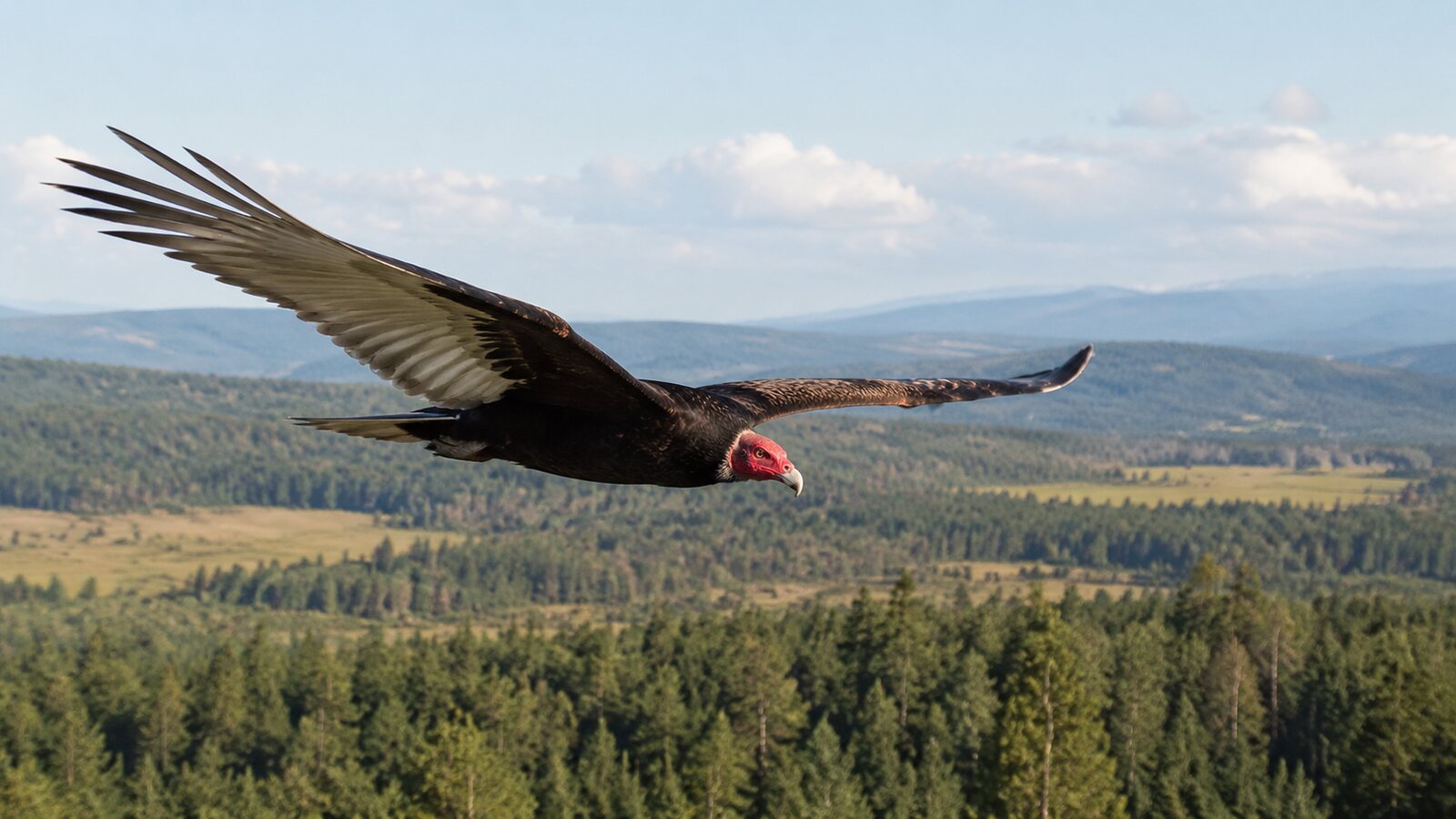
In North America, the Turkey Vulture is the classic example. It can use odor to help locate carrion, including food hidden under forest cover where sight alone would be less effective.
Several seabirds also have strong scent abilities. Petrels and related species can use chemical cues over the ocean to find productive feeding areas. Other birds use odors in ways that have nothing to do with finding food.
Can birds smell food?
Some can and do. Turkey Vultures can follow airborne chemical cues from decaying animals. Seabirds may respond to compounds associated with marine food webs.
That doesn’t mean every chickadee, finch, or sparrow finds your feeder by smelling sunflower seed from across the neighbourhood. Backyard birds often rely heavily on vision, memory, social cues, and learned routines when finding feeders.
Different birds solve the same problem with different senses. A vulture searching a forest and a chickadee returning to a familiar feeder don’t need the same sensory strategy.
Can birds smell humans?
Birds are capable of detecting odors, so the old statement that “birds can’t smell humans” is too broad. The better answer is that species vary in what they can smell and how much importance they place on human scent.
This question often comes up around nests and baby birds. The idea that any human touch automatically causes a parent bird to reject its young because it smells a person is not supported as a general rule.
That still isn’t a reason to handle nests or young birds unnecessarily. Disturbance, stress, predators, and legal protections are separate concerns. If a young bird appears injured or truly in trouble, a licensed wildlife rehabilitator is the right source for local advice.
Do birds use smell to find their way?
Some research suggests smell can contribute to navigation in certain birds. Homing pigeons have been studied extensively for their use of atmospheric odors, and seabirds can use scent cues while travelling over large areas of ocean.
Navigation is rarely one-sense-only. Birds can also use the sun, stars, Earth’s magnetic field, landmarks, learned routes, and other information depending on the species and situation.
This is a good example of why bird senses are difficult to rank. Smell may be only one part of a much larger navigation system.
Can birds recognize each other by smell?
In some species, chemical cues appear to carry social information. Studies have found links between odor and individual recognition, mate choice, nest recognition, and reproductive behaviour.
Birds produce oils and other chemical compounds, including material from the preen gland near the base of the tail. Researchers have been studying how those odors differ among individuals, sexes, seasons, and species.
The field is still developing. Smell was ignored in bird research for so long that scientists are still discovering jobs it may perform.
Do birds have noses?
They have nostrils and nasal passages, but not a projecting nose like ours. The nostril openings are usually called nares.
On a chickadee or finch, the nares can be small and partly hidden by feathers. On other birds they are obvious. Their position also varies. Some seabirds have unusual tubular nostril structures, while diving birds may have adaptations that help keep water out.
When you get a clear close view of a bird’s bill, the nares are one more piece of anatomy you can look for.
Does smell help birds avoid danger?
It can in some species. Birds may respond to odors associated with predators, spoiled food, their own nests, or other environmental clues.
But again, birds are diverse. A scent that changes the behaviour of one species may mean very little to another. It’s safer to say that birds have functional smell systems than to assume every bird uses smell in the same situations.
Frequently asked questions
Can birds smell?
Yes. Modern research shows that birds have a functioning sense of smell. Its importance varies greatly among species.
Which bird is known for a strong sense of smell?
The Turkey Vulture is a familiar North American example. It uses scent to help find carrion, even when food is partly hidden from view.
Can birds smell birdseed?
Birds are capable of smelling, but common feeder birds often find food through sight, memory, social activity, and familiarity with a feeding location. Smell is unlikely to be the only clue bringing them to a feeder.
Do birds have nostrils?
Yes. Their nostrils are called nares and are normally found on the bill, although their exact position and shape vary among species.
Keep following the question
Smell is only one part of the search. See how birds combine their senses to find food, read do birds have noses?, or compare bird taste and color vision.
Sources and further reading
- Behavioural Brain Research / PMC: the role of olfaction in birds
- Journal of Comparative Physiology A / PMC: chemical signalling and bird reproduction
- National Audubon Society: birds can smell
- Cornell Lab of Ornithology: human scent and the baby-bird myth
- Cornell Bird Academy: olfaction and bird anatomy terms