
A healthy backyard habitat
Think beyond the feeder
A feeder can bring birds closer, but it’s only one part of a bird-friendly backyard. Birds are more likely to stay when they can find several things in the same area: natural food, fresh water, cover from weather, safe perches, and plants that support insects.
A yard doesn’t need to be large or perfectly landscaped. A balcony, patio, townhouse garden, or small suburban lot can all help birds. The best changes are usually simple and easy to maintain.
Start with one feeder and one dependable food
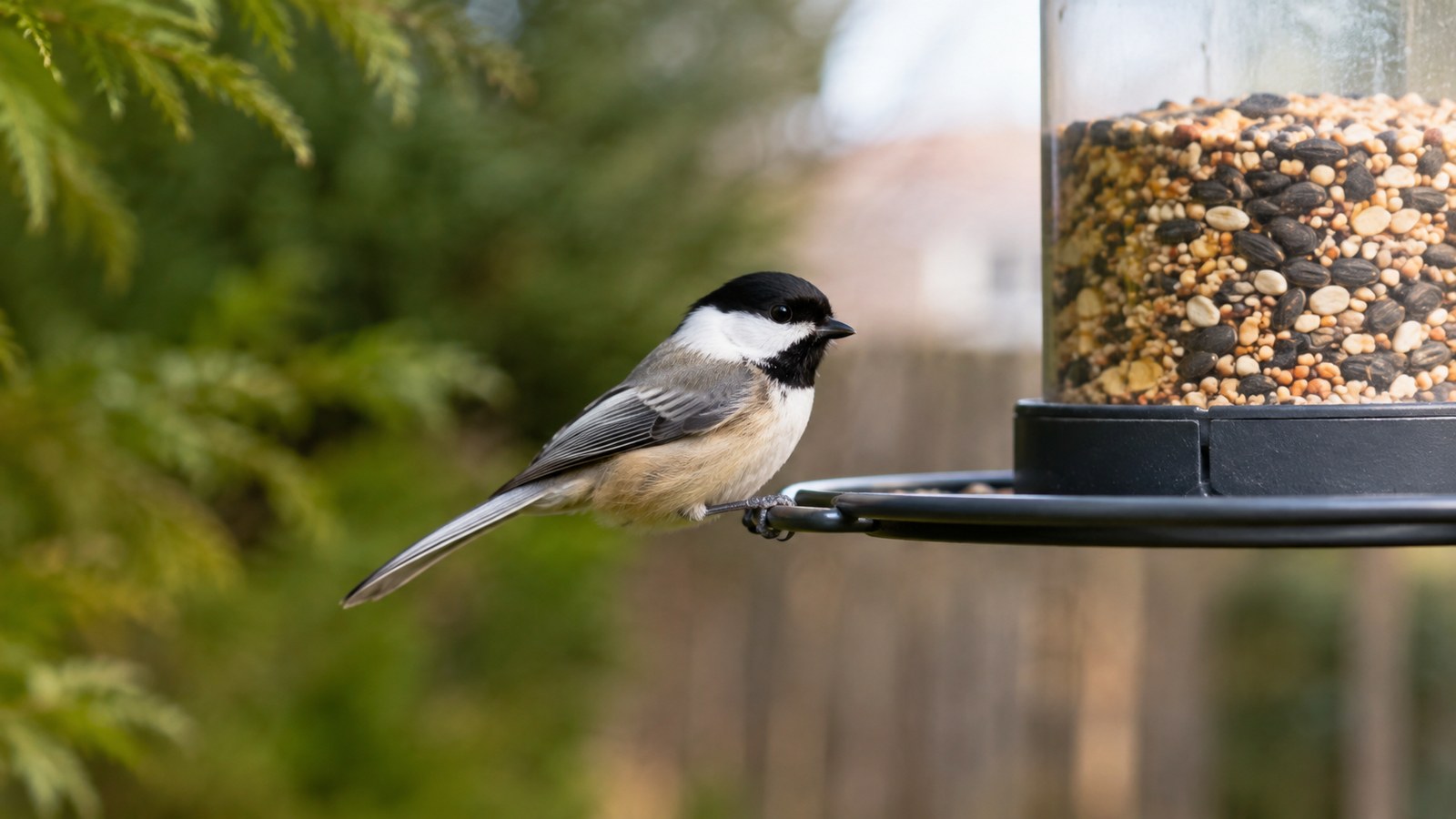
Adding several feeders at once creates more cleaning and makes it harder to learn what local birds prefer. One easy-to-clean feeder with fresh black-oil sunflower seed is a good place to begin in many North American yards.
Watch which birds arrive, what food they eat, and what ends up below. Those observations tell you whether another seed or feeder style would actually improve the setup.
Hummingbird feeders need a separate routine
Nectar feeders shouldn’t be managed like seed feeders. Use the measured recipe in our guide to making hummingbird nectar, and never add red dye, honey, brown sugar, or artificial sweeteners.
Sugar water must be replaced frequently even when little has been consumed. See how often to change hummingbird nectar for an easy schedule, then choose a shaded and sheltered spot using our hummingbird feeder placement guide.
When the feeder remains quiet, work through season, range, nectar, cleanliness, flowers, insects, predators, and territorial birds in why hummingbirds aren’t visiting.
For insect problems, use a plain water moat and clean hanging route to keep ants out. A clean saucer-style feeder, repaired leaks, and careful relocation can reduce bees and wasps without spraying pesticides around birds.
Fresh water can be more inviting than food
Birds need water for drinking and bathing. A shallow bird bath can attract species that rarely visit seed feeders. Our guide to attracting birds to a bird bath explains depth, footing, movement, and cleaning.
Placement matters too. Choose an open approach with nearby perches nearby, while avoiding dense hiding places that could conceal a cat. See where to place a bird bath for a placement checklist.
Plants provide food, cover, and nesting material
Plants that naturally grow in your region are often especially valuable because local birds and insects are adapted to them. Use our guide to choosing native plants for birds to match local range, light, soil, moisture, space, and seasonal value. Shrubs, grasses, twigs, bark, and plant fibres also become part of how many birds build nests.
Trees, shrubs, flowers, grasses, vines, evergreens, and ground covers each contribute something different. Our comparison of the best plant types for backyard birds explains how to build several different layers instead of relying on one isolated plant.
Leaving part of the yard a little less tidy can help too. Fallen leaves shelter insects, seed heads feed birds, and small brush piles can provide cover. The goal isn’t neglect. It’s a yard with more layers and fewer empty spaces.
Keep windows and pets in mind
Windows can reflect sky and vegetation, which may look like open space to a flying bird. Learn why birds fly into windows, then use the guide to making glass visible to birds with properly spaced exterior treatments.
After a strike, use what to do if a bird hits your window and contact a licensed wildlife rehabilitator. Repeated pecking or fluttering may be territorial reflection behaviour; see why a bird attacks a window or mirror.
Indoor cats should remain indoors, in a secure enclosure, or under direct control outside. Robin and I find that the most enjoyable bird watching happens when the yard feels comfortable for both birds and people. A clear view from a window or chair helps, but safety should guide the final setup.
Fresh food matters more than a full feeder
Buy only as much seed as you can keep fresh and dry. Food that smells musty, clumps together, or shows signs of mould should be discarded. A small amount of fresh seed is better than a large feeder full of old food.
Don’t continually pour new seed over old seed. Empty the feeder during regular cleaning so the lowest food doesn’t remain trapped for weeks.
Clean the feeder and the ground below it
Remove old seed and hulls from beneath feeders. Wash seed feeders at least every two weeks as a baseline, and more often during wet weather, heavy use, or visible contamination. Allow every part to dry before refilling.
If several birds look sick, stop feeding for a while and clean the feeder and the ground below it. Check current advice from your provincial, state, or local wildlife authority before you start again.
Expect activity to change with the seasons
Migration, nesting, moulting, weather, and wild food crops all influence what appears in a backyard. A quiet feeder doesn’t always mean something is wrong.
Keep notes about the first and last dates you see seasonal visitors. Over time, those observations become a personal guide to the birds in your neighbourhood.