
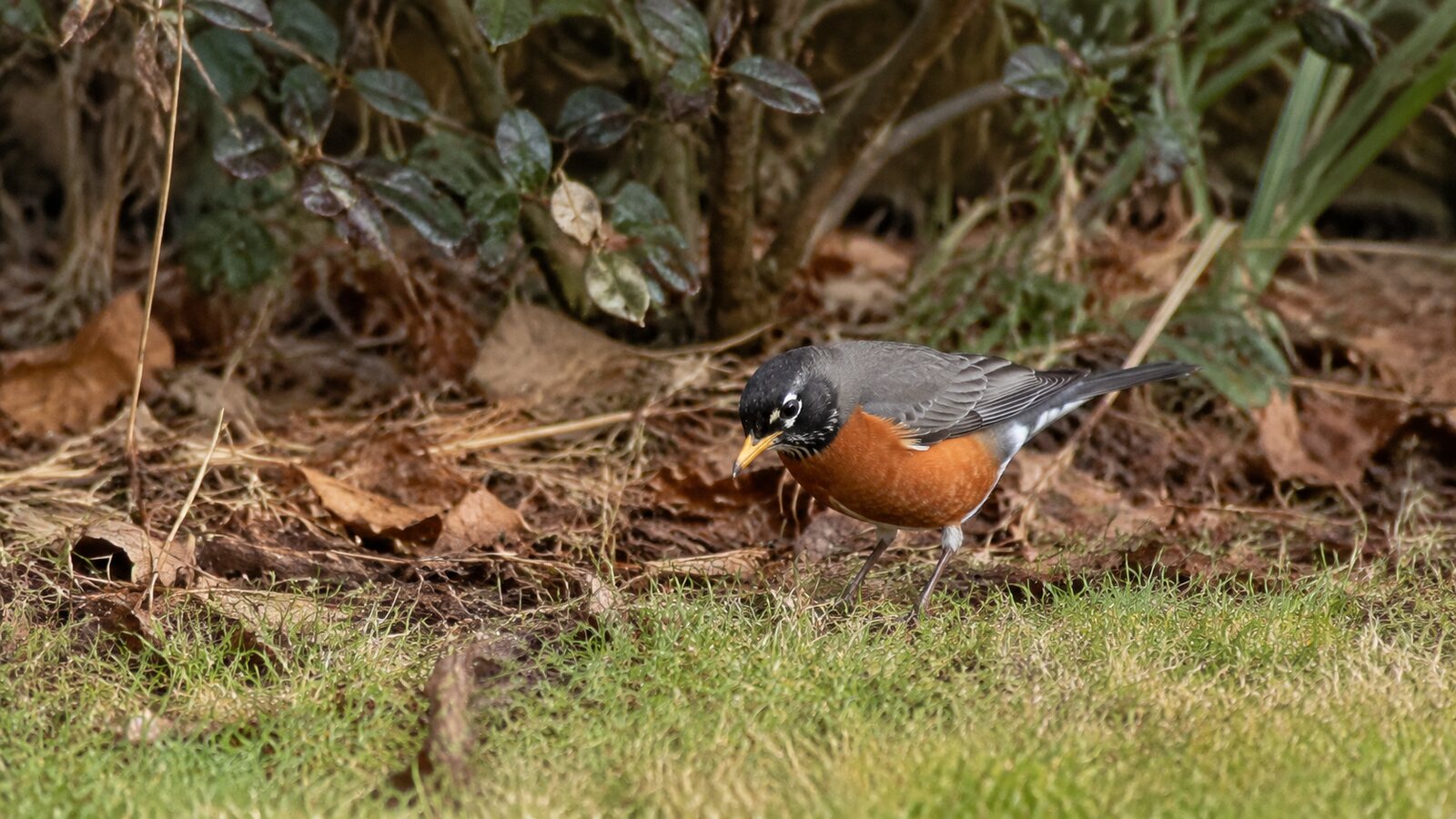
Sight finds movement, shape, and color
Vision is the main food-finding sense for many birds. Hawks scan for prey from perches or flight. Hummingbirds notice flowers and remember which patches refill with nectar. Seed eaters watch the ground, plants, and feeders for familiar shapes and movement.
Bird eyesight differs by lifestyle. Read how bird vision is adapted for distance, motion, color, and low light.
How robins find worms
An American Robin often pauses with its head tilted while searching a lawn. It can use visual clues, tiny movements, sound, and knowledge of good feeding ground. Saying a robin only hears worms is too simple.
Moist soil can bring earthworms and other invertebrates closer to the surface, which makes them easier to detect and catch.
Hearing reveals hidden food
Sound can matter when prey is concealed. Owls can locate small animals by rustling or movement, even when grass, snow, or darkness hides them. Woodpeckers may listen and inspect bark before probing or opening wood.
Bird ears are hidden beneath feathers. See how birds hear and locate sound.
Smell matters more to some birds
Birds can smell, but ability varies widely. Turkey Vultures use scent to help locate carrion, while some seabirds follow odors over open water. Many backyard songbirds lean more heavily on sight, hearing, and memory.
Our guide Can Birds Smell? explains why the old no-smell myth is wrong.
Memory and habitat knowledge
Birds learn where food appears and when it is worth returning. Hummingbirds remember flower and feeder locations. Chickadees and jays hide food and later recover many stores using spatial memory and nearby landmarks.
Flocks can also provide social clues. One bird feeding safely may draw the attention of others, while alarm calls can tell the group to stop feeding and watch for danger.
Beaks, feet, and touch finish the job
Senses guide a bird to a likely place, but body shape affects what happens next. A woodpecker probes bark, a duck filters or picks food in water, and a finch cracks seed with a short, strong bill. Feet may scratch leaves, hold food, or disturb hidden prey.
Finding food at backyard feeders
Backyard birds often notice a feeder by sight, follow other birds, or remember it from an earlier visit. A consistent, safe location helps them learn where food is available. Smell is usually not the main way familiar seed-eating birds locate a feeder.
Start with what birds eat, compare the best bird seed choices, or see which birds visit suet feeders.
Frequently asked questions
How do birds find worms?
They combine clues such as sight, movement, sound, suitable soil, and experience. No single method explains every search.
Do birds remember where food is?
Yes. Many remember dependable feeding spots, and food-caching birds can relocate many hidden items.
Can birds smell birdseed?
They may detect odors, but most common feeder birds depend more on vision, memory, social activity, and feeder location.
Follow the senses
Read about bird color vision, find out whether birds can taste, or visit the Backyard Birds hub.