
10 of North America’s smallest birds
These birds are ordered loosely by weight and overall size, not by one exact measurement. Male and female sizes overlap, published ranges vary, and a long tail can make a very light bird look longer.
1
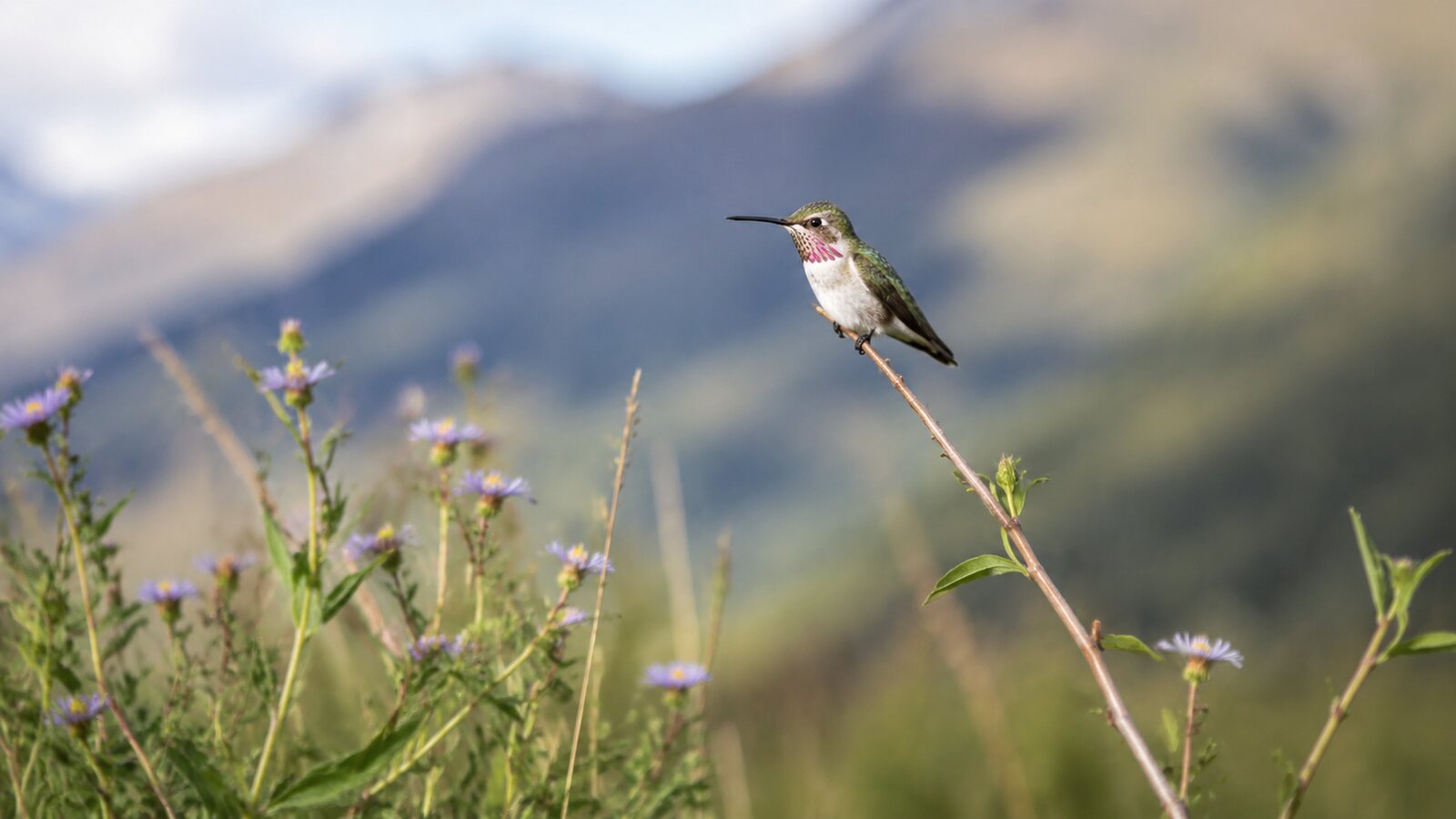
Calliope Hummingbird
3.1–3.5 in · 2.3–3.4 g
The Calliope Hummingbird is the smallest bird in the United States and Canada by weight. It is about the length of a person’s palm and can weigh less than a dime.
Adult males have narrow magenta throat rays. This tiny bird still completes a long migration between western mountain breeding areas and Mexico.
2
Costa's Hummingbird
about 3–3.5 in · 2–3 g
Costa’s Hummingbird is a compact desert species. Adult males have an iridescent purple crown and a throat patch that flares along the sides of the neck.
It lives mainly in the Sonoran and Mojave deserts and in dry scrub farther west.
3
Ruby-throated Hummingbird
2.8–3.5 in · 2–6 g
The Ruby-throated Hummingbird is the familiar breeding hummingbird across most of eastern Canada and the United States. Males have a red throat that can look black outside direct light.
Its length overlaps the Calliope’s, but its weight range runs higher.
4
Rufous Hummingbird
2.8–3.5 in · 2–5 g
Rufous Hummingbirds are tiny, tough migrants. Males glow orange-rufous with an iridescent orange-red throat, while females are greener with rufous in the tail and flanks.
Some travel from Mexico to Alaska, an enormous journey for a bird this small.
5
Black-chinned Hummingbird
about 3.5 in · 2.3–4.9 g
Black-chinned Hummingbirds have a long straight bill and a fairly plain body. The male’s black throat ends in a narrow violet band that can be hard to see.
They breed widely across the West in canyons, open woodland, towns, and streamside growth.
6
Bushtit
2.8–3.1 in · 4.5–6 g
Bushtits can be shorter than some hummingbirds, but they weigh more. They are tiny round gray birds with long tails and very short bills.
Flocks move quickly through western shrubs and trees, often hanging upside down while searching for insects.
7
Golden-crowned Kinglet
3.1–4.3 in · 4–8 g
Golden-crowned Kinglets are among the smallest songbirds. A yellow or orange crown stripe sits between black lines, although the crown can be hidden when the feathers lie flat.
They often feed high in conifers, flicking their wings as they search small branches.
8
Ruby-crowned Kinglet
3.5–4.3 in · 5–10 g
Ruby-crowned Kinglets look olive-gray with a bold white eye ring and pale wing bars. Only adult males have the red crown patch, and they usually keep it concealed.
The bird’s constant wing flicking is often easier to notice than the crown.
9
Brown Creeper
4.7–5.5 in · 5–10 g
A Brown Creeper is longer than a kinglet but still extremely light. Its stiff tail and thin curved bill fit a life spent spiralling up tree trunks.
Brown-and-white streaks help it disappear against bark. It usually flies to the base of another tree before climbing again.
10
American Goldfinch
4.3–5.1 in · 11–20 g
The American Goldfinch is larger than the birds above, but it remains one of the smallest familiar feeder birds. It has a short conical bill and a deeply notched tail.
Size alone may not separate it from siskins and other small finches, so use wing pattern and bill shape too.
Length and weight can give different answers
A Bushtit may measure shorter than a Calliope Hummingbird because much of a hummingbird’s length comes from the bill. The hummingbird is still lighter. A Brown Creeper is longer because of its tail and curved bill, yet it may weigh about as little as a few paper clips.
That is why bird size works best as a range. Our guide to identifying birds by size and shape suggests comparing a mystery bird with familiar birds instead of guessing inches from a distance.
How tiny birds survive cold nights
Small bodies lose heat quickly. Tiny birds meet that problem with dense feathers, frequent feeding, sheltered roosts, shivering, and short-term drops in body temperature. Hummingbirds can enter torpor, a deep energy-saving state, when conditions demand it.
Read how birds stay warm in winter for the broader cold-weather picture.