
10 of North America’s largest birds
The list is ordered loosely by overall size. Wingspan, weight, height, sex, and individual variation prevent one perfect ranking.
1
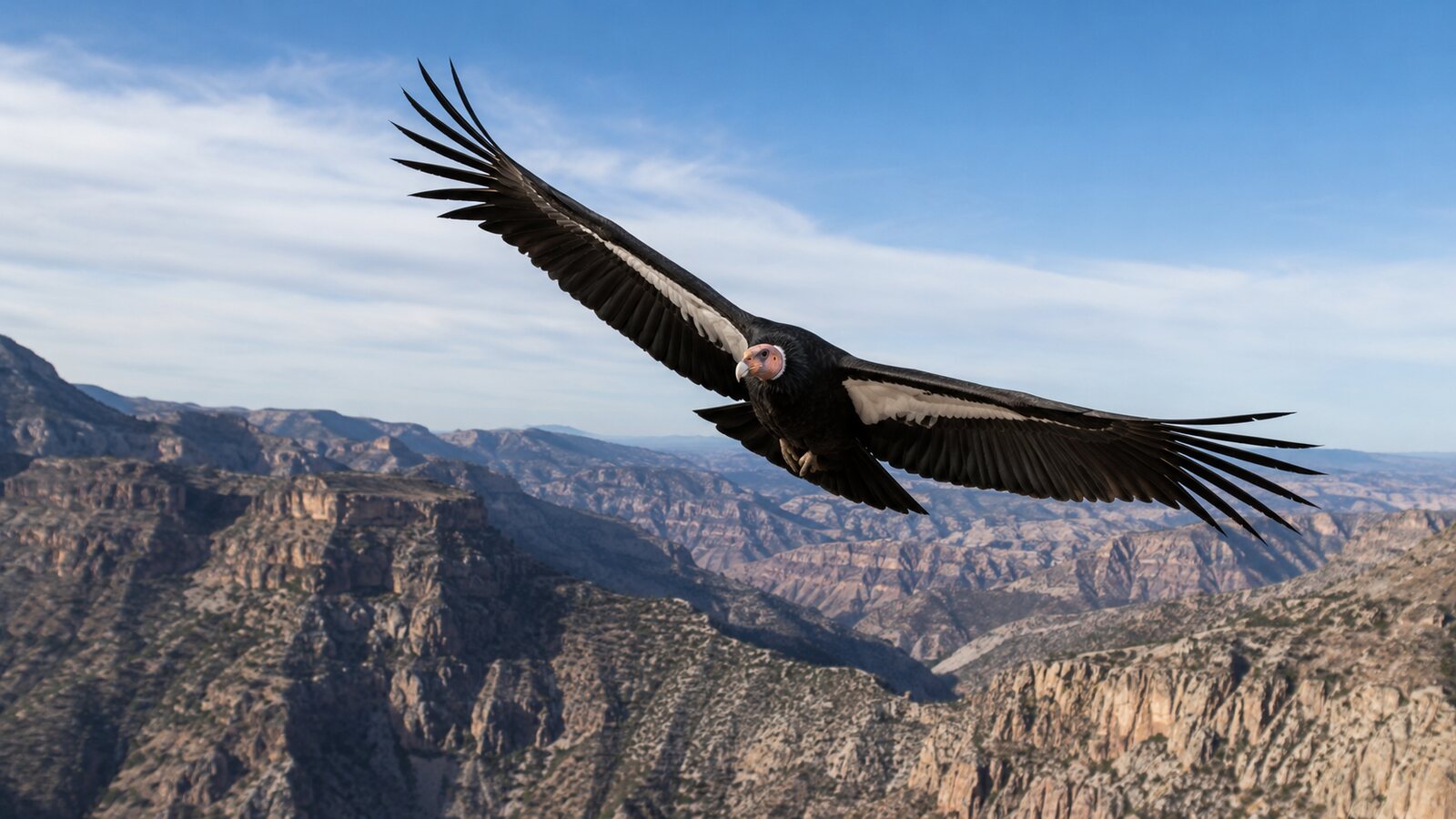
California Condor
Wingspan 9.1 ft · 15.4–21.8 lb
The California Condor is North America’s largest wild bird by overall wingspan and bulk. Cornell lists a wingspan of about 109 inches, or just over 9 feet.
Adults are black with large white patches under the wings and bare orange-pink heads. They soar for long periods and feed on carrion.
2
American White Pelican
Wingspan 8–9.5 ft · 9.9–19.8 lb
American White Pelicans can match or even exceed a condor’s wingspan at the top of their published range, although they are built differently and are usually lighter. Black flight feathers show when the huge white wings open.
They catch fish at the surface rather than plunge-diving like Brown Pelicans.
3
Trumpeter Swan
Wingspan about 6.7 ft · 17–28 lb
The Trumpeter Swan is North America’s largest native waterfowl. It is also among the continent’s heaviest flying birds.
Adults are white with a long straight neck and a large black bill. Their weight means they need a long open stretch of water for takeoff.
4
Whooping Crane
Wingspan about 7.5 ft · 13.2–17.2 lb
A Whooping Crane stands close to 5 feet tall, making it North America’s tallest bird. Adults are white with black wingtips, long black legs, and red on the crown.
It is also one of the rarest birds on this list, with carefully managed wild populations and migration routes.
5
Bald Eagle
Wingspan about 5.5–8 ft · 6.6–13.9 lb
Female Bald Eagles are larger than males and the biggest birds tend to occur toward the north. Adults have a white head and tail, while young birds are mostly brown and mottled.
Even a large eagle is shorter-winged and lighter than a California Condor.
6
Golden Eagle
Wingspan about 6–7.5 ft · 6.6–13.5 lb
Golden Eagles are powerful, broad-winged raptors of open country and mountains. Adults are dark brown with golden feathers on the back of the head and neck.
They can look similar to young Bald Eagles, but shape, flight style, and pattern help separate them.
7
Sandhill Crane
Wingspan about 6.5 ft · 7.1–11.9 lb
Sandhill Cranes are tall gray birds with long necks, long legs, and red crowns. They fly with the neck fully extended and often gather in large noisy flocks during migration.
Their height is more obvious on the ground than their weight.
8
Great Blue Heron
Wingspan about 5.5–6.6 ft · 4.6–5.5 lb
A Great Blue Heron can stand more than 4 feet tall but weighs much less than its height suggests. Long hollow bones, a narrow body, and huge wings create the size.
In flight it folds the neck into an S shape, unlike cranes, which stretch their necks straight forward.
9
Wild Turkey
Wingspan 4.1–4.8 ft · up to 24 lb or more
Male Wild Turkeys are among the heaviest native land birds that can still fly. Their broad rounded wings are built for short powerful bursts rather than long travel.
Most of the time they walk and run. They usually fly to escape danger or reach a nighttime roost.
10
Canada Goose
Wingspan about 4.2–5.7 ft · 6.6–19.8 lb
A large Canada Goose is heavier than many eagles. Size varies across populations, with some forms much smaller than the familiar big geese seen in parks and fields.
Long migrations are possible because broad wings, strong muscles, stored fat, and flock flight all work together.
Wingspan, weight, and height are different records
A pelican may have a greater wingspan than a heavier swan. A Whooping Crane stands taller than both but has a narrow body. A Wild Turkey can outweigh a Great Blue Heron even though the heron looks much taller.
Published measurements are ranges, not promises. Females are larger than males in many raptors, while males are much heavier than females in Wild Turkeys.
How to judge the size of a distant bird
Use something nearby for scale: a crow, fence post, tree branch, gull, goose, or utility pole. Then look at wing width, tail length, head size, and flight style.
A Red-tailed Hawk can look huge when it passes close overhead, but it remains much smaller than a Bald Eagle. The guide to bird size and shape explains how proportions can narrow the choice.