
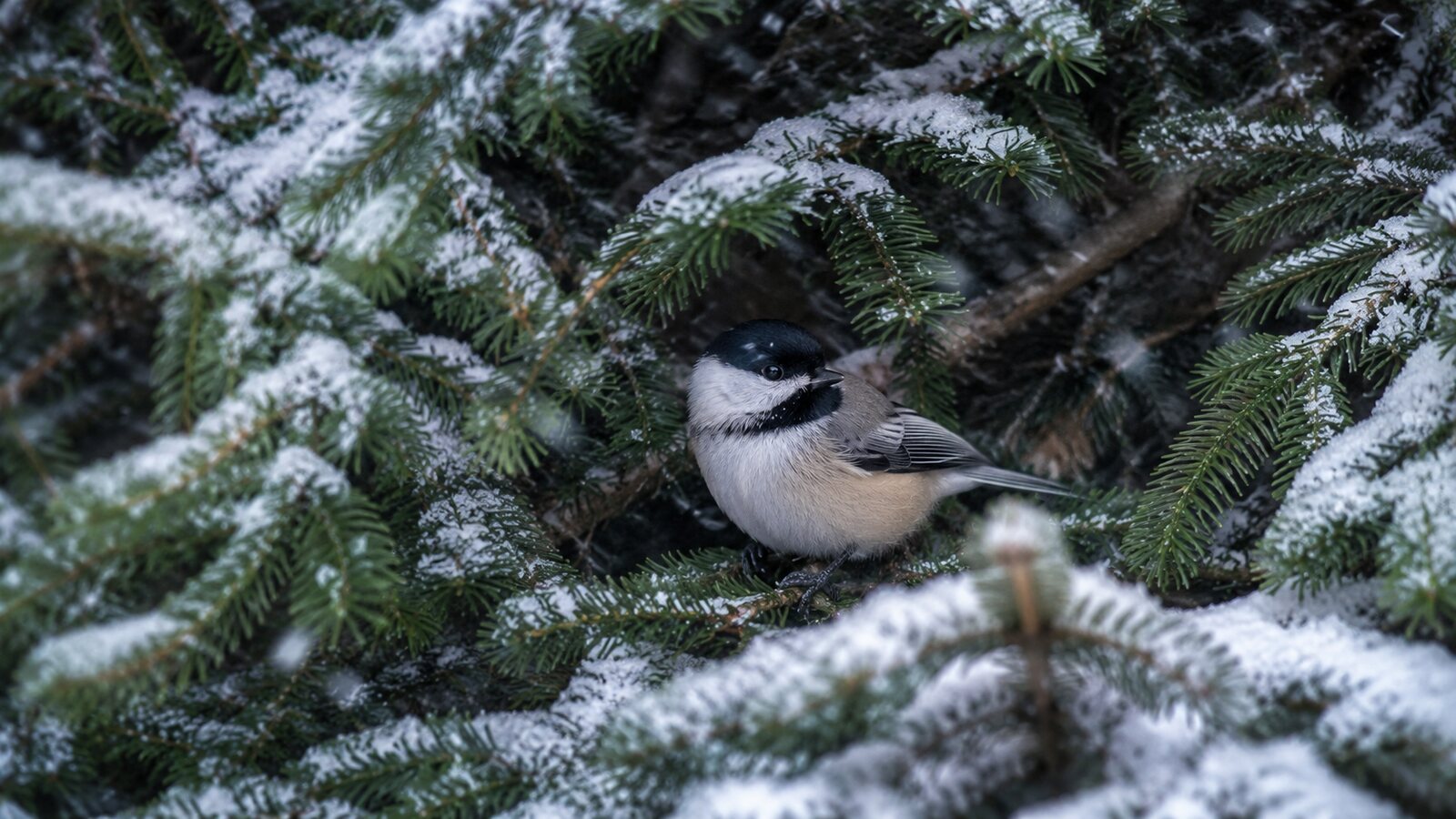
Birds look for protected microhabitats
A winter storm does not affect every spot equally. Wind can be strong above a hedge and much calmer inside it. Snow may cover open ground while the space beneath dense evergreen branches stays partly clear.
Birds use these small differences. They choose places that reduce wind, blowing snow, and heat loss without spending more energy than necessary to get there.
Dense evergreens and shrubs provide cover
Spruce, fir, cedar, pine, juniper, and thick shrubs can form sheltered pockets. Small songbirds may move deep into the branches, where foliage breaks the wind and offers some protection from falling snow.
Species such as chickadees, juncos, cardinals, and sparrows use cover differently, but a layered yard with dense vegetation gives many birds more choices than an open lawn.
Cavities protect some birds
Chickadees, nuthatches, wrens, bluebirds, and woodpeckers may use tree holes, crevices, or suitable nest boxes as nighttime shelter. More than one small bird may share a protected cavity in severe weather, depending on the species.
A nest box is not a universal storm shelter. Birds that do not normally roost in cavities are more likely to use branches, reeds, dense foliage, ground cover, water, or another habitat that matches their normal behaviour.
Where do water birds go?
Ducks, geese, gulls, and other water birds may use sheltered bays, shorelines, islands, marsh vegetation, or open water. They often position themselves where land or plants reduce wind.
Ice and deep snow can change access to food as well as shelter. Some birds move locally to a better wetland or shoreline rather than making a long migration.
Do birds keep flying during a snowstorm?
Some movement continues, especially before a storm and during breaks in the weather. Birds may feed heavily, shift to a safer spot, or make short trips between shelter and food.
During the worst conditions, many birds become less visible because they reduce activity and stay under cover. When the wind eases, they often reappear quickly to feed and replace the energy used through the storm.
How do birds prepare for a storm?
Birds can respond to changing weather and air pressure. Many feed actively before severe weather reaches them, building short-term energy reserves for a period when feeding will be harder.
Once sheltered, puffed feathers help trap air, while a tucked foot or bill can reduce exposed surface. These behaviours are part of the broader answer to how birds stay warm in winter.
How can a backyard provide winter shelter?
Keep some dense shrubs and evergreens where practical. Native trees, seed heads, brush, and layered plantings can provide cover and food without creating an artificial shelter birds may not use.
Place feeders where birds can reach nearby cover but predators cannot hide directly beside the feeding area. Keep cats indoors or supervised, and avoid disturbing a roost once birds have settled.
Frequently asked questions
Where do birds hide during blizzards?
Many move into dense evergreens, thick shrubs, cavities, reed beds, or the protected side of a tree or structure. The best shelter depends on the species and habitat.
Do birds fly during snowstorms?
They may make short trips to food or better shelter, but many birds reduce activity during the worst wind and snow to conserve energy and avoid exposure.
Do birds use birdhouses during storms?
Some cavity-roosting birds may use a suitable nest box for shelter, but many species never use boxes and instead choose natural cover.
Storm shelter and nighttime roosts
See where birds normally sleep at night, learn why most adults do not sleep in nests, or read how birds respond to cold.