
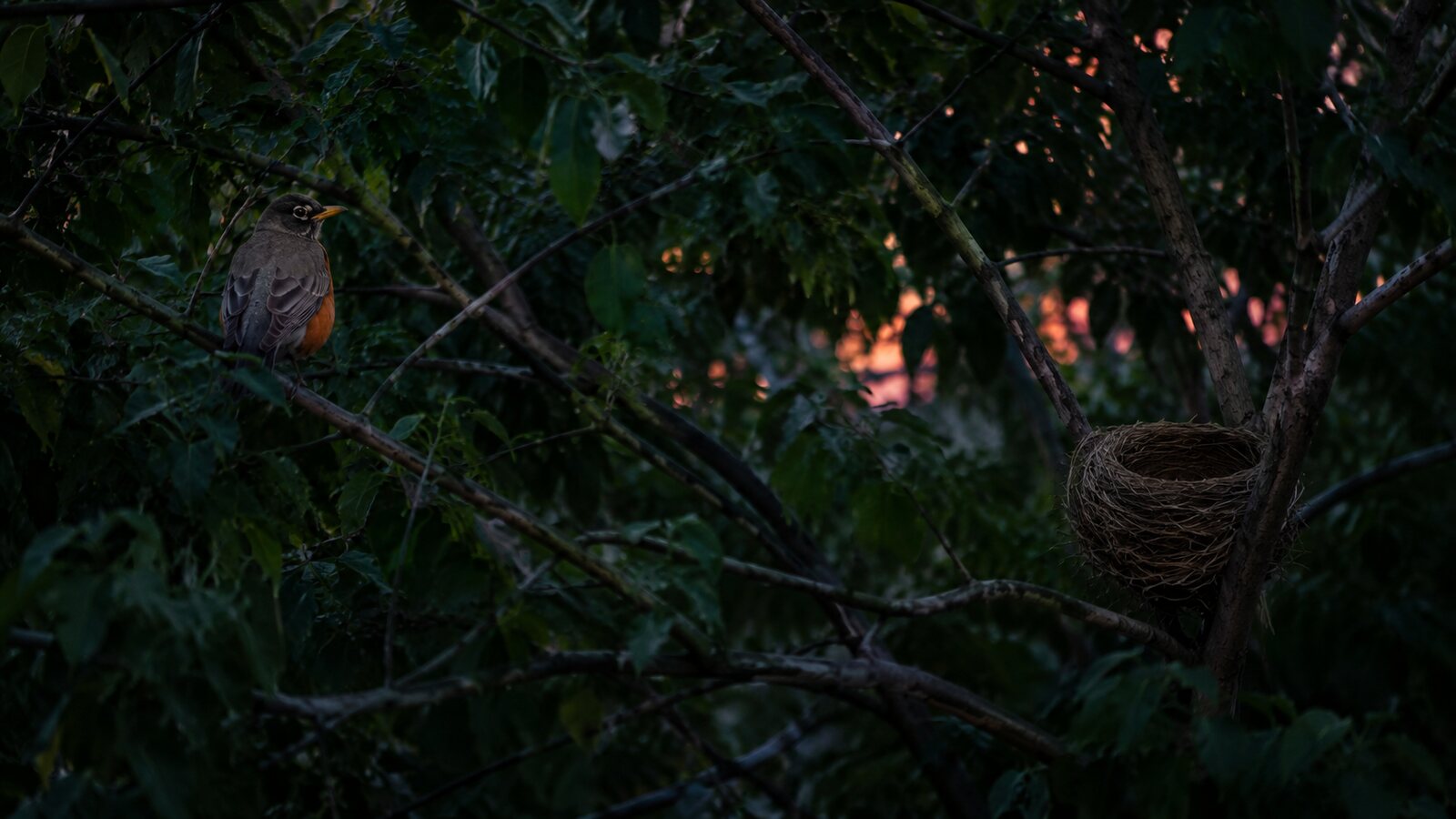
What nests are built for
A nest holds eggs and keeps young birds in a protected place while they develop. It may also support an incubating or brooding parent. Once the young leave, the structure often has little value as a regular sleeping place.
Many cup nests become dirty, damaged, exposed, or filled with parasites. Some are designed to last only one nesting attempt. Learn how these structures differ in the bird nest-building guide.
When adult birds do sleep on a nest
A bird incubating eggs stays on the nest for long periods and may remain there overnight. A parent may also brood newly hatched chicks, covering them with warm body feathers.
As the chicks grow, space becomes tight and they can regulate their temperature better. The adult may then spend the night nearby rather than on top of them.
Baby birds sleep in nests
Nestlings live in the nest, so they sleep there too. Their days include feeding, resting, growing feathers, and becoming stronger. After fledging, a young bird may sleep in nearby cover while its parents continue to feed it.
Leaving the nest does not mean the bird is independent. See how long baby birds stay in nests and what happens after fledging.
Do birds sleep in old nests?
Some species reuse large or durable nests, but that is different from treating every old nest as a nightly bedroom. Hawks, eagles, herons, swallows, and other birds vary widely in how they reuse structures or sites.
The guide to whether birds reuse nests separates returning to the same territory from reusing the same physical structure.
Do birds sleep in birdhouses?
Some cavity-nesting birds may roost in nest boxes. Chickadees, nuthatches, wrens, bluebirds, or small woodpeckers may use cavities or suitable boxes depending on species and location.
A nest box is not a universal shelter. Entrance size, interior space, placement, condition, predators, and local species all matter. Do not open or disturb a box just to check whether a bird is sleeping inside.
Where adults sleep instead
American Robins may use sheltered branches or communal roosts. Song Sparrows can settle into dense vegetation. Chickadees and woodpeckers may use cavities. Water birds may sleep on water or along protected shorelines.
The main bird roosting guide compares these sleeping places by bird group.
Frequently asked questions
Do baby birds sleep in nests?
Yes. Nestlings remain and sleep in the nest until they are old enough to fledge.
Do birds sleep in birdhouses?
Some cavity-using species may roost in a suitable box, especially in cold or rough weather.
Do parent birds sleep with their babies?
A parent may brood young chicks. As the chicks grow, the adult may sleep nearby instead.