
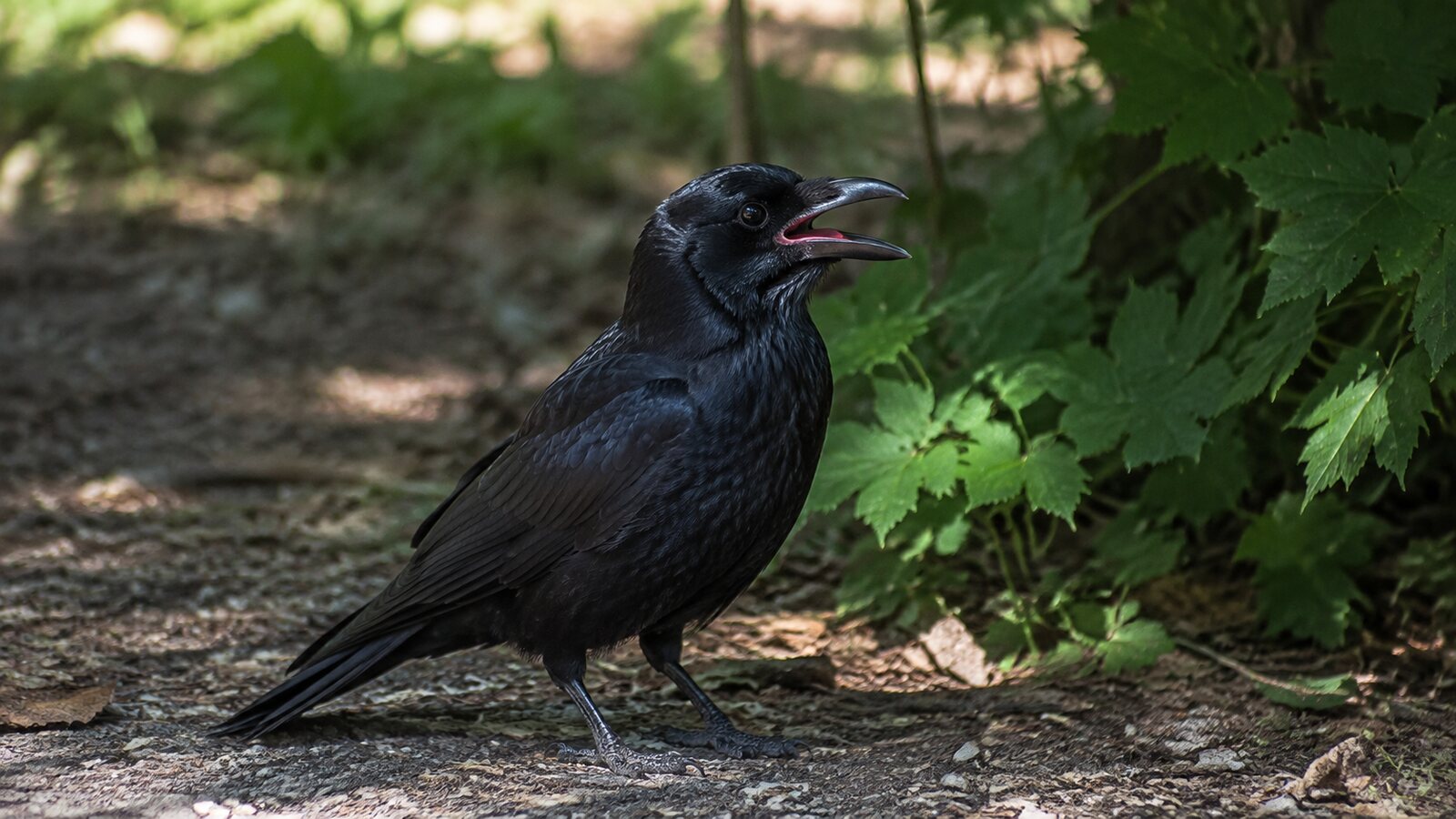
How do birds cool down without sweat?
The answer is a combination of behaviour and physiology. A hot bird may stop moving, get into shade, pant, flutter its throat, spread or droop its wings, bathe, and send more warm blood toward parts of the body where heat can escape.
No one method does all the work. What you see depends on the species, temperature, humidity, wind, water supply, and how active the bird has been.
A chickadee in a shady cedar and a pelican on an exposed beach are solving the same basic problem in very different bodies.
Why do birds pant?
Panting increases evaporation from moist surfaces in the mouth and respiratory tract. When water evaporates, it takes heat with it.
You may notice a bird sitting with its bill open and breathing rapidly on a hot day. That can be a normal heat response, especially after activity or in direct sun. The dedicated why do birds pant? page follows that behaviour in more detail.
It also costs water. Cooling by evaporation works only if the bird can replace enough of the moisture it loses.
What is gular fluttering?
Some birds go a step beyond ordinary panting. They rapidly vibrate the floor of the mouth or throat area, a behaviour called gular fluttering.
That movement increases airflow over moist membranes and boosts evaporative cooling. Pelicans, cormorants, nightjars, owls, and other birds are known for versions of it.
If you see a bird with an open bill and a throat that appears to be fluttering quickly, you may be watching its built-in air conditioning.
Do birds lose heat through their feet and bills?
Yes. Feathers are excellent insulation, which is great in winter but means heat cannot simply pour through the entire skin surface.
Bare or lightly feathered areas give birds other places to exchange heat. Legs, feet, facial skin, and bills can carry warm blood close to the air. Changing blood flow to those areas helps regulate heat loss.
Large bills can be especially effective radiators in some species. Toucans are a dramatic example, although even familiar birds can shed heat through exposed bills and legs.
Why do birds hold their wings out when it is hot?
Moving the wings away from the body can expose less-feathered areas and let more air circulate. It may also keep the wing feathers themselves from trapping as much warm air against the body.
Context matters. Birds spread their wings for many reasons, including drying and sunning. Our page on why birds spread their wings covers the bigger picture.
On a very hot day, though, a loose wing posture plus an open bill is a strong clue that temperature is part of the story.
Do bird baths help birds cool off?
They can. Water touching the body absorbs heat, and evaporation afterward can continue the cooling effect.
Birds also bathe for feather maintenance, so cooling is not the reason for every splash. Still, clean water becomes especially valuable during hot, dry weather.
If you offer one, keep it shallow and clean. The bird bath guide covers placement and maintenance.
Why do birds sit quietly in shade on hot days?
Sometimes the smartest cooling strategy is simply to stop making more heat. Flying and active foraging burn energy and produce heat as a by-product.
Birds may shift activity toward the cooler morning and evening hours, then rest in foliage or another shaded spot during the hottest part of the day.
So a quiet yard at mid-afternoon does not necessarily mean the birds disappeared. They may be ten metres away doing almost nothing. Fair enough.
Can birds overheat?
Absolutely. Birds maintain high body temperatures and can be pushed past their ability to cool themselves during severe heat.
Risk rises when temperatures stay high, nights do not cool down, water is scarce, or birds are exposed to direct sun. Nestlings can be especially vulnerable because they cannot simply fly to a better microclimate.
Heat waves are a real wildlife stressor, not just uncomfortable weather.
What does an overheated wild bird look like?
Open-mouth breathing, rapid panting, wings held away from the body, unusual lethargy, and repeated efforts to find shade or water can all appear in heat.
Those behaviours have other possible causes too. Watching from a respectful distance is usually better than assuming every panting bird needs to be caught.
If a wild bird is grounded, injured, or clearly unable to escape danger, contact a licensed wildlife rehabilitator for local advice.
Do birds ever use pee to cool down?
Some do, in a way. Certain storks, vultures, and other long-legged birds release waste onto their legs. The moisture evaporates and cools the skin.
The behaviour is called urohidrosis. It is not sweating because no sweat glands are involved.
Bird biology has a habit of finding strange solutions. For the waste side of that story, read do birds pee?
How can I help backyard birds during hot weather?
Water and shade are the big two. Keep a shallow bird bath clean and filled, and preserve shrubs or trees that give birds cooler places to rest.
Avoid letting bird baths turn stagnant. During very hot weather, water can foul quickly and should be refreshed often.
Native plants help too because they combine shade, shelter, food, and insect habitat. See how to choose native plants for birds for ideas.
Frequently asked questions
Do birds sweat?
No. Birds lack the sweat glands humans use for cooling.
Why is a bird sitting with its mouth open?
In hot weather, it may be panting or using another form of evaporative cooling. Stress, illness, and exertion can also cause open-mouth breathing.
Do birds pant like dogs?
Many birds pant, although their respiratory system is very different from a dog’s. Some species also use rapid throat movements called gular fluttering.
Do birds get hot under all those feathers?
They can. Feathers insulate against outside heat as well as cold, but birds still need ways to remove internally produced heat when conditions get hot.
Keep following the question
Temperature connects a lot of familiar bird behaviour. Read how birds stay warm in winter, why birds bathe, or return to the Bird Facts hub.