
What does a bird bath actually do?
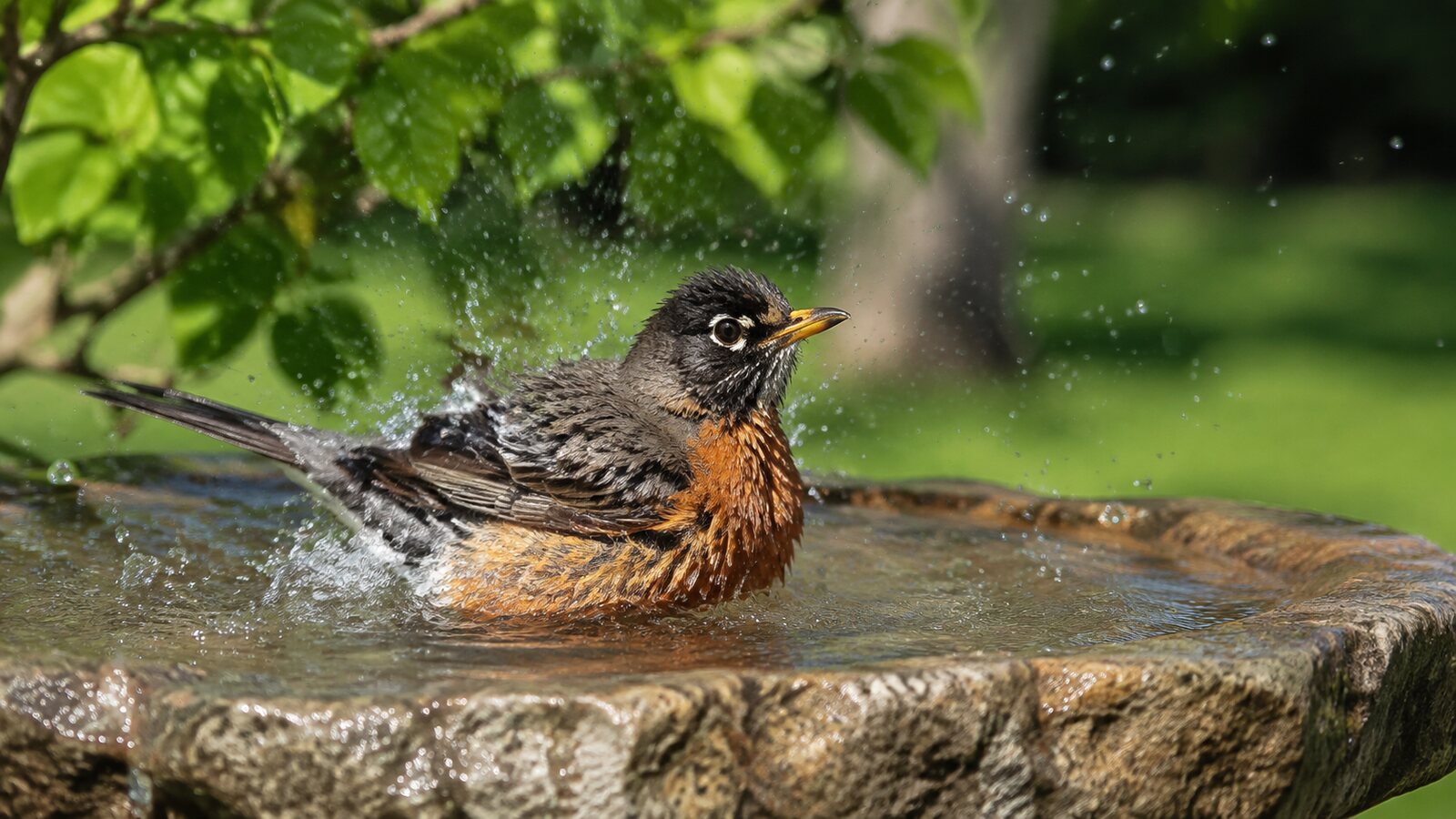
Watch a robin, sparrow, chickadee, or jay in shallow water and the basic routine is easy to recognize. The bird dips its body, fluffs its feathers, splashes with its wings, and throws water over its back.
It may repeat that several times. Then it leaves the water, shakes, finds a perch, and starts working through the feathers with its bill.
That last part matters. Bathing and preening often work as a pair.
Does bathing clean a bird?
Most likely, yes, but it is better to be precise about what that means.
Water can loosen dust, dried material, loose feather debris, and other material caught in the plumage. A vigorous splash also works water between the feathers rather than just wetting the surface.
After the bath, preening gives the bird a chance to remove loosened debris and put the feather structure back in order.
That sounds straightforward. The interesting part is that researchers have pointed out that the exact biological function of water bathing has not been tested as thoroughly as many people assume. Birds clearly do it. We just should not pretend every benefit has been neatly proven.
Why are feathers so important?
Feathers are not decoration. They are flight surfaces, insulation, weather protection, camouflage, and sometimes part of a courtship display.
A bird needs those feathers to stay flexible and properly aligned. Dirt, wear, moisture, plant material, body oils, and tiny parasites can all affect the plumage.
That is why birds spend so much time on feather care. Bathing is one part. Preening is another. Some birds also use dust, sunlight, or even ants.
Why do birds preen after bathing?
Because a soaked bird has a lot of rearranging to do.
The surface of a feather is built from branching structures that hook together. Splashing through water can separate and ruffle those parts. Once the bird is out of the bath, it runs feathers through its bill and helps bring the feather surface back into shape.
It may look as if the bird is undoing the bath by grooming immediately afterward. Really, the two behaviours fit together.
Do birds bathe to cool down?
Sometimes.
Birds run hotter than people, and a summer afternoon can put real pressure on their cooling system. Bathing can wet the skin and feathers, and evaporation can carry away heat.
You may notice more bird-bath activity during hot, dry weather simply because water is valuable for both drinking and cooling.
Still, birds bathe in cool weather too. So temperature does not explain the whole behaviour.
Do birds drink while they bathe?
They often can.
A shallow bird bath may serve as both a drinking station and a bathing spot. One bird may stop for two quick sips. Another climbs right in and starts splashing.
This is one reason keeping backyard water clean matters. Droppings, seed hulls, leaves, algae, and bathing birds can dirty a small basin quickly.
If you have a bath in your yard, see how to attract birds to a bird bath and where to place a bird bath.
Do all birds bathe the same way?
Not at all.
A robin may stand in shallow water and splash hard. A hummingbird can use droplets on leaves, light rain, a mist, or the edge of moving water. Swallows and swifts may skim water while flying.
Some birds barely move. Others look as if they are trying to empty the entire bath onto the lawn.
The method fits the bird.
Why do some birds bathe in rain?
Rain can do the same basic job as a pool of water without requiring the bird to land in a bath.
Some birds sit in exposed spots and let rain soak the plumage. Others move through wet leaves or vegetation. Hummingbirds may rub against damp foliage.
If the bird is already getting wet, it may take advantage of the opportunity.
Do birds bathe in winter?
Yes, when liquid water is available.
A cold-weather bath may look surprising, but birds still need to maintain feathers in winter. Those feathers are especially important when they are trapping warm air around the body.
Birds do not have to stay dry every second to stay warm. They do need safe shelter and enough food to maintain body heat. Read more in how birds stay warm in winter.
Can birds bathe too much?
For wild birds using natural water, regular bathing is normal behaviour.
In a backyard, the bigger concern is usually the condition of the water rather than the number of baths. A dirty basin can collect droppings and organic material. Fresh water and routine cleaning are worth the effort.
A shallow bath also gives small birds a safer way to enter and leave than a deep, steep-sided container.
Why do birds shake after a bath?
Because they are wet.
A full-body shake throws off excess water and helps separate feathers before preening begins. You may see a bird fluff up, shake hard from head to tail, then settle onto a nearby branch and start grooming.
Short behaviour. Big mess if you are standing beside the bath.
Why do birds sometimes use dust instead of water?
Dust bathing is another form of plumage maintenance, especially common in birds such as sparrows, quail, doves, and grouse.
The bird works fine dry material through its feathers, then shakes and preens it out. Dust may absorb excess oils, loosen debris, and possibly help with some feather parasites.
It looks like the opposite of a bath. It is still feather care. See why birds take dust baths.
Frequently asked questions
Why do birds bathe?
Bathing appears to help maintain plumage by wetting feathers, loosening dirt and debris, and setting the bird up for preening afterward. Cooling can be another benefit in hot weather.
Do birds bathe to get rid of mites?
Bathing may help with general feather maintenance, but it is too strong to say a water bath reliably removes all mites or other parasites. Birds use several grooming behaviours, and parasite control is complicated.
Why do birds preen after a bath?
Wet feathers need to be cleaned, dried, and realigned. Preening helps put the feather surface back into working order.
Do all birds use bird baths?
No. Species differ in how and where they bathe, and some may prefer moving water, puddles, wet leaves, dust, rain, or natural shorelines.
Drinking and swimming are different questions
The same water can be used for several jobs. If you are wondering about hydration, see do birds drink water?. For birds that actually move through deep water, see can birds swim?.
Keep following the question
Bathing connects directly with feather care. Continue with how birds preen after bathing, compare dust baths, or use the Backyard Birds hub for water and habitat guidance.