
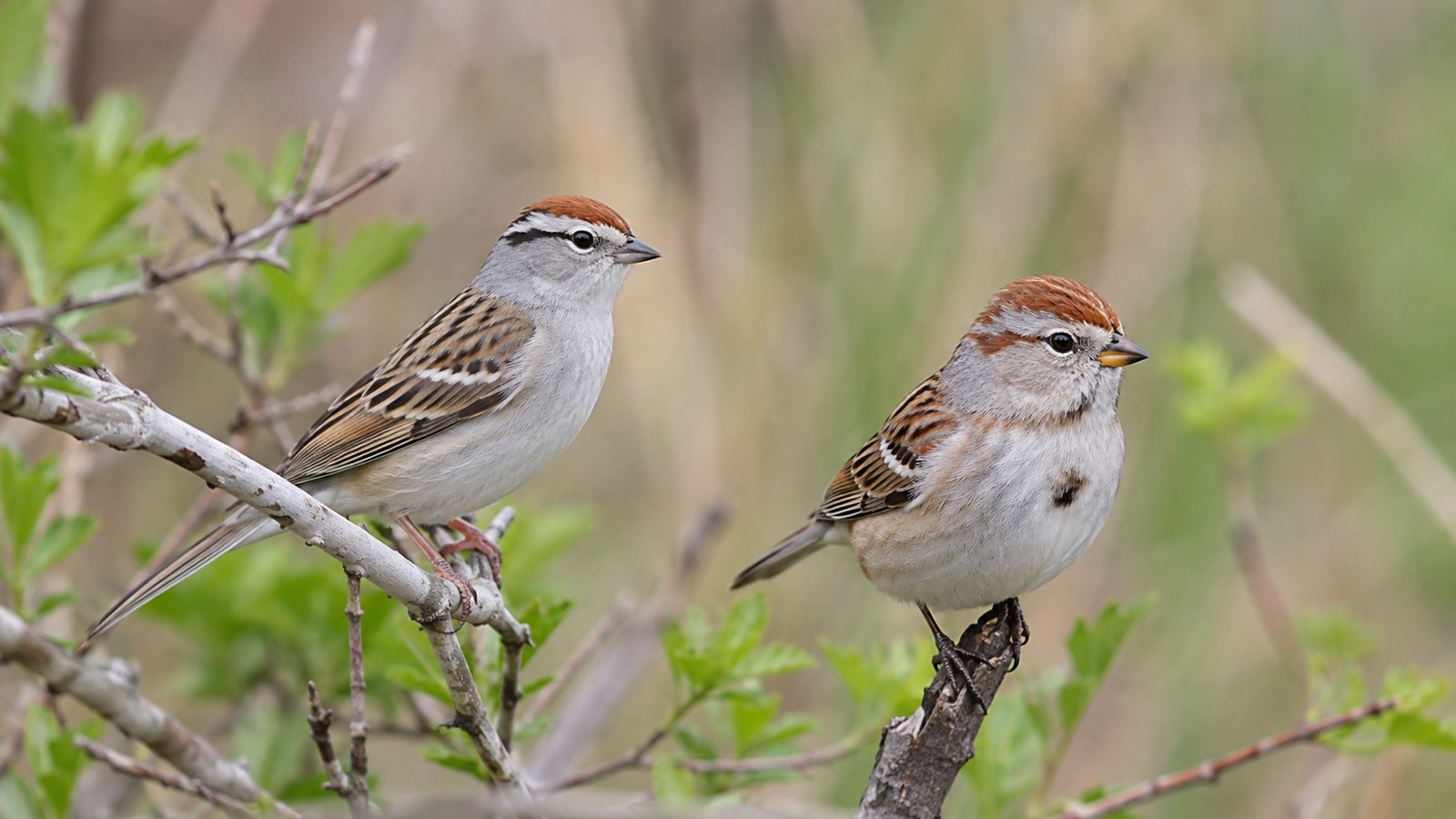
Why these two sparrows are confused
Fox Sparrows and Song Sparrows can both appear brown, heavily marked below, and active on the ground beneath shrubs or feeders. Both may scratch through leaves with both feet, and both vary greatly across Canada and the United States.
Compare the whole bird. Size, body depth, bill, tail, breast-marking shape, face pattern, feeding force, habitat, season, and voice provide a much safer identification than deciding that one bird simply looks more reddish.
Side-by-side comparison
| Feature | Fox Sparrow | Song Sparrow |
|---|---|---|
| Overall build | Large, chunky, round-bodied, and heavy for a sparrow | Medium-sized, fairly bulky, but slimmer and smaller than Fox Sparrow |
| Bill | Stout and heavy; colour can range from yellowish to dark grey | Short and stout but smaller; usually greyish |
| Breast marks | Heavy chevrons, arrowheads, or blotchy spots that may merge | Coarse linear streaks that often converge near the centre |
| Face | Often plainer or less crisply striped, depending on regional form | Usually shows a clearer stripe through the eye and broad dark moustache stripe |
| Tail | Medium length and broad, often matching the regional body colour | Long and rounded, contributing strongly to the bird’s proportions |
| Feeding | Powerful double-footed kicks through leaf litter | Hops and scratches in low vegetation and open ground |
| Habitat | Dense scrub, forest floor, thickets, mountain brush, and feeder edges | Gardens, marsh edges, shrub rows, overgrown fields, and woodland edges |
| Song | Rich, clear sequence of whistled notes | Several changing phrases, often beginning with spaced notes and ending in a buzz or trill |
Fox Sparrow is usually the larger bird
Fox Sparrows are large, round-bodied sparrows with sturdy legs and a heavy front end. Beside a Song Sparrow, the Fox Sparrow often looks deeper through the chest, fuller through the belly, and more powerful on the ground.
Song Sparrows are still substantial for small sparrows, but they usually look smaller, less round, and longer-tailed. Size is easiest to judge when the birds appear together or use the same feeder, rock, or branch.
Bill size and colour provide extra support
A Fox Sparrow has a stout bill that suits its powerful seed and ground-feeding habits. Depending on regional form, the bill may look yellowish, partly yellow, grey, or dark.
A Song Sparrow’s bill is shorter and smaller, usually appearing greyish. Bill colour changes with light, so compare thickness and length as well as shade.
Chevrons and blotches differ from coarse streaks
Fox Sparrow underpart markings often look like heavy arrowheads, chevrons, or broad spots. These marks can collect into dark blotches across the breast and flanks, giving the bird a strongly patterned appearance.
Song Sparrow marks are more likely to look like coarse lines or streaks. They may converge into a central breast spot, but the individual marks usually remain more linear than the Fox Sparrow’s heavy chevrons.
Look for the Song Sparrow eye line
Song Sparrows commonly show a clear reddish-brown line through the eye, grey areas on the face, crown stripes, and a broad dark moustache stripe beside the throat.
Fox Sparrow faces vary greatly. Some forms have obvious pattern, while others look comparatively plain or softly blended. A weak eye line doesn’t prove Fox Sparrow, but a strong classic Song Sparrow face can be a supporting clue.
Tail proportions change the silhouette
A Song Sparrow’s long rounded tail makes the bird look stretched behind the wings. Tail pumping may also be visible after a short flight or while the bird moves through cover.
A Fox Sparrow has a medium-length, broad tail that fits its rounder body. The bird often looks more compact and powerful even when exact plumage details disappear in shade.
Powerful leaf scratching is a Fox Sparrow signature
Fox Sparrows spend much of their feeding time on the ground. They jump or pull both feet backward to throw leaves aside, sometimes moving surprisingly large pieces of litter while searching for seeds and insects.
Song Sparrows can also scratch with both feet, so the behaviour isn’t exclusive. The Fox Sparrow’s larger body, heavier bill, repeated forceful kicks, and preference for dense cover make the complete pattern more convincing.
Habitat and season can narrow the choices
Fox Sparrows breed in northern forest, mountain scrub, and other dense habitats. Many observers farther south encounter them mainly during migration or winter, when they appear in thickets, forest edges, and beneath backyard feeders.
Song Sparrows use a wider variety of low, brushy habitats and may remain year-round in many regions. Gardens, marsh margins, stream edges, overgrown fields, and shrub rows are all typical settings.
Fox Sparrow regional forms look dramatically different
Bird guides commonly group Fox Sparrows into Red, Slate-coloured, Sooty, and Thick-billed forms. One may look bright rusty and heavily spotted, another grey and brown, and another very dark along the Pacific coast.
These differences make exact colour a weak first test. Look for a large round body, stout bill, heavy chevrons or blotches, strong ground scratching, habitat, range, and season.
Song Sparrows also vary across the continent
Song Sparrows have many described regional forms. Coastal and northern birds can be dark and heavily streaked, while birds in drier southern regions can be paler or smaller.
A dark Song Sparrow in the Pacific Northwest may look closer to a Sooty Fox Sparrow than a typical eastern field-guide portrait suggests. Body size, bill, facial pattern, tail, and marking shape should decide the comparison.
Sound can confirm a hidden bird
Fox Sparrow songs are rich and musical, often delivered as a sequence of clear whistled notes. The sharp call may be heard from dense scrub before the bird appears.
Song Sparrow songs vary locally but commonly combine spaced opening notes with several trills, buzzes, or changing phrases. A familiar local song can confirm a bird that’s only partly visible.
Winter feeder sightings are common opportunities
A Fox Sparrow may appear beneath a feeder rather than on it, especially when seed has fallen into leaves beside shrubs. Its large size and forceful scratching can make it stand out among smaller sparrows.
Song Sparrows also feed below feeders and around garden edges. Compare the birds directly when possible, and keep the ground clean so seed doesn’t become wet or spoiled.
Juveniles, wet feathers, and shade complicate colour
Young Song Sparrows can be buffy and strongly streaked. A wet bird may look darker and thinner, while a fluffed bird can look much larger than its normal shape.
Fox Sparrow forms already vary so much that weather and light add another layer of uncertainty. Use multiple photographs, body proportions, behaviour, habitat, and voice rather than forcing a colour match.
Photographs should preserve scale and posture
Take a photograph that includes the bird’s perch, nearby leaves, feeder base, or another familiar object. These references can help estimate size and body depth later.
A side view can reveal bill thickness, eye line, tail length, and whether breast marks are long streaks or broad chevrons. Keep the original file because heavy sharpening can change the apparent shape of markings.
What to check first
- Does the bird look large, round, and powerful or medium-sized and longer-tailed?
- Is the bill heavy and possibly yellowish or smaller and greyish?
- Are the breast marks chevrons and blotches or coarse linear streaks?
- Is there a strong Song Sparrow eye line and moustache stripe?
- Is the bird making powerful kicks through leaf litter?
- Does habitat and season favour a wintering Fox Sparrow or a local Song Sparrow?
- Confirm with regional form, sound, date, location, and several matching clues.
What to record during a brief view
- Large round or medium longer-tailed shape
- Heavy or moderate bill
- Yellowish or greyish bill colour
- Chevron spots, blotches, or linear streaks
- Strong or weak eye line
- Forceful scratching or lighter hopping
- Dense forest floor, feeder edge, marsh edge, or garden shrub
- Song, call, date, region, and nearby sparrows
Frequently asked questions
What should I look at first when comparing a Fox Sparrow and a Song Sparrow?
Fox Sparrows are usually larger, rounder, and heavier-billed, with bold chevron-shaped breast spots that can merge into blotches. Song Sparrows are smaller, longer-tailed, greyer-billed, and more linearly streaked.
Are all Fox Sparrows bright rusty red?
No. Fox Sparrows occur in several strongly different regional forms, including rusty, grey-brown, dark sooty, and thick-billed forms. Structure, bill, breast-marking style, behaviour, range, and season are more dependable than one colour.
Do Fox Sparrows and Song Sparrows both scratch in leaves?
Yes. Both may scratch with both feet, but Fox Sparrows are especially powerful leaf-litter feeders and often make conspicuous backward kicks beneath shrubs or feeders.
Can Fox Sparrows visit backyard feeders?
Yes. During migration and winter they may feed on the ground beneath seed feeders, especially where dense shrubs, leaf litter, or forest-edge cover is nearby.