
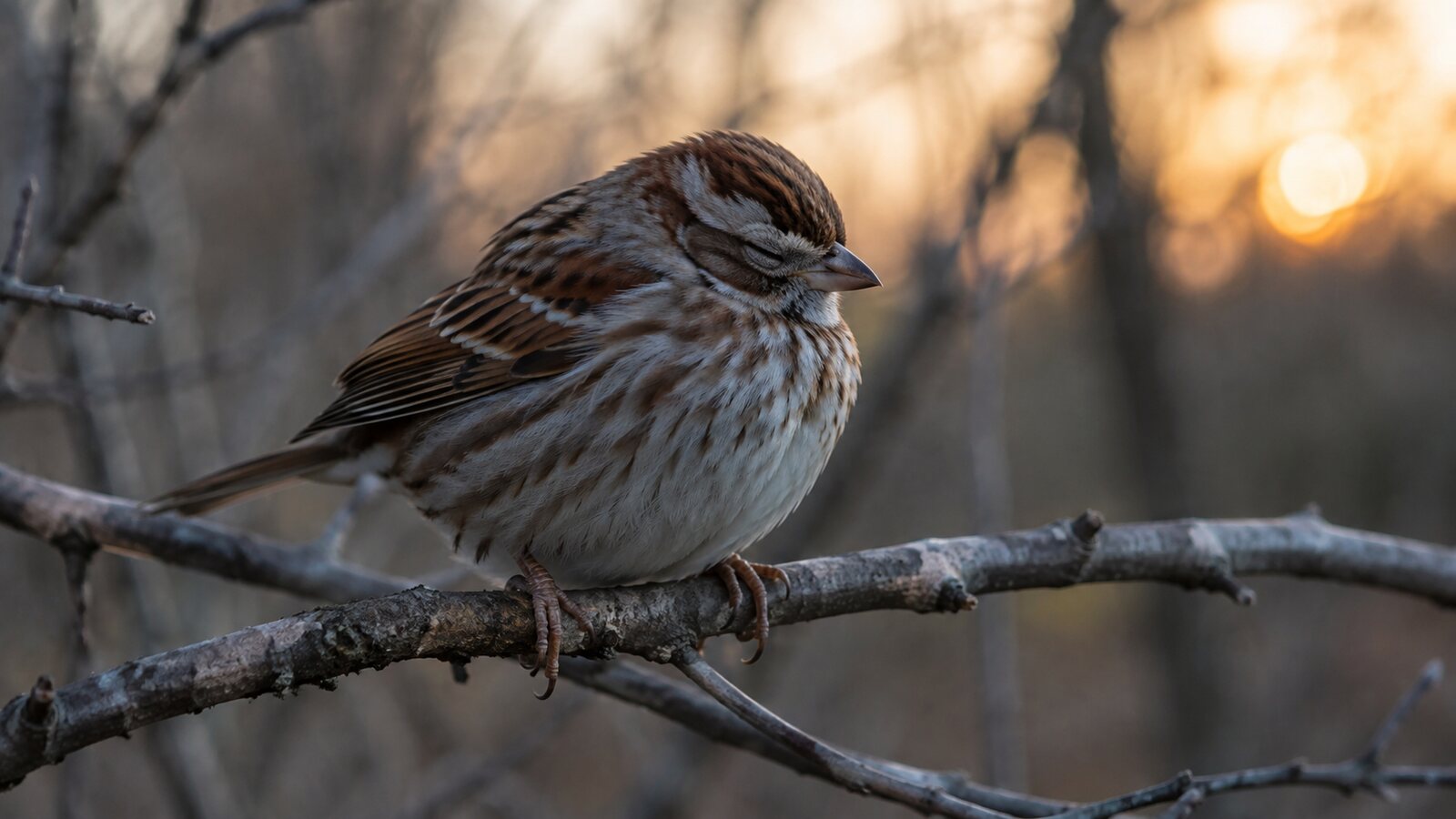
How the perching grip works
A bird’s toes are connected to muscles higher in the leg by tendons. As a perching bird lowers its body and bends the ankle and knee joints, tension in those tendons helps curl the toes around the perch.
Small ridges and rough surfaces inside parts of the system can help resist slipping in some birds. The details vary, so it is safer to describe an assisted grip than one identical mechanical lock in every species.
Balance still matters
The feet are only part of the answer. A bird keeps its body over the perch, settles into a stable posture, and chooses a branch that suits the size and shape of its feet.
A Song Sparrow can use a fairly narrow branch. A larger bird needs a stronger perch. Birds often choose sheltered branches rather than the most exposed tip of a tree.
Do birds lock their feet?
People often say a bird’s feet lock automatically. That is a handy shortcut, but it can sound more rigid than the real system. Tendon tension helps maintain the grip with little muscular work, while the bird can still adjust or release its toes.
This low-effort grip is useful for resting, but it is not the same in all birds. Feet have evolved for perching, climbing, swimming, grasping prey, or walking on different surfaces.
Not every bird sleeps on a branch
Ducks can sleep while floating. Shorebirds and geese may rest on the ground. Woodpeckers can cling to a vertical surface or use a cavity. Swifts may cling to walls or other upright surfaces.
See where different birds sleep for roosts in foliage, cavities, water, cliffs, reed beds, and buildings.
Why birds sometimes stand on one leg
A sleeping or resting bird may pull one foot into its feathers. That can reduce heat loss from bare legs and feet. The bird shifts its balance over the supporting leg and may switch legs later.
This is especially noticeable in water birds, but many perched birds do it too. The guide to why birds stand on one leg explains the warmth and rest connection.
Can birds fall while asleep?
A healthy bird on a suitable perch is unlikely to fall. Severe wind, a breaking branch, sudden disturbance, injury, or illness can still create problems. Birds reduce risk by choosing sheltered roosts and becoming alert quickly.
Sleep posture can look surprisingly relaxed, but the feet, balance system, and roost choice are all working together.
Frequently asked questions
Do birds lock their feet onto branches?
Not like a rigid padlock. Tendons help hold the toes curled as the legs bend, so the grip needs little effort.
Do birds ever fall while sleeping?
It is uncommon for a healthy bird on a good perch, though weather, injury, or a sudden disturbance can cause a fall.
Do all birds sleep standing on branches?
No. Birds also sleep on water, ground, ledges, vertical surfaces, and inside cavities.