
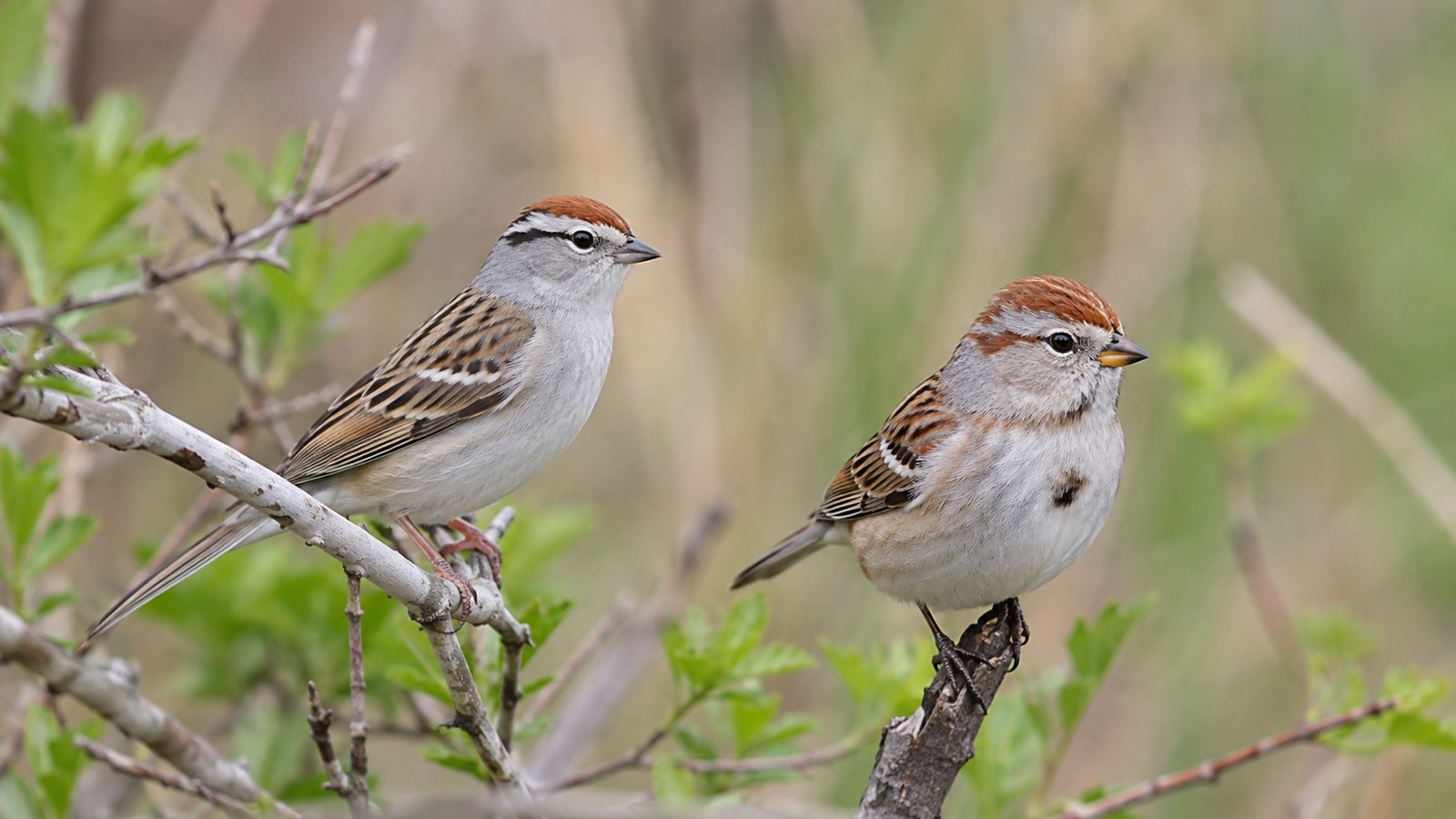
How to identify a Song Sparrow
Song Sparrows are fairly bulky sparrows with rounded heads, short sturdy bills, broad wings, and long rounded tails. Most show brown streaks on the chest and sides over a pale background.
The streaks often meet in a dark spot at the centre of the breast. That mark helps, but it is not present or clear on every bird. Use the face pattern, tail shape, habitat, voice, and behaviour together.
Regional birds can look surprisingly different. Pacific Northwest Song Sparrows are often darker and more heavily marked than birds from dry southwestern areas. Males and females look alike. Juveniles are streaked and can be difficult to separate from other young sparrows.
Size and similar sparrows
Song Sparrows are about 12 to 17 cm long, with a wingspan around 18 to 24 cm. They are slightly smaller than most Dark-eyed Juncos.
A Fox Sparrow is usually larger and more robust. A Savannah Sparrow tends to show a yellowish eyebrow and a shorter, notched tail. A House Sparrow has a different head pattern and a thicker bill. Use Fox Sparrow vs Song Sparrow or Song Sparrow vs House Sparrow for a closer comparison.
What does a Song Sparrow sound like?
The song usually begins with two or more clear notes, then breaks into trills, buzzes, and shorter phrases. A single male can learn several song types.
Songs vary by region and individual, so there is no one perfect written version. The call is often a short, nasal chimp.
What do Song Sparrows eat?
Song Sparrows eat seeds and fruit through much of the year. In spring and summer they also take insects and other small invertebrates, especially when feeding young.
They often scratch through leaf litter or pick food from low plants. Around feeders they may eat millet, cracked corn, and sunflower pieces that fall to the ground. Compare the best bird seed choices and sunflower-seed visitors.
Range, habitat, and migration
Song Sparrows occur across most of North America. Look along marsh edges, stream banks, brushy fields, hedges, gardens, and shrubby yards. They are often close to water but do not require it.
Some populations stay year-round. Birds from Alaska and northern Canada migrate farther south, while many birds from milder areas move little or not at all.
Nesting and behaviour
The female builds a cup nest on or near the ground, often hidden in grass, shrubs, or dense plants. Later nests may be placed higher. A clutch commonly contains three to five eggs.
Song Sparrows usually forage low and retreat into cover when disturbed. Males sing from exposed shrubs, fence posts, and other low perches.
Frequently asked questions
Do Song Sparrows visit feeders?
Yes. They often feed on the ground below a feeder, especially where millet or sunflower pieces have fallen.
Do male and female Song Sparrows look different?
They look much alike. Song and behaviour are usually more helpful than plumage for recognizing a male.
Do Song Sparrows migrate?
Some do. Northern populations migrate, while many birds in milder regions remain year-round.
More familiar birds
Compare the White-throated Sparrow, Dark-eyed Junco, or browse Common Birds.