
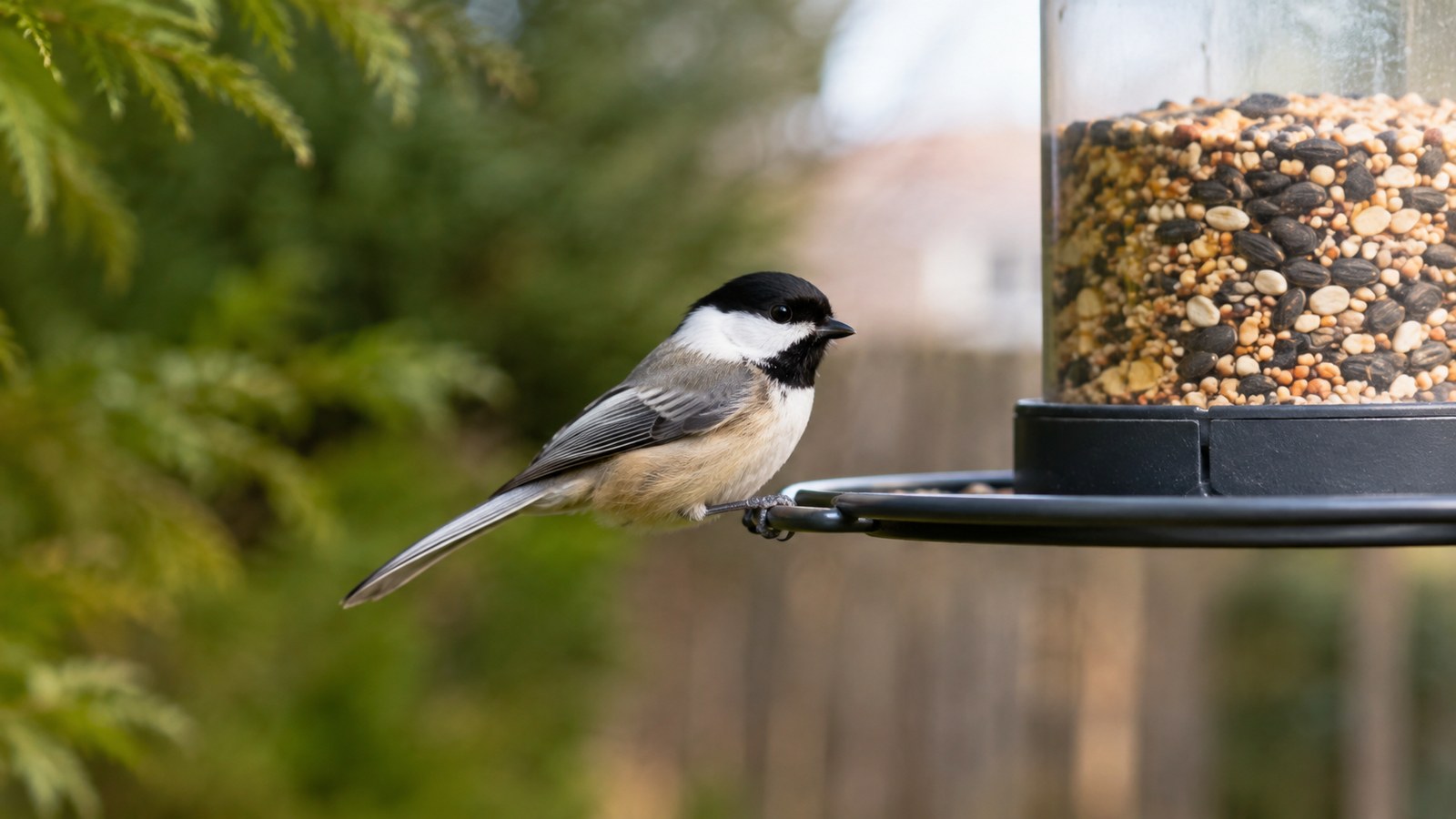
Do birds need feeders in summer?
Usually, no.
Summer can be one of the richest times of year for natural bird food. Insects are active. Plants produce seeds and fruit. Flowers offer nectar. Parent birds may be making constant trips to feed growing chicks.
A feeder adds another option. It does not replace that natural food web.
Why keep a feeder up in summer?
Because it is enjoyable, and birds may use it.
Summer feeders can bring adult birds, recently fledged young, and seasonal visitors into easy view. They can also make it easier to learn local species and watch changes in plumage and behaviour.
That is enough of a reason, as long as the feeder is managed safely.
Warm weather changes feeder care
Heat and moisture shorten the life of bird food.
Seed that gets wet can clump, sprout, or grow mould. Hulled seed spoils faster than seed protected by a shell. Cooked or moist food spoils faster still.
Do not fill a large feeder just because it has room. In summer, a smaller amount that birds finish quickly can be easier to keep fresh.
How often should a summer bird feeder be cleaned?
Project FeederWatch recommends regular cleaning of seed and suet feeders, roughly every week or two as a general routine, and more often during wet weather or heavy use.
If food is damp, mouldy, stuck together, or mixed with droppings, clean sooner.
Our bird feeder cleaning guide lays out an easy routine.
What about hummingbird feeders in summer?
They need much more attention.
Sugar water can ferment and grow mould quickly in warm weather. Project FeederWatch recommends cleaning hummingbird feeders every couple of days, and even more often during heavy use or warm conditions.
Use plain white sugar and water in the proper ratio. No red dye.
See how to make hummingbird nectar and how often to change it.
Should you put out suet in summer?
Be careful.
Traditional raw suet can soften, become rancid, and foul feathers in hot weather. Some commercial no-melt products are made for warmer temperatures, but any suet can spoil if heat is extreme or it sits too long.
If it looks or smells wrong, throw it away.
What should you feed birds in summer?
The same basic rule applies all year: choose food for the birds that visit your yard.
Black-oil sunflower seed works for many common feeder birds. Nyjer can attract finches. Peanuts are popular with jays, chickadees, nuthatches, and woodpeckers. Fruit suits some orioles, catbirds, robins, and waxwings.
And do not forget the insects.
Many nesting songbirds feed their chicks large numbers of caterpillars and other invertebrates. Native plants help support that food source in a way a seed feeder cannot.
What if bears live nearby?
This can change the answer completely.
Bird feeders can attract bears. Cornell specifically notes that people in bear country may need to remove feeders during warmer months, and wildlife agencies in many regions publish seasonal feeding rules or recommendations.
Follow the guidance for your province, state, park, or municipality. A bird feeder is not worth teaching a bear that homes provide food.
What if I see a sick bird?
Do not ignore it.
Birds crowding together can spread disease through direct contact, droppings, and contaminated surfaces. Clean feeders and bird baths more often. Depending on the illness and how many feeders are nearby, temporarily changing or removing your feeding setup may also be sensible.
Project FeederWatch now gives disease-specific guidance because different pathogens spread in different ways.
Should I feed birds or plant for them?
Do both if you enjoy both.
But if you have to choose, native plants can provide much more than seed. They support insects, fruit, nectar, shade, shelter, nesting sites, and seasonal cover.
A feeder is a food station. A good garden is habitat.
Frequently asked questions
Will summer feeding stop birds from finding natural food?
Most wild birds use many food sources and continue foraging naturally. A backyard feeder is normally supplemental rather than their entire diet.
Should I feed birds during nesting season?
You can keep a clean feeder up, but remember that many chicks need insects even when their parents also visit seed feeders.
Should I stop feeding birds before migration?
No. A feeder does not normally stop healthy migratory birds from leaving when their seasonal cues tell them to move.
Is a bird bath more important in summer?
Water can be especially attractive in hot, dry weather. Keep it shallow and clean, and replace the water often.
Keep reading
Read what birds eat in winter, the best birdseed for backyard birds, or return to Backyard Birds.