
Start small and watch what happens
The birdseed aisle can make backyard feeding seem more complicated than it needs to be. Bags may promise songbirds, cardinals, finches, woodpeckers, or an entire woodland gathering. The best test isn’t the picture on the package. It’s what the birds in your neighbourhood eat without leaving a pile of unwanted seed behind.
Robin and I prefer to start with one dependable food and learn from the visitors. One feeder is easier to keep fresh, clean, and adjust than several feeders filled with mixes we don’t know yet.
Black-oil sunflower seed suits many common birds
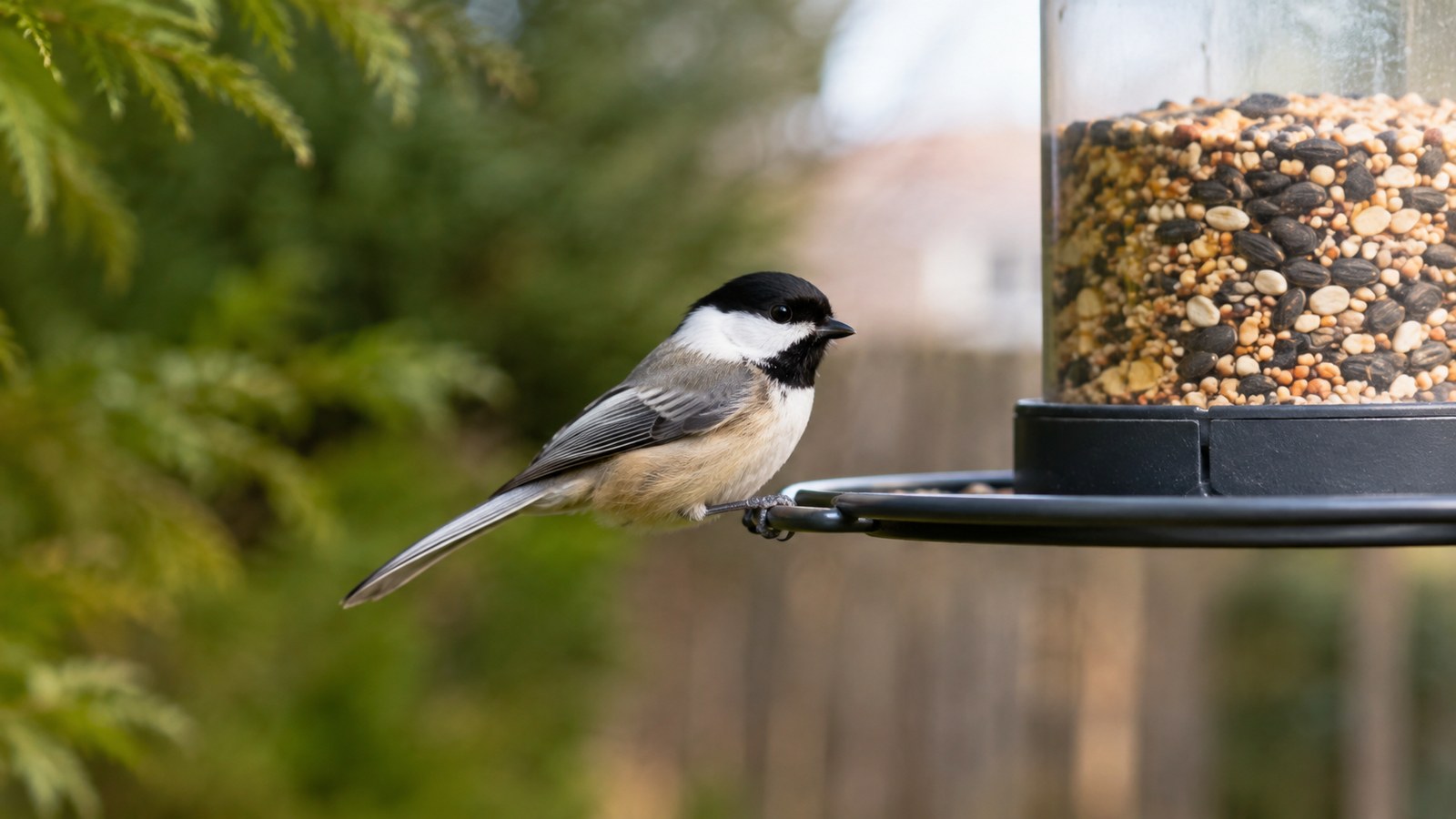
Black-oil sunflower is a good first choice for chickadees, cardinals, finches, nuthatches, grosbeaks, titmice, jays, and several other feeder visitors. The seeds are smaller than striped sunflower and have relatively thin shells, so many birds can open them. See which birds eat sunflower seeds for species links and feeder tips.
They do that without true teeth. Bills handle the food first, while the digestive system does much of the grinding later. The Bird Facts page do birds have teeth? explains the difference between a beak edge, an egg tooth, and a real tooth.
Whole sunflower seed creates hulls below the feeder and is also attractive to squirrels. Those drawbacks don’t make it a poor choice. They simply mean the feeding area needs regular cleanup and may need a baffle or well-designed feeder.
Sunflower hearts reduce shell waste
Sunflower hearts, chips, or kernels are sunflower seed with the hull removed. Birds spend less time opening them, and there are far fewer shells below the feeder. They work well where cleanup is difficult, such as a small patio or a carefully maintained garden.
Hulled seed costs more and loses the protection provided by the shell. It can spoil quickly when damp. Offer a modest amount, use a feeder with good drainage, and avoid filling a container so deeply that old food remains beneath fresh food.
Use other foods for particular visitors
No seed is best for every bird. The broad guide to what birds eat covers insects, fruit, nectar, nuts, prey, and other foods that do not belong in a seed mix.
| Food | Birds commonly attracted | What to know |
|---|---|---|
| Black-oil sunflower | Chickadees, cardinals, finches, nuthatches, grosbeaks, titmice | A dependable first choice. Expect shells and squirrel interest. |
| Sunflower hearts | Many of the same birds that eat whole sunflower | Less mess, but more expensive and quicker to spoil when wet. |
| Safflower | Cardinals, finches, chickadees, doves | Some unwanted visitors may show less interest, but results vary by yard. |
| Nyjer | Goldfinches, Pine Siskins, redpolls | Use a fine-mesh or small-port feeder and buy small, fresh quantities. |
| White proso millet | Dark-eyed Juncos, native sparrows, towhees, doves, quail | Best in a low tray or in small ground-feeding amounts that are removed promptly. |
| Peanuts | Jays, woodpeckers, nuthatches, chickadees | Use fresh, unsalted peanuts in a suitable feeder. Discard any that smell stale or look mouldy. |
| Suet | Woodpeckers, nuthatches, chickadees, wrens | Use food made for wild birds and monitor it closely during warm weather. See birds that eat suet. |
| Cracked corn | Doves, quail, jays, some sparrows and blackbirds | Can attract rodents and larger flocks. Offer only what is eaten quickly. |
Safflower can help, but it’s not a guarantee
Safflower is often promoted as a seed that cardinals enjoy while squirrels and some blackbirds avoid. That can happen, but animals learn and local preferences vary. Treat safflower as another option to test, not as a guaranteed solution to every feeder problem.
Some birds may need time to recognize it. If you switch from sunflower to safflower, make the change gradually and watch whether regular visitors continue eating.
Nyjer is for a narrower group of birds
Nyjer is a small seed commonly offered to goldfinches, Pine Siskins, and redpolls. It needs a feeder with tiny openings or fine mesh. It’s not the best general seed for every backyard, but it can be very effective where these finches are present.
Nyjer can dry out and become less appealing even when it still looks normal. Buy a small bag, keep it dry, and replace it when finches inspect the feeder but don’t eat.
Millet works best when it matches local birds
White proso millet appeals to several ground-feeding birds, including juncos, sparrows, towhees, doves, and quail. It’s often included in mixes, but the feeding method matters. A low tray or a very small amount on clean ground makes it easier to see whether birds are eating it.
Don’t scatter more than birds can finish quickly. Food left on damp ground can spoil, attract rodents, and contribute to seedlings beneath the feeding area.
Peanuts and suet add variety
Fresh unsalted peanuts can attract jays, woodpeckers, nuthatches, and chickadees. A feeder designed for peanuts controls access and keeps large pieces from falling everywhere. Never offer seasoned, candy-coated, or salty nuts.
Suet works well for birds that eat insects and other high-energy foods. Choose suet or a suet-style product made for wild birds. Check it frequently during warm weather and replace anything that’s softened excessively, become dirty, or developed an unusual smell.
Read the ingredients on mixed birdseed
A mixture can be convenient when its ingredients suit your local birds. The problem comes when birds throw unwanted seed aside to reach the few pieces they prefer. That waste can collect under the feeder, become wet, and make cleanup harder.
Look at the ingredient list rather than the front label. Watch what remains in the tray and what accumulates below. A smaller bag filled with seed birds actually eat may cost less in practice than a large inexpensive bag that’s mostly discarded.
Match food to the feeder
A good seed can still fail in the wrong feeder. Sunflower works in many tube, hopper, and platform feeders. Nyjer needs smaller openings. Peanuts need mesh or openings designed for their size. Ground-feeding foods should be offered in a way that keeps quantities limited and makes old food easy to remove.
Drainage matters for every feeder. Food shouldn’t sit in rainwater or remain packed in damp corners. A feeder that comes apart easily is more valuable than a complicated design you avoid cleaning.
Store birdseed as carefully as you serve it
Keep seed cool, dry, and protected from insects and rodents. A secure container helps, but seed should be dry before it goes inside. Moisture trapped in a sealed bin can spoil an entire supply.
Buy an amount that matches your actual feeder use. A large bargain bag stops being a bargain when it sits in storage for months. Check for clumping, webbing, insects, musty smells, or visible mould before refilling a feeder.
Choose food by season and region
Bird communities differ across North America. A food that brings cardinals in the East may serve a different mix of finches, jays, or sparrows in the West. Migration and natural food crops also change feeder activity through the year.
Use general advice as a starting point, then keep notes about your own yard. Record the seed, feeder type, date, weather, and birds seen. Your observations will soon become a better buying guide than a colourful package.
Foods to leave off the menu
- Bread as a regular food source
- Salty, seasoned, fried, or sugary foods
- Seed that’s damp, mouldy, clumped, or stale
- Large amounts of food left on wet ground
- Unknown leftovers that weren’t made for wild birds
- Any food local wildlife authorities advise against during a disease concern
Identify woodpeckers that visit the feeding area
Suet, peanuts, sunflower, mature trees, and nearby woodland can bring several woodpeckers into view. Use the common backyard woodpecker guide, then compare Downy and Hairy Woodpeckers by bill proportion, size reference, tail markings, voice, and feeding position.
Frequently asked questions
What is the best birdseed if I buy only one kind?
Black-oil sunflower seed is the most reliable all-around starting choice for many North American feeder birds because its thin shell is easy for many species to open.
Is cheap mixed birdseed worth buying?
It can be, but only when local birds eat most of the ingredients. A low price isn’t a bargain when birds discard much of the mix and the leftovers collect below the feeder.
Does birdseed go bad?
Yes. Moisture, heat, insects, and long storage can spoil seed. Buy an amount you can use while it’s fresh and keep it in a dry, secure container.
Can I feed birds bread or salty snacks?
Bread and processed salty foods aren’t good substitutes for natural foods or birdseed. Our can birds eat bread? guide explains why an occasional crumb is different from making bread a regular food.
Use feeder visitors as identification practice
Fresh seed may bring House Finches, American Goldfinches, Pine Siskins, Redpolls, or irregular grosbeaks. Use the common backyard finch guide, then compare Evening and Pine Grosbeaks or Redpoll and Pine Siskin.
Cold weather changes the energy equation
Winter birds use food calories to fuel the body heat their feathers help retain. Read how birds stay warm in winter for the connection between feeding, insulation, and cold nights.
Sources and further reading
- Cornell Lab: guide to birdseed types
- Project FeederWatch: feeding birds safely
- U.S. Fish and Wildlife Service: feeding wild birds
For species-specific feeder habits, see our guides to the Blue Jay, Northern Cardinal, Black-capped Chickadee, and Mourning Dove.