
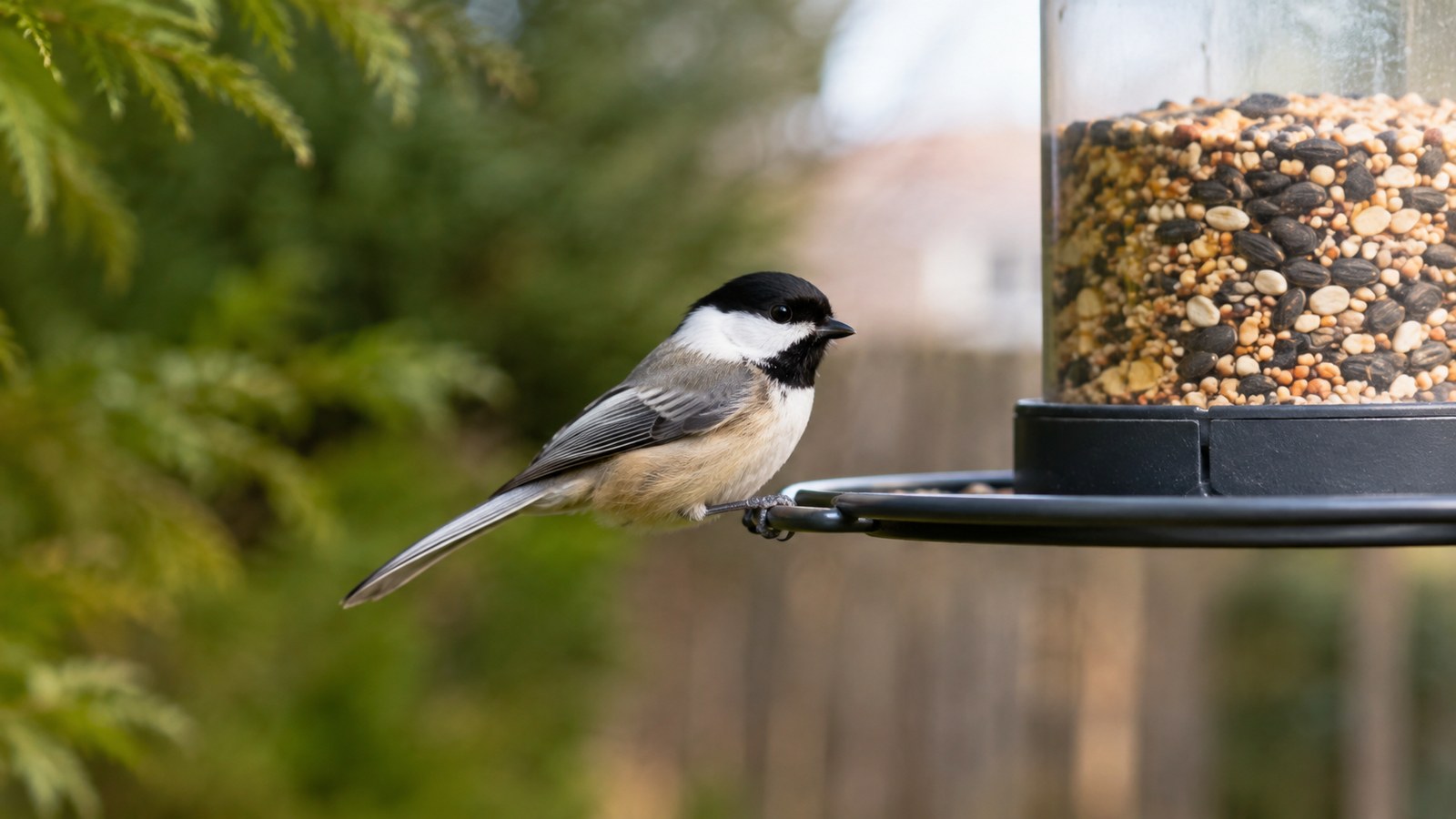
Use the calendar and the feeder itself
A two-week schedule is a good reminder, but it’s not permission to ignore a dirty feeder until cleaning day. Conditions can change quickly. A storm may drive rain into the food, a busy flock may leave droppings on a tray, or seed may become packed in a damp corner.
The best routine combines a regular cleaning date with a quick inspection every time you refill. Robin and I find that a small check each time is much easier than dealing with a feeder that’s been neglected for weeks.
Clean more often in wet or warm weather
Moisture is one of the biggest feeder problems. Wet seed clumps, blocks ports, and can spoil. Warm conditions can speed that process. A feeder that stays dry in winter may need much more attention during a rainy spring or humid summer.
After heavy rain, look into the bottom and corners rather than judging only the top layer. Empty the feeder when food smells musty, feels damp, sticks together, or shows any visible mould.
Busy feeders need more attention
A feeder used by a few birds is different from one visited by a large flock. More birds mean more contact with perches and ports, more seed hulls, and a greater chance of droppings landing on feeding surfaces.
During a busy period, a weekly cleaning may be more realistic than waiting two weeks. Platform and tray feeders often need especially frequent attention because food is exposed and birds can stand directly among it.
Clean immediately when you see warning signs
- Seed is wet, clumped, sprouting, or mouldy.
- Food has an unusual or musty smell.
- Droppings are on the tray, ports, roof, or perches.
- Seed is packed around openings and won’t flow.
- Insects, webbing, or larvae appear in the food.
- The feeder has algae, slime, or dark residue.
- Several birds are crowding into a dirty feeding space.
- A bird appears unusually weak, unsteady, or visibly unwell.
A straightforward feeder-cleaning routine
- Take the feeder down. Move it away from the active feeding area before opening it.
- Discard old food. Don’t place damp or questionable seed back into storage.
- Take the feeder apart. Remove trays, perches, roofs, and other pieces when the design allows.
- Remove dry debris. Use a dedicated brush to clear hulls and packed seed from corners and ports.
- Wash every surface. Use hot soapy water and a brush reserved for bird-feeding equipment.
- Rinse thoroughly. No soap or cleaning residue should remain.
- Use extra disinfection when appropriate. Follow the feeder maker's directions and current wildlife-agency guidance. Never mix cleaning products.
- Let every part dry completely. Reassemble and refill only when no moisture remains.
- Clean the ground below. Sweep or rake away hulls, old seed, and droppings.
- Wash your hands. Clean up after handling feeders, waste, and outdoor tools.
Keep feeder tools away from food preparation
Use a brush, gloves, and container dedicated to feeder care. Clean the feeder outdoors or in a utility area rather than beside dishes or food. Keep birdseed containers and cleaning tools away from kitchens and eating surfaces.
Children can enjoy watching birds and helping record visits, but an adult should handle dirty feeder equipment and any cleaning product.
Tube feeders hide debris in small spaces
Tube feeders can look clean from a distance while damp seed remains around the lowest ports. Take the tube apart when possible and use a narrow brush to reach the base, ports, and seams.
Make sure drainage holes are open. When food repeatedly becomes damp in the same location, the feeder may need a better rain guard or a more sheltered position.
Platform and tray feeders need frequent surface cleaning
Open trays are easy for many birds to use, but food and droppings can share the same surface. Remove leftovers frequently and wash the tray whenever it becomes soiled. During wet weather, offer only a small amount that birds can finish quickly.
A tray with good drainage is better than one that holds water. Screens or removable bases can make routine cleaning easier.
Hopper feeders can trap old food at the bottom
A hopper may appear full and dry at the top while older seed remains packed below. Empty it completely during cleaning instead of continually topping it up. Inspect the lowest corners and the area where seed enters the tray.
Rotate stored food so the oldest suitable seed is used first, but never mix fresh seed into damp or questionable leftovers.
Suet feeders have their own rhythm
Suet cages and holders collect crumbs, feathers, and residue. Inspect them at each refill and wash them regularly. Clean sooner when suet becomes soft, greasy, dirty, or exposed to prolonged warmth.
Use products intended for wild birds and follow the maker's storage guidance. Don’t leave spoiled food hanging simply because some remains.
Hummingbird feeders need more frequent attention
Nectar feeders should be emptied and cleaned whenever the sugar water is changed. Our guide to changing hummingbird nectar uses every other day as a dependable routine, with immediate replacement whenever heat, mould, insects, cloudiness, or debris create a concern.
Use the measured recipe in how to make hummingbird nectar. Never top up old nectar with a fresh batch.
Ground-feeding areas count as feeders too
Seed scattered on the ground can mix with soil, rain, droppings, and old food. Offer only a small amount and remove leftovers. A low tray that can be washed is often easier to manage than repeatedly throwing seed into the same patch of soil.
Rotate the location when the ground becomes muddy or heavily used. Watch for rodents and stop offering ground food when it can’t be kept clean.
Clean the area below the feeder
A spotless feeder above a layer of old hulls and droppings is only half clean. Sweep patios, rake soil or gravel, and remove decomposing food. Seed catchers help, but they also need washing.
If one small area is difficult to maintain, consider moving the feeder to a surface that can be cleaned more reliably. Our guide to stopping birdseed from sprouting explains ways to reduce the amount reaching the ground.
What to do when a bird appears sick
Don’t try to diagnose or treat a wild bird at the feeder. Remove the feeder being used, discard the food, clean the equipment and surrounding area, and check current guidance from your provincial, state, or local wildlife authority.
Recommendations can change with the illness and location. A temporary pause allows birds to spread out and prevents a crowded feeding point from becoming part of the problem.
Make cleaning easier before buying a feeder
The best feeder isn’t only attractive or squirrel-resistant. It should also open easily, have reachable corners, drain well, and tolerate repeated washing. A beautiful feeder that can’t be cleaned properly will become frustrating.
Before buying, imagine removing wet seed from the lowest corner. If the design makes that simple, regular care is much more likely.
A realistic maintenance schedule
| When | What to do |
|---|---|
| Every refill | Inspect food, ports, perches, tray, drainage, and the ground below. |
| At least every two weeks | Empty, take apart, scrub, rinse, dry completely, and clean below. |
| Weekly or more often | Use this schedule during heavy use, rain, heat, or repeated contamination. |
| Immediately | Clean after wet food, mould, droppings, insects, blocked ports, or a sick bird. |
Identify woodpeckers that visit the feeding area
Suet, peanuts, sunflower, mature trees, and nearby woodland can bring several woodpeckers into view. Use the common backyard woodpecker guide, then compare Downy and Hairy Woodpeckers by bill proportion, size reference, tail markings, voice, and feeding position.
Frequently asked questions
How often should a seed feeder be cleaned?
A good baseline is at least once every two weeks. Clean sooner during wet weather, heavy use, visible contamination, or a local bird-health concern.
Should I clean a feeder every time I refill it?
You do not need a full wash at every refill. Still, check the food, remove damp debris, clear blocked openings, and clean the feeder right away when it is dirty.
Can I refill a feeder while it’s still damp?
No. Let the feeder dry completely before adding fresh food because moisture encourages seed to clump and spoil.
What should I do if I see a sick bird?
Take down the affected feeder, clean the feeder and the area below it, and follow current advice from your provincial, state, or local wildlife authority before resuming feeding.
Notice which finches share the feeder
Cleaning time is a good opportunity to review the visitors you recorded. The common backyard finch guide compares eight species, while Evening vs Pine Grosbeak and Redpoll vs Pine Siskin cover irregular winter visitors.
Warm weather needs a little more attention
Heat and moisture can make food spoil faster. If you keep feeding through warm weather, see should you feed birds in summer? for seed, suet, nectar, and bear-country considerations.