
12 wonderfully strange North American birds
1
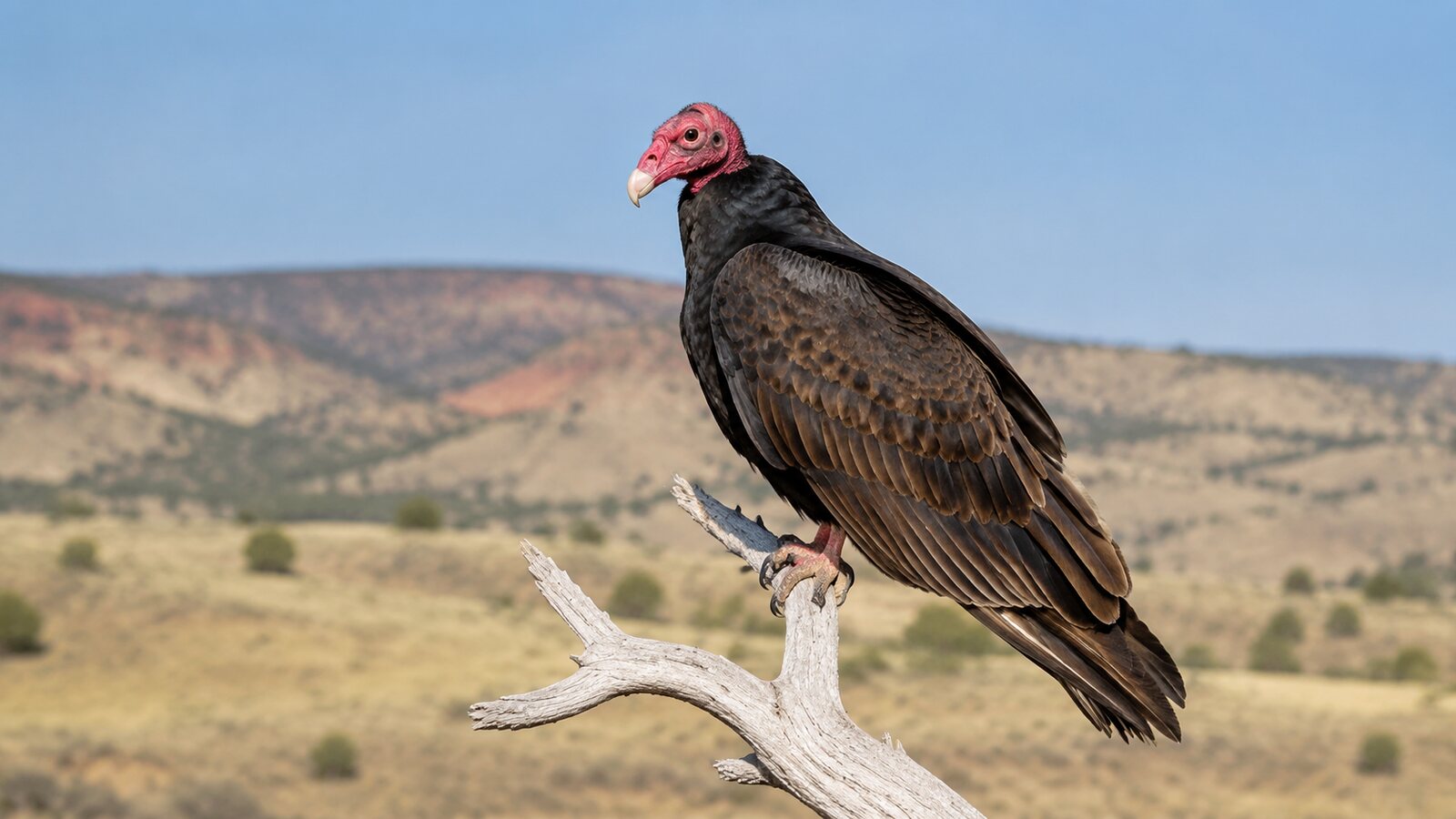
Turkey Vulture
Bare head and huge wings
A Turkey Vulture has a wrinkled red head, a hooked pale bill, and long dark wings held in a shallow V. Up close, it may land on someone’s “ugliest bird” list. In the air, it becomes one of the most graceful birds on the continent.
The bare head is practical for a scavenger that feeds inside carcasses.
2
Wood Stork
Bald, scaly head
Adult Wood Storks have white bodies, black flight feathers, and bald gray-black heads with thick down-curved bills. The head can look as if it belongs to a reptile.
That heavy bill is a feeding tool. The bird sweeps it through shallow water and snaps it shut when prey touches it.
3
Roseate Spoonbill
A bill shaped like a spoon
Pink plumage is only the beginning. The Roseate Spoonbill has a long bill that widens into a flat rounded tip.
It swings the partly open bill from side to side through shallow water, using touch to find small fish, crustaceans, and other food.
4
Greater Sage-Grouse
Inflatable chest sacs
Most of the year, a male Greater Sage-Grouse is a large mottled bird with a pointed tail. During courtship, he fans that tail, raises spiky neck feathers, and inflates two yellow-green air sacs on his chest.
The display is meant to be seen and heard across open sagebrush country.
5
Magnificent Frigatebird
Red throat balloon
A displaying male Magnificent Frigatebird inflates a bright red throat pouch until it looks like a balloon under the bill. Its deeply forked tail and extremely long narrow wings add to the shape.
Females judge the display from above while males gather in groups below.
6
American Coot
Lobed greenish feet
An American Coot looks a little like a dark duck until it steps onto land. Instead of webbed feet, each long toe carries broad separate lobes.
The lobes push against water while swimming and fold back as the bird lifts its foot, giving the coot traction without a full web.
7
Wild Turkey
Wattles, snood and bare skin
A male Wild Turkey has a fleshy wattle on the throat, a snood hanging over the bill, and bare head skin that can shift in colour. Add a fanned tail and puffed body feathers and the result is hard to mistake.
Those strange features are part of courtship and social display.
8
Pileated Woodpecker
Flaming crest and long bill
The Pileated Woodpecker looks almost prehistoric. It has a tall red crest, strong black-and-white face pattern, long chisel bill, and a body close to crow size.
Its shape fits the job: tearing into large dead wood for carpenter ants and carving deep nest cavities.
9
Greater Roadrunner
Long legs and shaggy crest
A Greater Roadrunner is built like a small ground-running dinosaur. It has long legs, a long tail, a raised crest, a heavy bill, and bare blue and orange skin behind the eye.
It can fly, but much of its hunting happens while running through dry country.
10
American White Pelican
Seasonal bill horn
An American White Pelican already has an enormous orange bill and pouch. Breeding adults grow a flat vertical plate on the upper bill, often called a horn.
The temporary growth falls off after breeding. Both males and females can have it.
11
Anhinga
Snake-like neck
An Anhinga often swims with most of its body underwater and only the long neck and head showing. That is why it is sometimes called a snakebird.
After diving for fish, it may perch with its wings spread to dry. The long pointed bill gives the whole bird a sharp, unusual outline.
12
Common Poorwill
Mouth wider than it looks
At rest, a Common Poorwill is a small mottled bird with a tiny-looking bill. Open the mouth and the gape is remarkably wide, an adaptation for catching insects in flight.
Its large eyes, short bill, soft pattern, and flattened resting posture help it disappear against dry ground.
Why birds evolve odd-looking features
A strange body part is often a clue. Bills match feeding methods. Feet match water, branches, ground, or prey. Bare skin can help with hygiene or display. Long feathers and inflatable sacs can advertise a bird to potential mates.
That is why shape is so valuable when identifying birds. The guide to bird size and shape covers bills, legs, wings, tails, posture, and silhouette. Our page on why birds have different beaks goes deeper into feeding and adaptation.
Ugly on land, beautiful in flight
Turkey Vultures are the best example. A perched bird can look hunched and awkward. In flight, the same bird holds long wings in a shallow V and rocks gently while riding rising air. It can travel with very little flapping.
Pelicans, storks, and frigatebirds also change completely once airborne. A list based only on close-up faces misses half the bird.