
Which birds are most likely to reuse a nest?
Birds that invest heavily in large, long-lasting structures have the strongest reason to keep them. Bald Eagles and Ospreys are familiar North American examples. A pair may return to the same nest and add fresh sticks or other material before breeding again. Our Bald Eagle species guide covers those huge nests in more detail.
Some herons, hawks, storks, and other large birds may also reuse nests or nesting structures, depending on the species and whether the old site remains safe.
For these birds, rebuilding an enormous platform from nothing every spring would be costly. Repairing a proven structure can save time and energy.
Why don’t most small birds reuse old nests?
A little cup nest is built for a very different job. After weeks of rain, sun, wind, droppings, growing chicks, and daily traffic, it may be worn, misshapen, or partly falling apart.
Old nesting material can also contain mites, fleas, blow fly larvae, bacteria, fungi, and other organisms. Starting with fresh material may reduce some of that carryover.
Predators are another part of the picture. A nesting attempt that was discovered once may not be a good place to try again. Moving even a short distance can change cover, access, and the chance of being found.
Do birds return to the same nesting spot?
Very often, yes. This is where the question gets confusing.
A robin may return to the same porch, beam, shrub, or section of yard because the location worked before. A bluebird may return to the same nest box. A swallow may return to the same building. But the bird can still add fresh material or build a new nest within that familiar site.
Biologists call repeated attachment to a place site fidelity. It is not the same as using the exact same nest.
Do birds use the same nest every year?
There is no rule that covers all birds. The answer depends on how the species nests.
- Eagles and Ospreys: often return to durable stick nests and add to them.
- Many songbirds: usually build a new nest, even if they return to the same territory.
- Cavity nesters: may reuse the same cavity or nest box while replacing the nesting material inside.
- Woodpeckers: many species excavate fresh cavities, leaving old holes that become valuable homes for other wildlife.
- Birds that take over nests: some species use structures built by another bird rather than constructing their own from scratch.
The safest answer to “Will that bird come back next year?” is that it might return to the area, but you should not assume it will use the old nest.
Do birds reuse nests for a second brood?
Sometimes, but not always. Birds that raise more than one brood in a season may reuse a nest, repair it, or build another one nearby.
American Robins, for example, can raise multiple broods. A female may build a fresh nest for the next attempt even while the male is still helping feed recently fledged young from the first brood.
A good nesting site can therefore stay busy for much of spring and summer without the exact same cup being used every time.
Do birds reuse nest boxes?
Yes, many cavity-nesting birds return to the same nest box or another box nearby. That does not necessarily mean they keep the old nesting material.
Bluebirds, chickadees, wrens, Tree Swallows, and other cavity nesters may use boxes when the size, entrance, habitat, and placement suit them. Old nest material is often removed after the breeding season as part of normal nest-box management, but the best timing and cleaning approach depends on the species and location.
If you have an active box, leave it alone apart from careful monitoring practices designed for that species.
Can one bird use another bird’s old nest?
Yes. Nest structures can become part of the local housing market.
Great Horned Owls are famous for using old hawk, crow, raven, or squirrel nests rather than building a typical nest themselves. Cavity nesters also benefit enormously from holes excavated by woodpeckers in earlier seasons.
Sometimes a nest is not reused by the bird that built it but still becomes valuable habitat for another animal.
Do hummingbirds reuse nests?
Hummingbird nests are tiny, flexible, and exposed to weather. Females generally build a new nest for a new breeding attempt, although they may return to a successful area and may reuse some material.
That distinction matters. Seeing a hummingbird nesting in the same tree two years in a row does not prove it has returned to the exact same nest.
Do robins reuse nests?
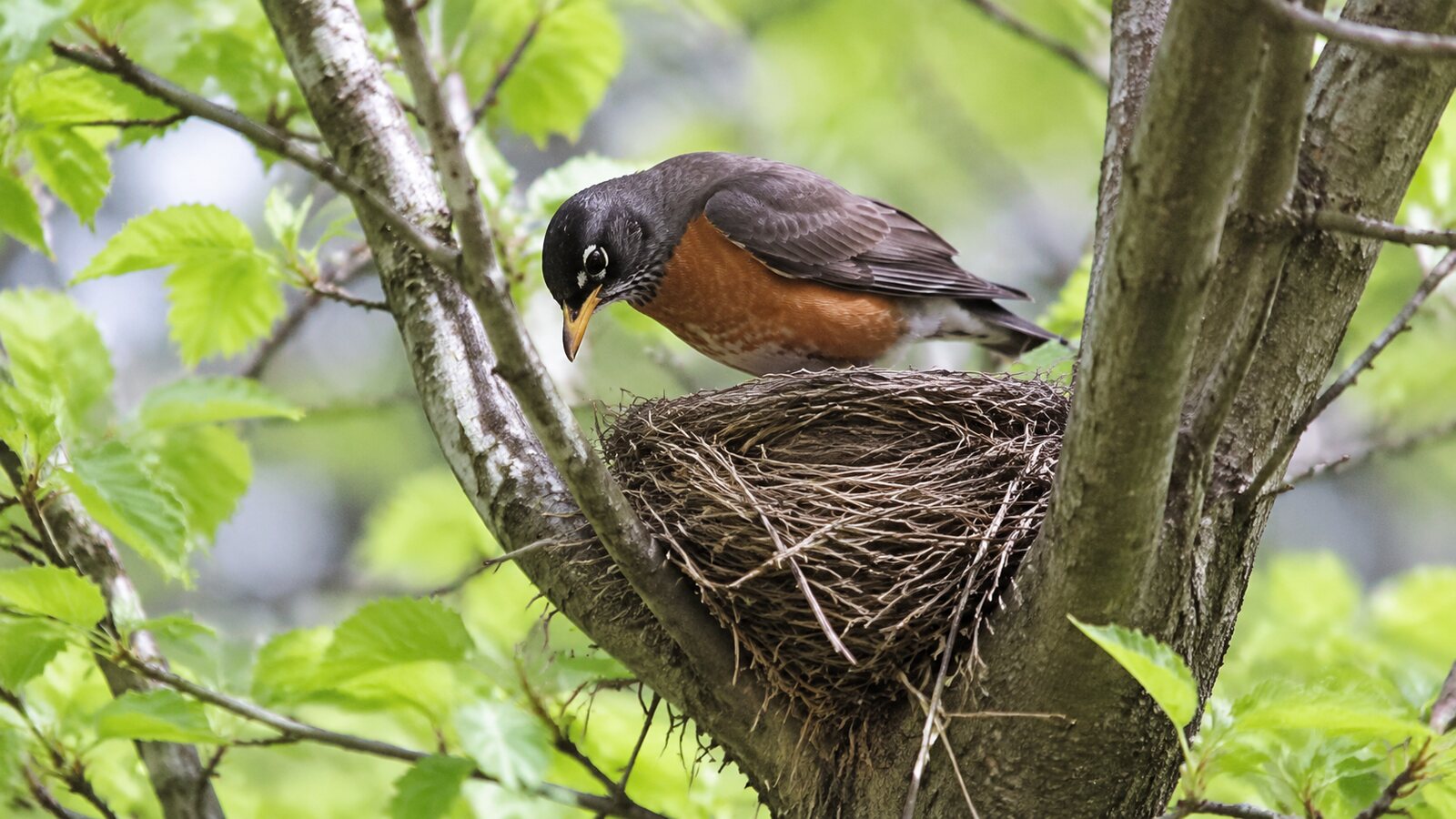
American Robins usually build a new nest for each nesting attempt, but they can be very loyal to a good location. You may see a robin place a new cup on the same porch feature, ledge, or tree fork used earlier.
In some cases a new nest can be built on top of old material, which makes it look as though the old nest itself was reused.
Should I remove an old bird nest?
First make absolutely sure it is inactive. Birds can be quiet around a nest, and young birds may remain dependent even after they start leaving it.
In Canada, federal rules protect migratory bird nests when they contain a live bird or viable egg, and some species that reuse nests receive additional year-round nest protection. In the United States, many migratory bird nests, eggs, and birds are protected under federal law, with rules that depend on whether the nest is active and the species involved.
If the nest is in a place where removal matters, such as a vent, construction area, or structure that must be repaired, check current federal, provincial, territorial, state, and local guidance first. Do not rely on the fact that you have not seen a bird for one afternoon.
Can I collect an empty bird nest?
Be careful. In the United States, possessing the nest of many native migratory birds without authorization can be illegal even if you found it empty. Canadian rules also vary with the species and type of nest protection.
For most backyard bird watchers, the easiest choice is to leave wild nests where they are and enjoy them without collecting them.
How can I tell if a nest is active?
Watch from a respectful distance rather than walking up to inspect it repeatedly. Adults carrying nesting material, food, or fecal sacs are strong signs of activity. An adult sitting quietly for long periods may be incubating eggs.
Do not assume a nest is abandoned because the adults disappear when you approach. Your presence may be the reason they are staying away.
Frequently asked questions
Do birds reuse nests?
Some do. Large birds with durable nests often reuse them, while many songbirds build fresh nests for new breeding attempts.
Do birds use the same nest every year?
Some species do, but many birds return to the same area rather than the exact same nest.
Do robins reuse nests?
Robins usually build new nests, although they may reuse a successful location and occasionally build over old nest material.
Why do birds build new nests?
A fresh nest can be sturdier, cleaner, and less burdened by parasites. It may also put the next brood in a less predictable place for predators.
Keep following the nesting cycle
Learn how birds build nests, then continue with how long bird eggs take to hatch and why eggs or chicks may be removed or displaced.