
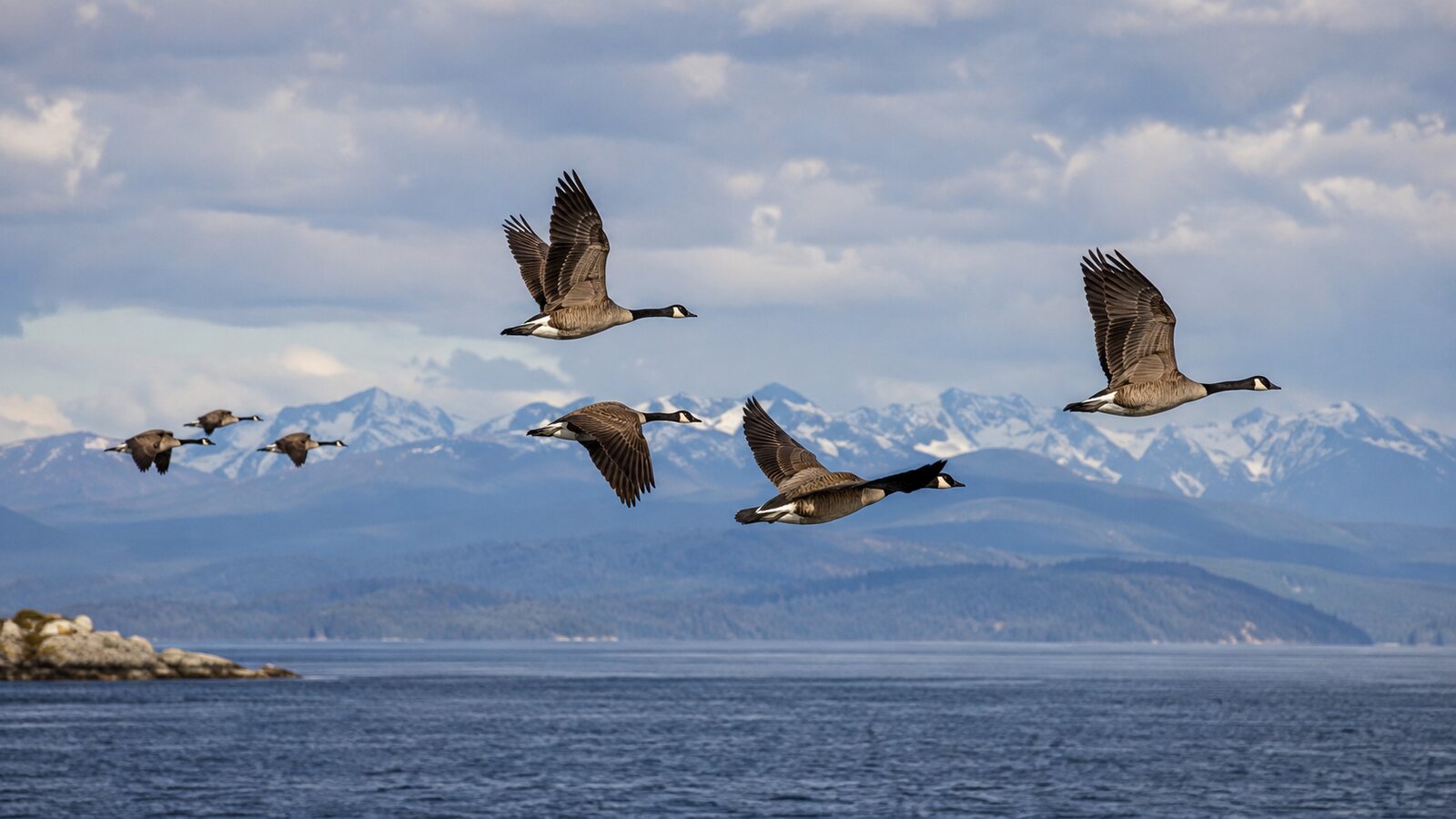
Short-distance migration
Some birds make modest seasonal shifts. They may move south within the same country, leave a high elevation for lower ground, or move from inland habitat toward a milder coast.
Even within one species, northern populations may travel farther than southern populations. Some American Robins move long distances, while others remain wherever open ground and fruit stay available.
Long-distance migration
Many North American songbirds spend winter in Mexico, Central America, the Caribbean, or South America. A Ruby-throated Hummingbird may cross the Gulf of Mexico during a much longer seasonal journey. Common Yellowthroats also connect northern breeding areas with southern winter habitat.
Most birds travel in stages
Migration is usually a series of flights and stopovers, not one nonstop trip. Birds pause to rest and rebuild fat. The hardest sections may be routes over open water, deserts, or other places with few safe landing sites.
Distance is not the only measure of difficulty
Wind, weather, elevation, body size, and access to food all affect the cost of a trip. A shorter route across open water may be more demanding than a longer route with rich stopovers.
Young birds can make the journey too
Many first-year birds travel without their parents. Inherited directions help them begin, while experience can improve later trips. See how birds navigate.
The broad guide to why birds migrate explains the seasonal payoff. You can also compare night and daytime migration.
Frequently asked questions
Do all birds migrate long distances?
No. Seasonal movements range from local shifts to journeys between hemispheres.
Do birds fly the whole route without stopping?
Most stop to rest and feed, though some demanding sections may require long nonstop flights.
Can small birds migrate far?
Yes. Hummingbirds, warblers, and other small birds can travel hundreds or thousands of miles.