
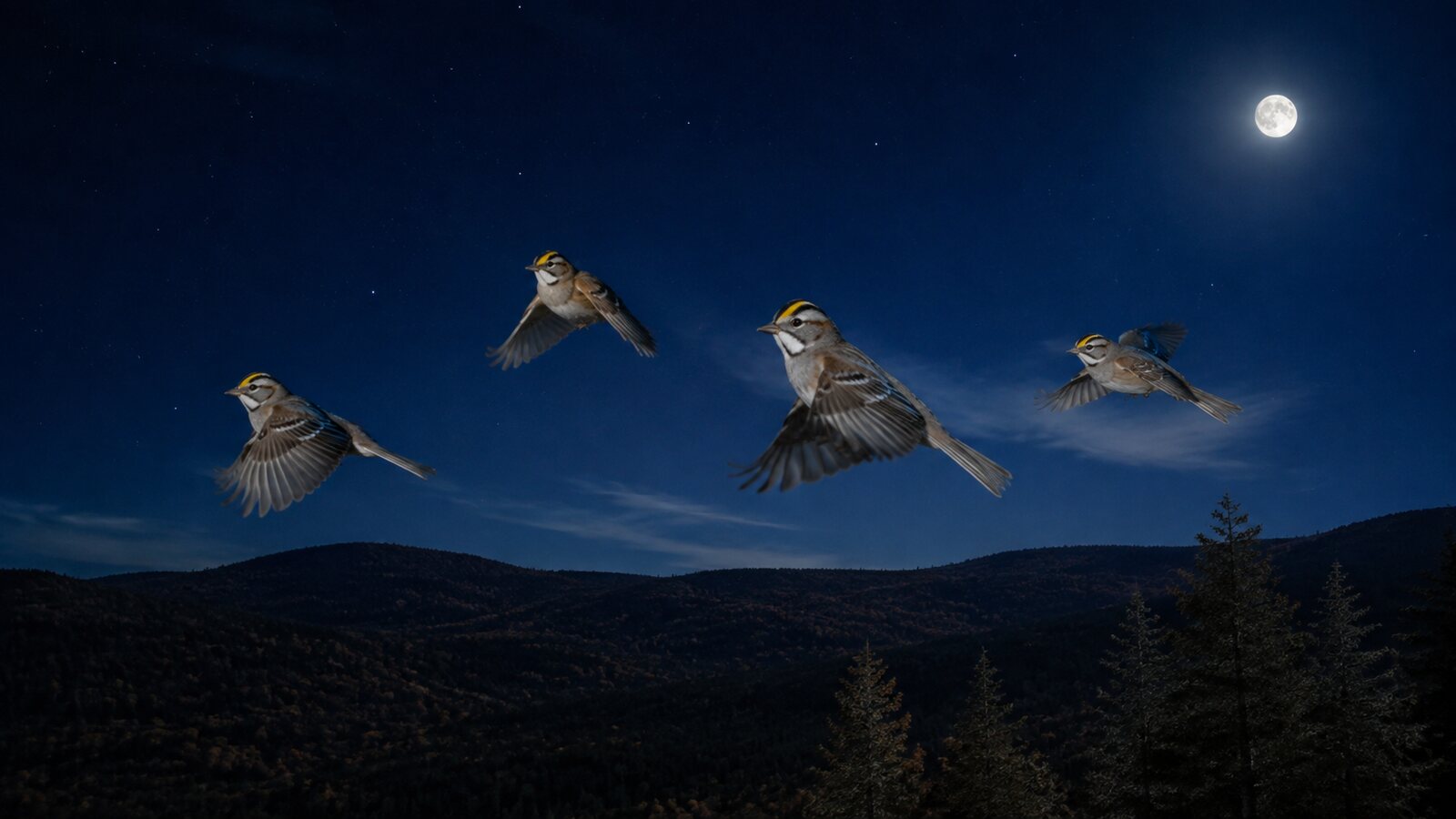
Why many songbirds fly after dark
Migration uses a great deal of energy. Cooler air helps prevent overheating, while calmer conditions can make steady flight easier. A bird that lands near dawn can spend the day finding food before the next flight.
White-throated Sparrows and Common Yellowthroats are among the many small birds that often migrate at night.
How night migrants stay on course
Night travellers can use star patterns and Earth’s magnetic field, along with inherited directions and experience. Learn how these cues work together in bird migration navigation.
Many birds migrate in daylight
Hawks and other raptors often wait for the sun to warm the ground. Rising air called thermals lets them climb and glide with less flapping. Some swallows can feed while moving, and geese and other waterfowl may travel by day or night.
Migration can pass overhead unnoticed
On a busy migration night, thousands of birds may cross above a town without being seen. Soft flight calls sometimes reveal them. Weather radar can also detect large movements of birds.
Night flight still has risks
Storms and strong winds can push birds off course. Artificial light can attract and confuse night migrants, especially around tall buildings. Birds also need safe stopover habitat when they land.
Read why birds migrate, see how far they may travel, and learn what tells them it is time to leave.
Frequently asked questions
What kinds of birds migrate at night?
Many warblers, sparrows, thrushes, and other small songbirds do. Waterfowl may move by day or night.
Why do hawks migrate during the day?
They can ride warm rising air that develops after the sun heats the ground.
Do birds stop during migration?
Most do. They use stopovers to rest and replace energy before continuing.