
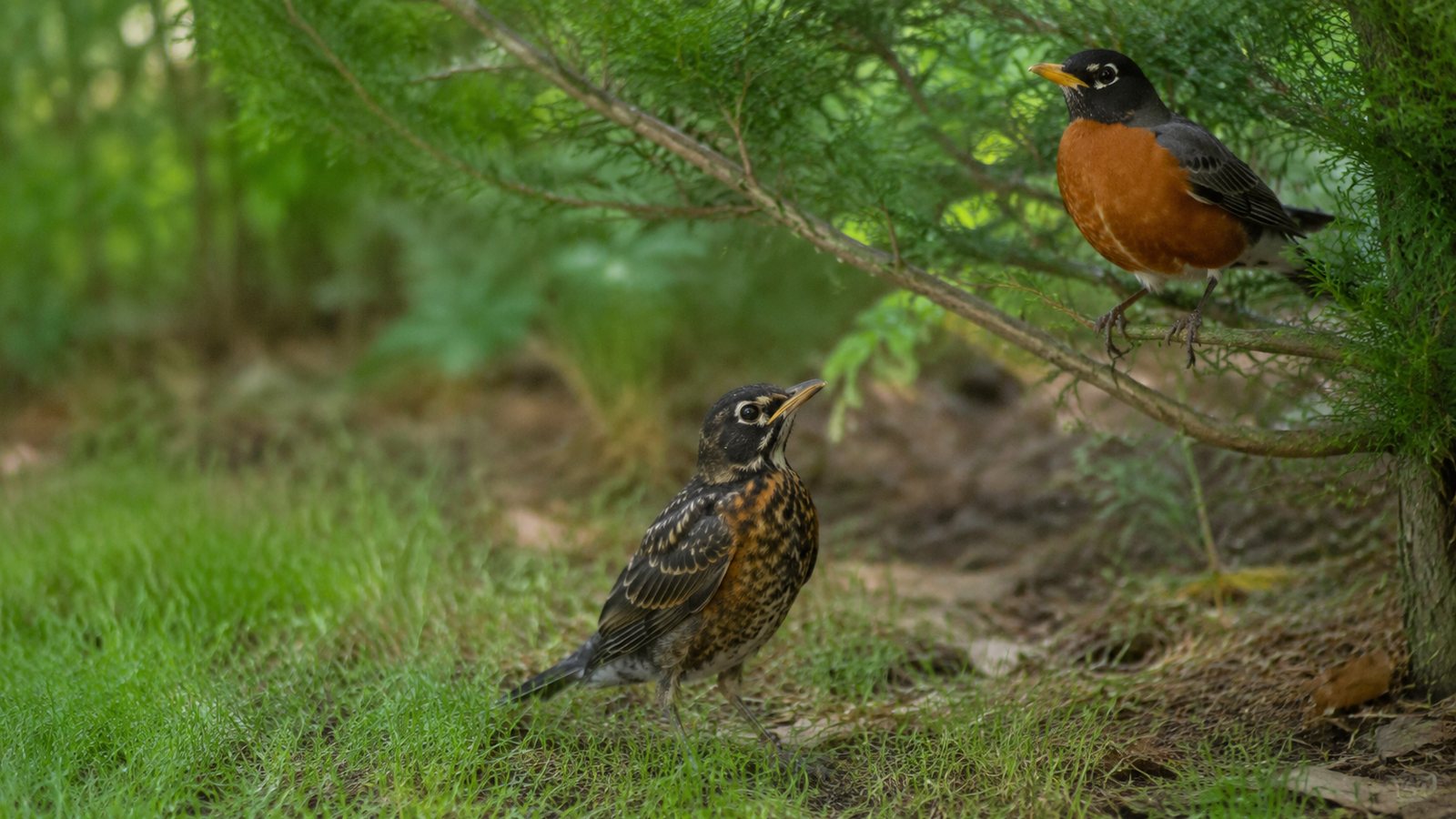
Is it a nestling or fledgling?
A nestling is very young. It may be naked, covered in down, or growing pin feathers. Its eyes may be closed, and it cannot perch, hop, or move well.
A fledgling is mostly feathered and can usually sit upright, grip, hop, or flutter. Its tail may be short and its flight can look clumsy. That is a normal stage, not proof that it was abandoned.
The guide to baby-bird names and stages explains hatchling, nestling, fledgling, and juvenile in more detail.
What to do with a healthy fledgling
Leave it close to where you found it. The parents may be watching from cover or waiting for people to move away before bringing food.
Keep cats, dogs, and people back. If the fledgling is in a road, busy path, or exposed spot, move it only a short distance to nearby shelter such as a shrub. Its parents need to be able to find it.
Do not take a healthy fledgling home because it cannot fly well. Many young songbirds leave the nest before they are strong fliers, and their parents continue to feed them. See how long baby birds stay in the nest.
What to do with a healthy nestling
Look for the nest directly above or close by. If you can reach it without climbing dangerously or disturbing other young birds, gently return the nestling.
Human scent does not normally make the parents reject it. Handle the bird as little as possible, then leave the area so the adults feel safe returning. Read can you touch a baby bird? for the full explanation.
If the nest is missing, damaged, or impossible to reach, call a licensed wildlife rehabilitator for advice instead of improvising care.
Signs that a baby bird needs professional help
Contact a licensed wildlife rehabilitator or local wildlife authority if the bird:
- is bleeding or has an obvious wound
- has a drooping wing or cannot stand
- feels cold, looks weak, or barely responds
- was caught by a cat or dog
- is covered with flies or insects
- has no known parents and is clearly too young to survive outside a nest
Call before transporting the bird when possible. A rehabilitator can assess the situation and tell you what to do next.
Do not feed or give water
Do not pour water into the bird’s mouth or offer bread, milk, seed, or pet food. Baby-bird diets differ, and food or liquid given the wrong way can cause harm.
Parents are the best caregivers for a healthy young bird. If professional care is needed, let the rehabilitator guide feeding and treatment. The page on what baby birds eat explains why there is no safe one-food answer.
Frequently asked questions
Can you put a baby bird back in its nest?
Yes, if it is a healthy nestling, the correct nest is accessible, and you can return it without risking a fall or damaging the nest.
How long should you watch for the parents?
Watch quietly from a good distance. Parents often stay away while a person is close. If you are uncertain or the bird’s condition is poor, call a rehabilitator instead of waiting.
Should you rescue every baby bird on the ground?
No. A healthy feathered fledgling on the ground is often exactly where it should be.
Continue through the nesting cycle
Read how long bird eggs take to hatch, when young birds leave the nest, or return to Bird Facts.