
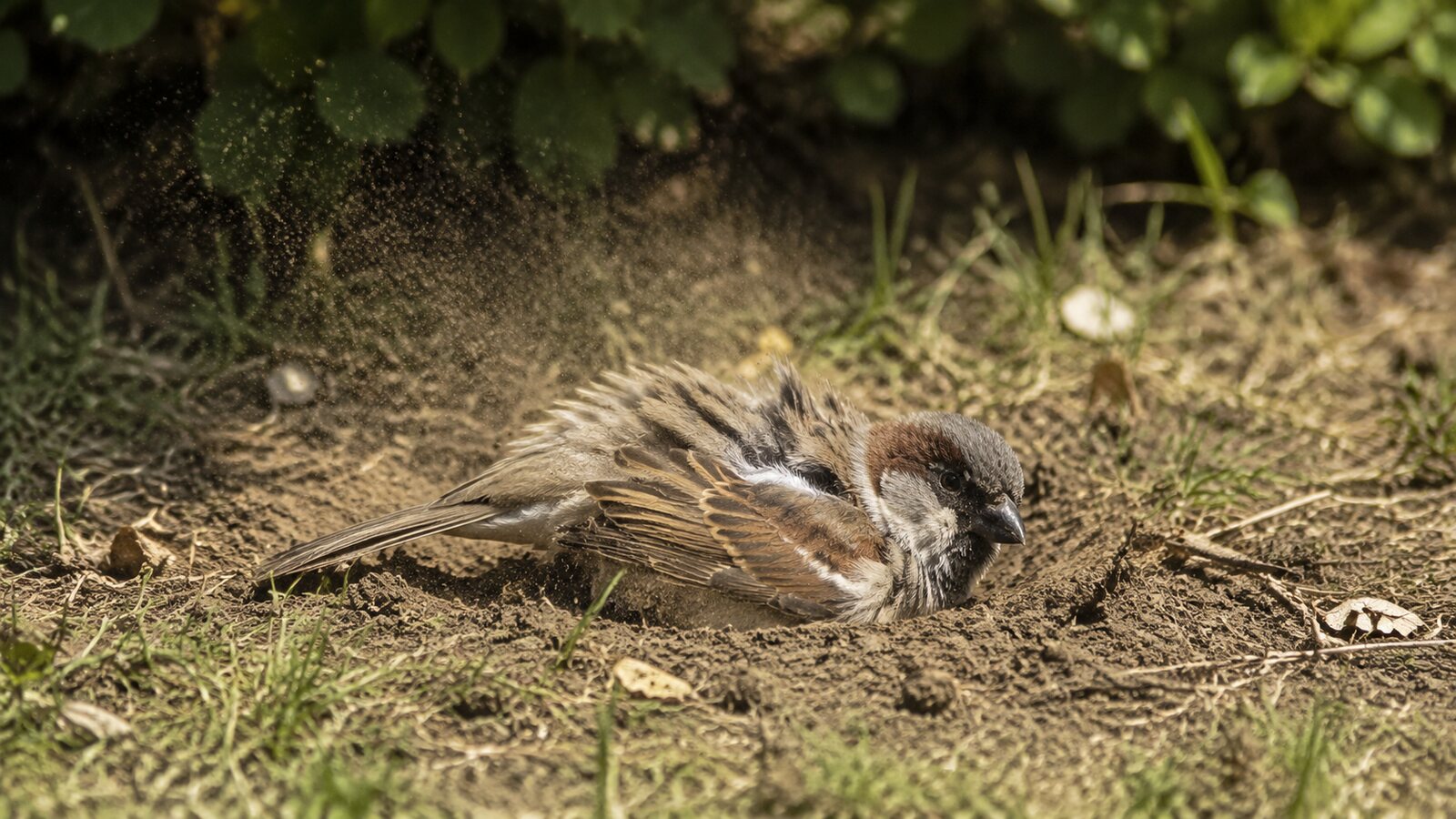
What is a dust bath?
A bird finds a patch of loose, dry soil or sand and settles into it. Then the action starts.
The bird fluffs its feathers, lowers its body, rolls or wiggles, and beats its wings against the ground. Fine dust works down through the feathers toward the skin.
Afterward, the bird shakes vigorously and usually preens.
It is not stuck. It is not having a seizure. It is taking a bath without water.
How can dirt make a bird cleaner?
That sounds backwards, but dry powder can absorb oil.
As dust moves through the plumage, it can pick up excess oils, bits of dry skin, feather debris, and other material. When the bird shakes and preens the dust out, some of that material leaves with it.
Think less mud bath and more dry shampoo. Not exactly the same thing, but the comparison gets the idea across.
Does dust bathing remove parasites?
Possibly some of them.
Bird feathers can host lice, mites, and other tiny organisms. Fine dust may interfere with those parasites or make some easier to remove during preening.
Audubon notes that dust bathing may remove small parasites along with grease and feather debris. Other ornithological sources are more cautious and point out that the exact function is not fully understood.
So I would not reduce the behaviour to “birds dust bathe to kill mites.” Feather maintenance is the broader, safer answer.
What birds take dust baths?
House Sparrows are easy to catch doing it. Find a patch of fine dry dirt near a hedge, parking lot edge, gravel lane, or garden bed and they may turn it into a regular bathing spot.
Quail, grouse, pheasants, doves, roadrunners, and several other birds also dust bathe.
Some species use dust often. Others rarely do. Bird behaviour has a way of refusing to fit one tidy rule.
Do House Sparrows take dust baths?
Very much so.
House Sparrows are among the most familiar dust bathers around homes and cities. They often use dry patches under shrubs, along foundations, beside driveways, or anywhere the soil stays loose.
Several birds may use the same spot, leaving behind shallow round depressions.
Do birds dust bathe when water is available?
Yes.
House Sparrows, for example, may use dust even when they have access to water. A bird can even take a water bath and later dust bathe.
That tells us the two behaviours do not have to be substitutes for each other. They can be different parts of the same general job: feather care.
Why do birds shake after a dust bath?
They need to get the dust back out.
A hard body shake throws loose material away from the feathers. Then preening lets the bird work more carefully through the plumage.
Watch closely and the whole sequence makes sense: dust in, shake, preen, feathers back in order.
Why do birds preen after dust bathing?
Preening is where the bird finishes the job.
It uses the bill to clean and realign feathers after the dust has moved through them. Material loosened by the bath can be removed, and the feather surface can be put back into shape.
See why birds preen for a closer look at how feather maintenance works.
Do birds use sand as well as dust?
Yes, if the material is fine, loose, and dry enough to work into the plumage.
Different birds use different soils. A desert bird may use fine sand. A backyard sparrow may use powdery garden soil. Grouse can return to established dusty spots on the ground.
What matters is that the material can move through the feathers.
What does a dust bath look like?
Messy.
The bird crouches low, fluffs up, flaps, wriggles, and may roll partly onto one side. Dust rises around the body. The wings can look awkwardly spread and the tail may fan.
That odd posture is one reason people sometimes think the bird is injured.
If it stands up, shakes normally, preens, and flies away, you probably just watched routine grooming.
Is a dust-bathing bird in trouble?
Usually not.
Normal dust bathing is active and deliberate. The bird chooses the spot, works dust into its feathers, and leaves when it is done.
A genuinely injured or sick bird may stay down, fail to move away when approached, hold a wing oddly, breathe hard, or show poor coordination. That is a different situation.
Can I make a dust bath for backyard birds?
You can leave a small area of loose, dry, untreated soil where birds already feel safe.
I would keep it simple. Avoid pesticides, scented products, powders, or chemical additives. Birds have been dust bathing for a very long time without us improving the recipe.
Place the area where birds can see approaching danger and get to nearby cover without being boxed into dense vegetation where a cat could hide.
Do birds also sunbathe?
Yes.
Sunning is another behaviour tied partly to feather care. A bird may spread one or both wings, fan the tail, and sit in direct sunlight. Warmth may be part of it, and researchers have suggested sunlight can affect feather parasites or make them easier to remove during preening.
This overlaps with why birds spread their wings.
Frequently asked questions
Why do birds take dust baths?
Dust bathing helps maintain plumage. Fine dry material can absorb excess oils and loosen debris before the bird shakes and preens it away.
Do birds dust bathe to get rid of mites?
Dust may help with some external parasites, but scientists have not shown that this is the only or universal purpose of the behaviour.
What birds take dust baths?
House Sparrows, doves, quail, grouse, pheasants, roadrunners, and many other birds have been observed dust bathing.
Can a bird use both water and dust baths?
Yes. Some species use both, and a bird may dust bathe even when water is available nearby.
Keep following the question
Continue with why birds bathe in water, why birds preen, or return to the Bird Facts hub.