
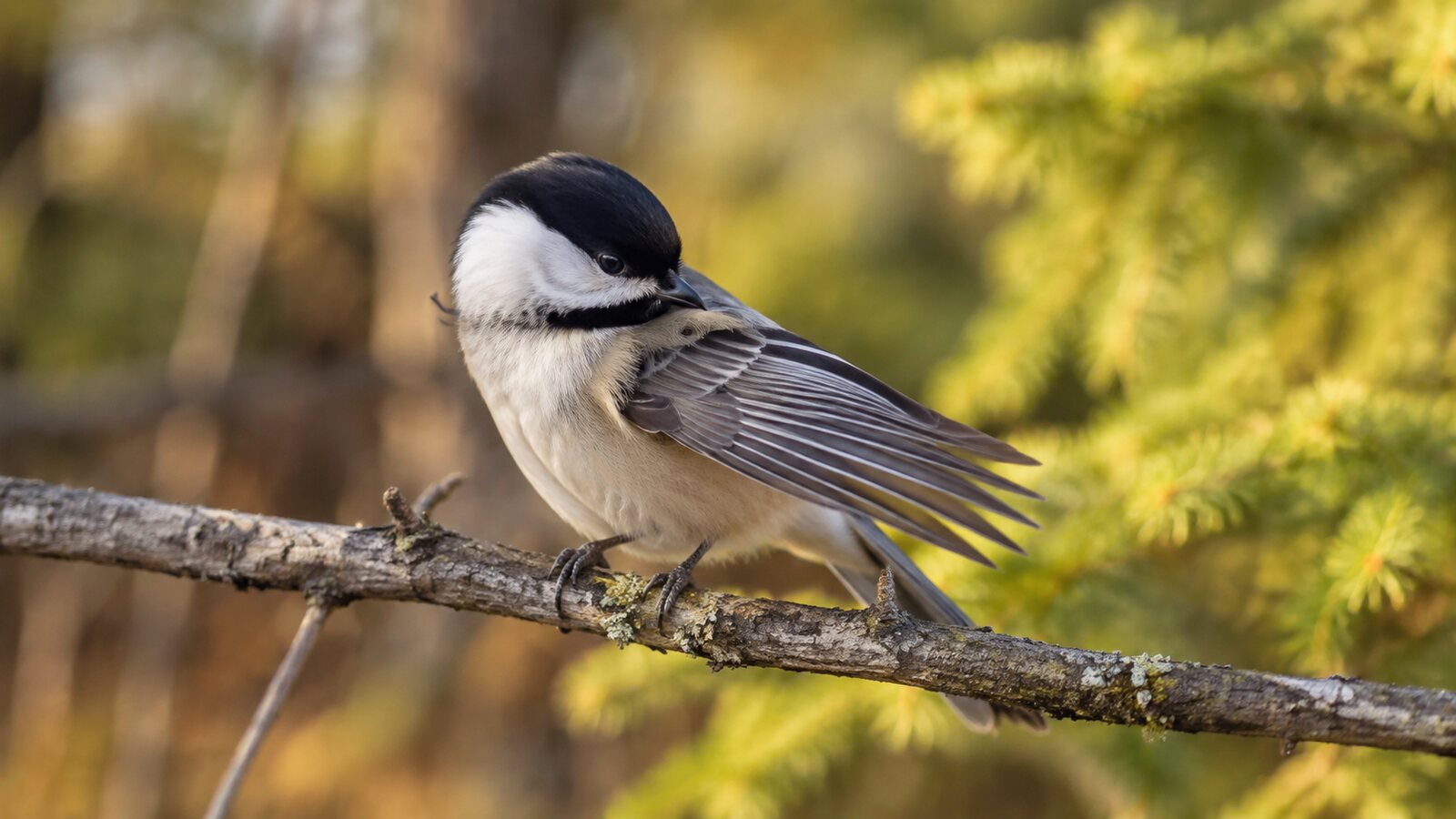
What is bird preening?
Preening is the routine care birds give their feathers. You’ll see a bird twist its head around, take a feather in its bill, and draw the bill along the feather from near the base toward the tip.
The bird may work through one wing, then the breast, back, tail, and other wing. Areas the bill can’t reach directly may be scratched with a foot.
It can look like fussy grooming, but feather condition affects flight, insulation, weather protection, camouflage, and display. For a bird, taking care of feathers is basic equipment maintenance.
How does preening repair feathers?
A flight feather is not one solid sheet. The broad surface is built from branching structures called barbs and barbules. Tiny hooks help neighbouring parts hold together to make a smooth vane.
Daily life can pull those connections apart. Flying through vegetation, landing, bathing, wind, and contact with other surfaces all disturb feathers.
When a bird draws a feather through its bill, it can guide separated parts back into alignment. The effect is a little like closing a tiny fastener along the feather surface, although the real structure is far more intricate.
Eventually feathers become too worn to maintain and are replaced during moult. Until then, preening helps keep the existing set in working condition.
Does preening clean feathers?
Yes. Birds pick away dirt, bits of plant material, dried mud, loose feather material, and other debris while they preen.
Clean plumage can maintain its structure and insulation more effectively. That becomes especially important in cold weather, when birds depend on feathers to trap warm air. See how birds stay warm in winter.
Do birds use oil on their feathers?
Many birds have a uropygial gland, commonly called the preen gland, near the base of the tail. During grooming, a bird may touch this area with its bill and then work the material through its feathers.
The gland’s secretions can help condition and protect plumage, but bird species differ greatly. It is too broad to say every bird oils its feathers the same way, or that preen oil alone makes every bird waterproof.
Some birds have reduced glands or lack the gland entirely. Feather structure and other forms of maintenance also contribute to keeping plumage in good condition.
Does preening remove parasites?
It can. Feathers can host lice, mites, and other small organisms. A bird working methodically through its plumage may remove some parasites directly with its bill.
Preening is only one part of feather care. Birds may also bathe in water, bathe in dust, sit in the sun, and, in some species, use ants on their feathers.
Not every unusual-looking grooming behaviour has one proven purpose, but birds clearly devote a large amount of time to keeping plumage in good condition.
Does sunning work with preening?
It can. Birds sometimes spread or droop their wings in direct sun, and research suggests heat and sunlight may make some feather parasites easier to kill or remove. Sunning can also warm the bird. It is one of several reasons you might see a bird sitting still with its wings open.
See why birds spread their wings for the full range of possibilities.
Why do birds preen after bathing?
Bathing and preening work together. Water gets into the plumage and helps loosen dirt and debris. Afterward, the bird needs to dry and reorganize feathers that have been soaked and ruffled.
You may see a bird hop out of a bath looking completely bedraggled, shake vigorously, move to a nearby perch, and then spend several minutes preening.
If you want to watch this in your yard, start with how to attract birds to a bird bath. Shallow water and a safe location matter more than an elaborate bath.
Why do birds puff up while preening?
Fluffing separates the feathers and gives the bill better access to different parts of the plumage. A preening bird may look huge for a moment, then sleek everything down again.
It may also shake its whole body between bouts of grooming. These movements help loosen and resettle the feathers.
Puffing has several other purposes too, including warmth and display. See why birds puff up their feathers.
What is mutual preening?
Some birds preen one another. This is often called allopreening.
It can help a bird reach the head and neck, areas that are difficult to groom with its own bill. In social or bonded birds, mutual preening can also be part of maintaining the relationship between individuals.
The behaviour varies widely among species. Some birds commonly groom a mate or flock member, while others are much more independent.
Why does a bird rub its head near the base of its tail?
You may be seeing the bird contact its preen gland. The gland sits on the lower back near the base of the tail in many species.
A bird can collect a small amount of secretion with the bill or head and then spread it through the feathers during preening.
Because the gland is hidden by plumage, the movement can look as if the bird is simply nibbling the tail base before returning to the wing or breast.
Do birds preen every day?
Many birds preen frequently, often in short sessions between feeding, resting, singing, or other activities. The amount of time varies by species, weather, season, feather condition, and what the bird has just been doing.
A bird that has just bathed may preen intensively. A bird resting in a safe spot may work through its plumage more casually. During feather growth and moult, maintenance routines can look different again.
Can preening help with bird identification?
Sometimes. The act of preening is widespread, so “it was grooming” won’t identify a bird by itself. But the way a bird bathes, scratches, spreads its wings, uses a perch, or handles feathers can be part of a larger behaviour pattern.
Watching what a bird does before and after preening can also reveal details hidden when it is sitting still. A lifted wing may briefly show underwing colour. A spread tail may reveal a pattern. A turned head can expose cheek or crown markings.
That is one reason behaviour is so valuable in identification. See how to identify birds by behaviour.
Frequently asked questions
Why do birds preen?
Preening cleans and realigns feathers, helps remove debris and parasites, and lets many species distribute secretions from the preen gland.
What does preening mean?
It means maintaining the plumage, usually by working feathers through the bill and arranging them back into good condition.
Do all birds have a preen gland?
No. Many birds do, but the gland is not present or equally developed in every species.
Why do birds preen after bathing?
Bathing loosens dirt and wets the feathers. Preening afterward helps clean, dry, and reorganize the plumage.
Keep following the question
Follow feather care into water bathing, dust bathing, and the broader guide to why birds molt.