
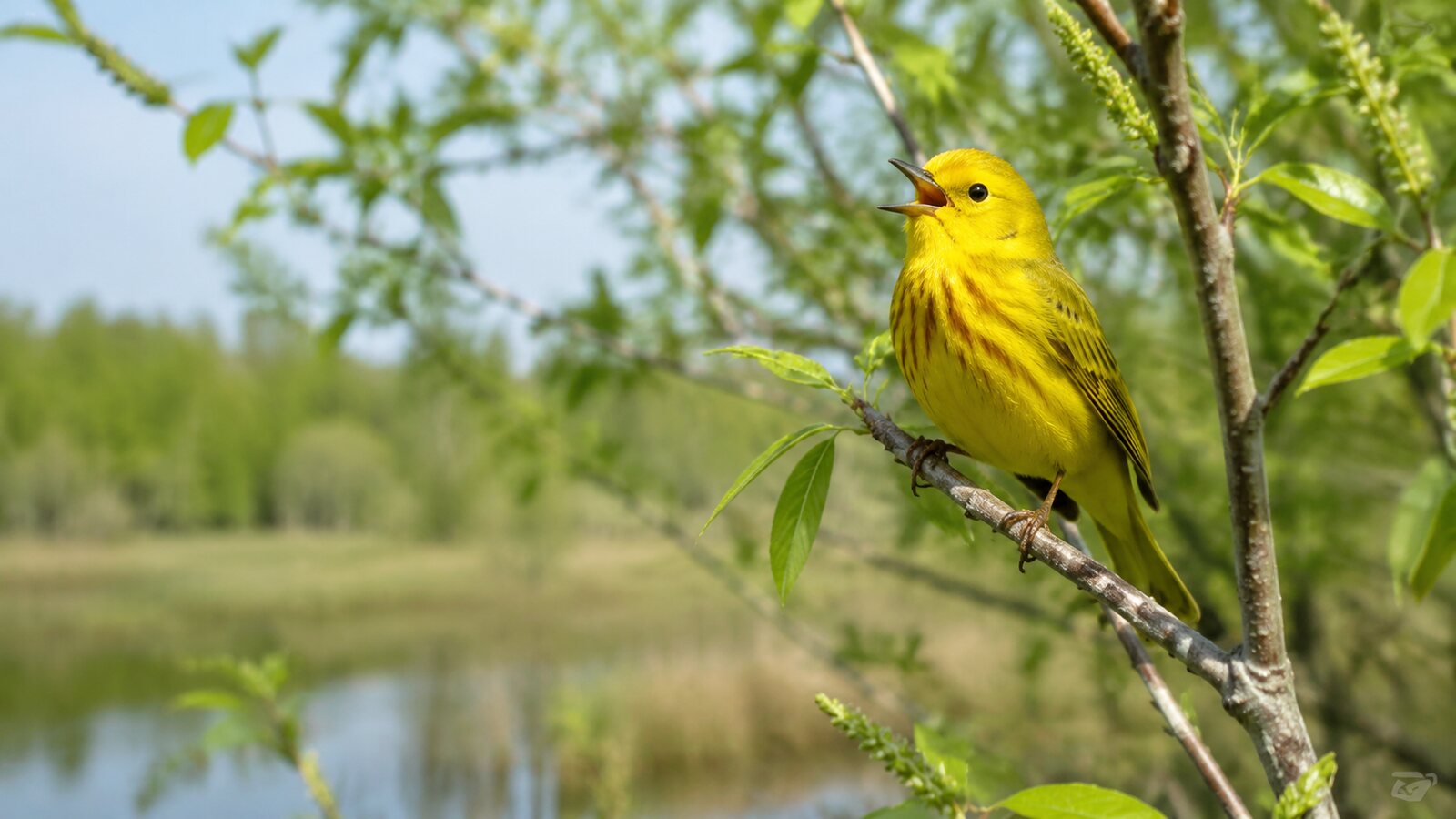
How to identify a Yellow Warbler
Adult males are bright yellow with olive-yellow wings and narrow chestnut streaks down the breast. Females are usually softer yellow or greenish yellow and have little or no breast streaking.
Immature birds can look pale yellow, olive, grayish, or brownish. All ages have fairly plain faces, dark eyes, thin pointed bills, and yellow spots in the tail that may show in flight.
Yellow Warbler size and wingspan
Adults are about 12 to 13 cm long, weigh roughly 9 to 11 g, and have a wingspan around 16 to 20 cm. They are smaller and slimmer than an American Goldfinch.
Shape matters when the light makes every small bird look yellow. Yellow Warblers have thin insect-catching bills, rounded heads, and no bold black wings or heavy conical finch bill.
What does a Yellow Warbler sound like?
The male sings a bright series of six to ten whistled notes that often speeds up and rises at the end. The familiar memory phrase “sweet, sweet, sweet, I’m so sweet” can suggest the rhythm, but real songs vary among birds and regions.
Both sexes use calls. The common chip can sound sharp, metallic, or slightly buzzing. Listen in low wet shrubs during spring and summer, then combine the sound with habitat and plumage using the guide to identifying birds by sound.
Habitat, range, and migration
Yellow Warblers breed across much of Canada and the United States in shrubby wetlands, willow thickets, stream edges, young woods, and brushy clearings. They often feed below the treetop canopy.
They are long-distance migrants. Most leave North America for wintering areas in Mexico, Central America, northern South America, and the Caribbean, then return in spring.
What do Yellow Warblers eat?
Caterpillars, beetles, midges, flies, leafhoppers, and other small insects make up most of the diet. The birds pick prey from leaves and twigs or make short flights to catch it.
They rarely visit seed feeders. Native shrubs, insect-rich plants, and reduced pesticide use make a yard more useful during migration.
Nesting, eggs, and young
The female builds a neat cup in the fork of a shrub or small tree, often in willow or another plant near water. Plant fibers, grass, bark, and spiderweb help hold it together.
A clutch usually has one to seven pale eggs with brown or gray markings. Incubation lasts about 10 to 13 days, and young remain in the nest about 9 to 12 days. Yellow Warblers sometimes bury a Brown-headed Cowbird egg under a new nest layer.
Similar birds and lifespan
Female American Goldfinches have thicker conical bills and darker wings. Male Common Yellowthroats have a black mask, while females usually show browner backs and less even yellow. Habitat, bill shape, wing pattern, and voice help.
The oldest recorded Yellow Warbler was at least 11 years old. That is an exceptional record, not a typical age.
A note about the name
The widespread North American bird long called Yellow Warbler was split from the Mangrove Yellow Warbler in 2025. Many current references now call it Northern Yellow Warbler, Setophaga aestiva. The familiar shorter name remains widely used, so this guide uses both without treating them as two local species.
Song in the breeding season
Males sing often after reaching breeding habitat, especially in the morning. The song helps attract mates and defend space, linking this little warbler to why birds sing and the dawn chorus.
Frequently asked questions
Is a Yellow Warbler the same as a Northern Yellow Warbler?
Yes for the widespread North American bird covered here. Many authorities adopted Northern Yellow Warbler after a 2025 species split.
Do female Yellow Warblers have red streaks?
Females usually have few or no chestnut breast streaks. Some can show light streaking, so use several clues together.
Do Yellow Warblers visit feeders?
They rarely eat seed. Insect-rich native plants and shrubs are more useful to them.
More familiar birds
Compare the Common Yellowthroat and American Goldfinch, or browse more common birds.