
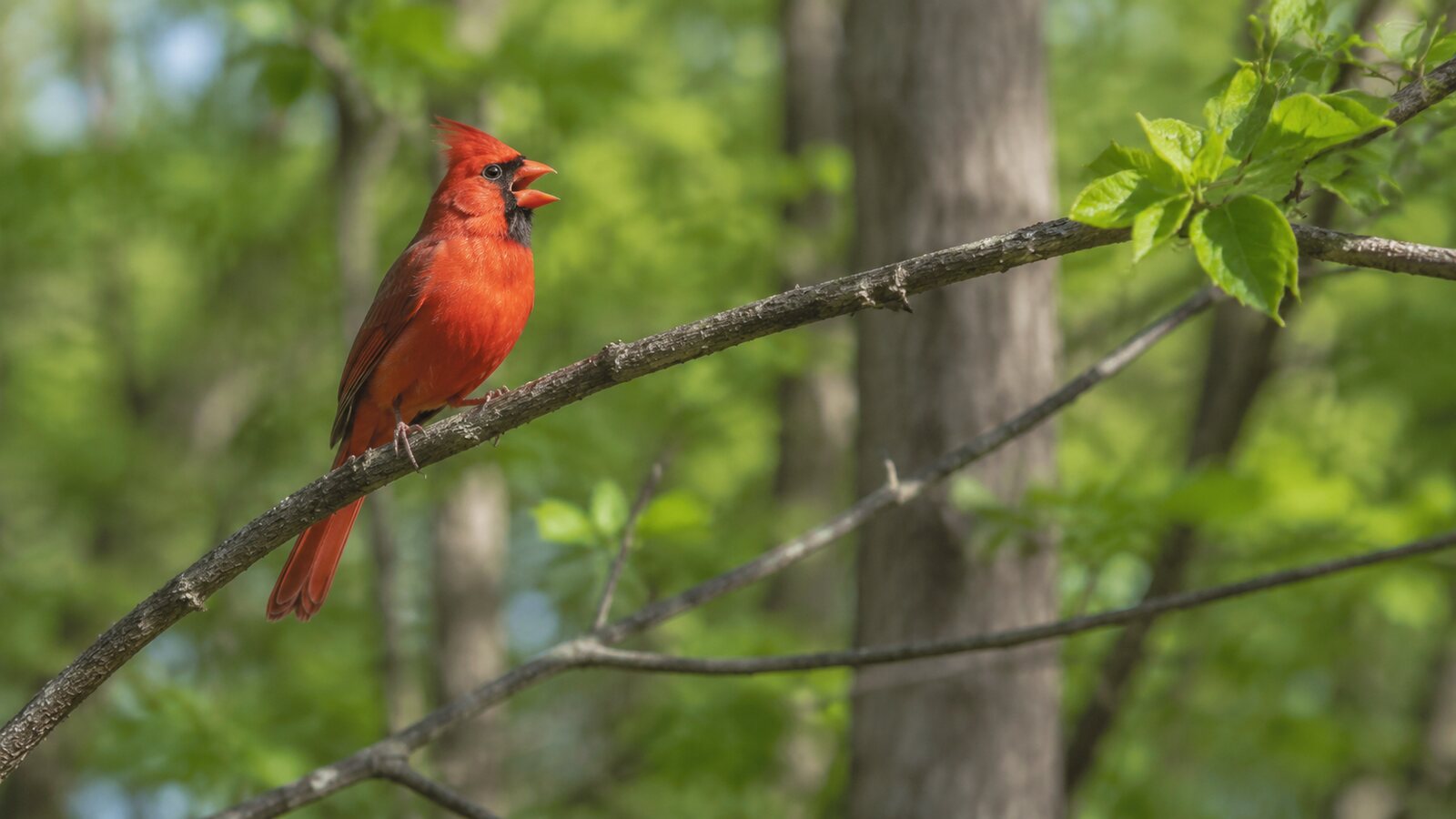
Birds sing to defend territory
A repeated song can mark a bird's breeding space without a fight. Nearby birds learn who is present and where one territory ends. A singer may use exposed branches, fence posts, or treetops so the sound carries clearly.
The Song Sparrow, Carolina Wren, and Northern Cardinal are familiar examples of birds that sing from regular perches.
Other voices make the same jobs easy to hear: the Red-winged Blackbird displays over a marsh territory, the Eastern Phoebe repeats a raspy spring song, and the Northern Mockingbird builds long performances from learned sounds.
Song can help attract a mate
In many species, song is part of courtship. Its pattern, timing, and performance can give another bird information about the singer. Singing often increases as breeding season begins and fades when nesting activity slows.
That does not mean every singer is male. Female birds sing in many species, and song roles differ around the world.
Song and calls are not quite the same
A song is usually longer and more patterned. A call is often shorter and may warn of danger, keep flock members together, help young beg for food, or coordinate movement. The line is not perfect, and birders sometimes use the broad word vocalization for either one.
People often call short notes chirps. Our guide to why birds chirp explains contact, alarm, begging, and other everyday calls.
Why singing changes through the year
Day length, hormones, migration, weather, and breeding stage all affect song. Spring is loud across much of North America because many species are claiming territories and forming pairs at the same time. Some birds still call year-round even when full song becomes less common.
Dawn is a peak period for many singers. See why birds sing in the morning for a closer look at the dawn chorus.
How birds produce a song
Birds make most vocal sounds with an organ called the syrinx, located low in the airway. Air moving through it makes soft tissues vibrate while small muscles control the sound. The plain-language guide to how birds make sounds explains the process.
How to start recognizing songs
Listen for pitch, rhythm, repetition, and tone. A whistle, trill, buzz, rattle, or rough scold gives you a useful starting point. Then check habitat, season, time, and the bird's behaviour.
Many songbirds learn and retain sounds, while neighbours may learn to recognize one another. The guide to bird memory connects learned songs with other information birds keep.
Use our practical guide to identify birds by their sounds, then practise with the voices of backyard chickadees.
Frequently asked questions
What is the main reason birds sing?
Territory and mate attraction are two major reasons, especially during breeding season. Song can also identify and coordinate with other birds.
Is bird song different from a bird call?
Usually. Songs tend to be longer and more patterned, while calls are often short signals used in many everyday situations.
Do female birds sing?
Yes. Female song occurs in many species, although it has been studied less than male song in some northern temperate birds.