
Why birds defend territories
A territory can give a bird or pair better access to food, cover, nest sites, and room to raise young. During breeding season, it may also help a bird advertise to potential mates and reduce interference from rivals.
Defending space costs time and energy. Birds are most likely to do it when the benefit is worth that cost.
Song often marks a boundary
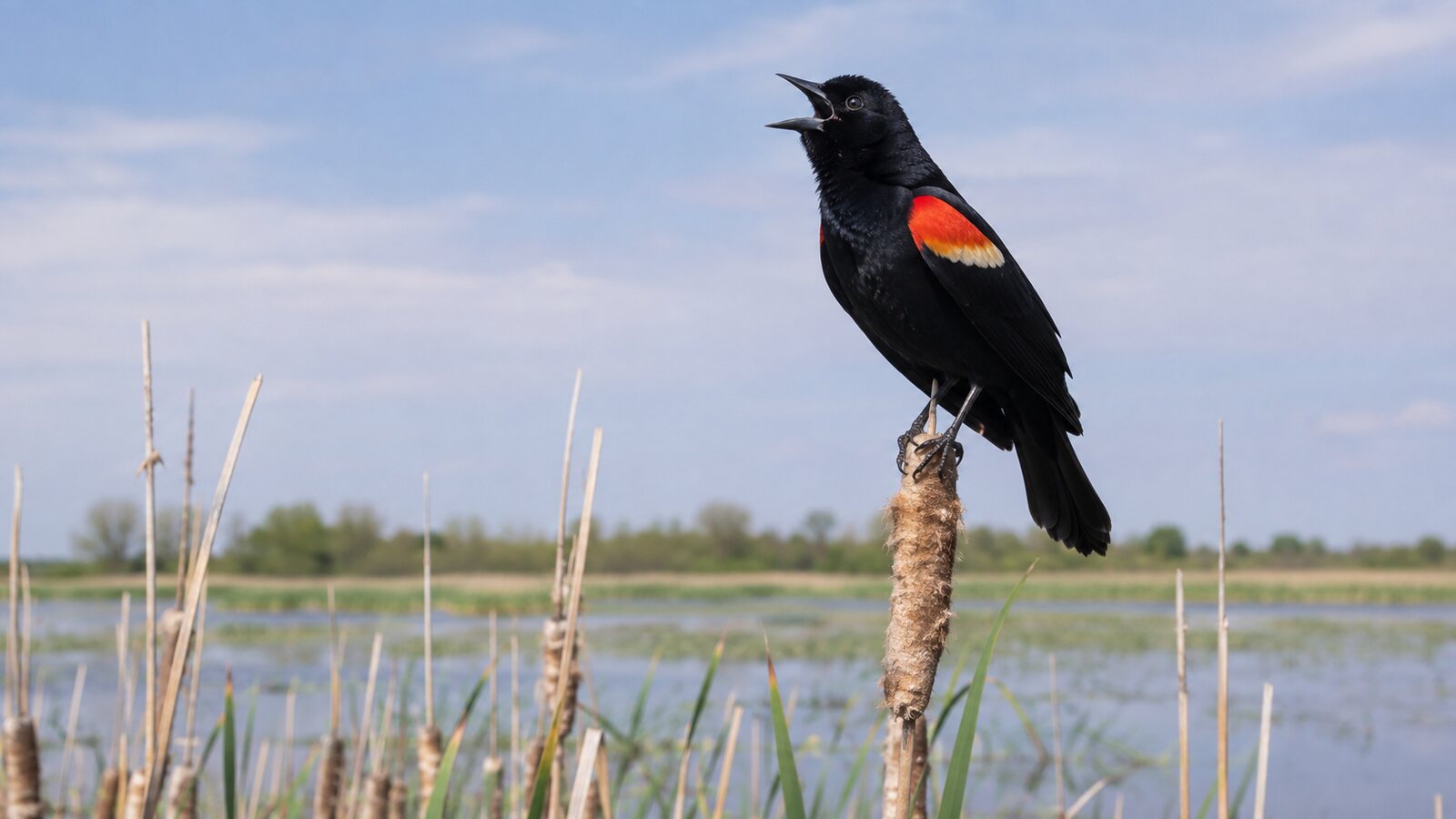
A singing bird may be doing more than making a pleasant sound. Song can announce the bird’s species and location, attract a mate, and warn rivals that the area is occupied.
A Red-winged Blackbird singing from a cattail is a familiar marsh example. A Northern Mockingbird uses repeated song from prominent perches. The guide to why birds sing explores both courtship and territorial roles.
Threat displays can prevent a fight
A bird may face an intruder, change posture, raise a crest, spread wings, point its bill, call, or make a short rush. If the other bird leaves, physical contact is unnecessary.
That is why a dispute can look dramatic without becoming a serious fight. Bird chases and fights range from a simple displacement to mobbing or rare physical combat.
Breeding territories change with the season
Many songbirds become most territorial as they pair, nest, and raise young. A bird that tolerated neighbours in winter may chase members of its own species in spring.
Territory can also be tied to courtship. A suitable area and strong song perches can be part of how a bird attracts a mate.
Some birds defend food rather than a nest
Hummingbirds may guard a feeder or flower patch. A male Anna’s Hummingbird can return to one lookout and chase other hummingbirds that approach. Spacing feeders out of sight of one another can sometimes reduce one bird’s control of all the food.
Winter feeding territories also occur in some species. Others share food in flocks or move as a group rather than defending one patch.
Not every bird is territorial
Colonial nesters may breed close together while defending only a tiny area around the nest. Flocking birds can feed and roost in large groups. Even a territorial species may become more social outside breeding season.
A species can also defend against its own kind but tolerate different birds, or chase several species from a valuable resource. There is no single territorial pattern.
Why birds attack windows and mirrors
A territorial bird may mistake its reflection for a rival that refuses to leave. It can peck, flutter, or repeatedly fly at the same pane or mirror.
The safe response is to break up or cover the reflection from the outside. See why a bird attacks a window or mirror for practical steps and the difference between reflection attacks and accidental collisions.
Frequently asked questions
Are female birds territorial?
Females defend space in some species, alone or with a partner. Territorial behavior is not limited to males.
Do birds defend feeding territories?
Some do. A bird may guard a feeder, flower patch, fruiting tree, shoreline, or other concentrated food source, especially when food is limited.
Are birds territorial all year?
Some birds defend space mainly during breeding, some guard feeding areas in winter, and others defend territories through much of the year.