
Song can attract a mate and defend space
For many songbirds, sound is one of the first courtship signals. A male may sing from a visible perch to advertise his presence and breeding territory. In some species, females sing too.
Song often does two jobs at once. It can attract a potential partner and tell rivals that the area is occupied. The guide to why birds sing explains both roles, while female bird song corrects the idea that singing belongs only to males.
Color and feathers can form a visual display
Bright feathers, crests, tail shapes, and patches that flash only at certain angles can make a bird easier to notice. A bird may turn, bow, puff up, spread its wings, or face the light so those features show clearly.
That does not mean every female is plain or every male is bright. The pattern varies widely, as explained in why males are more colorful in some species.
Dances and flight displays send several signals
Some birds leap, bow, strut, run, sway, or move together. Others perform dives, loops, hovering displays, or slow flights that reveal their shape and feather pattern.
A male Anna’s Hummingbird, for example, can climb high and dive steeply during courtship. Cranes use much larger movements on the ground. See why birds dance for more examples.
Food offerings can be part of courtship
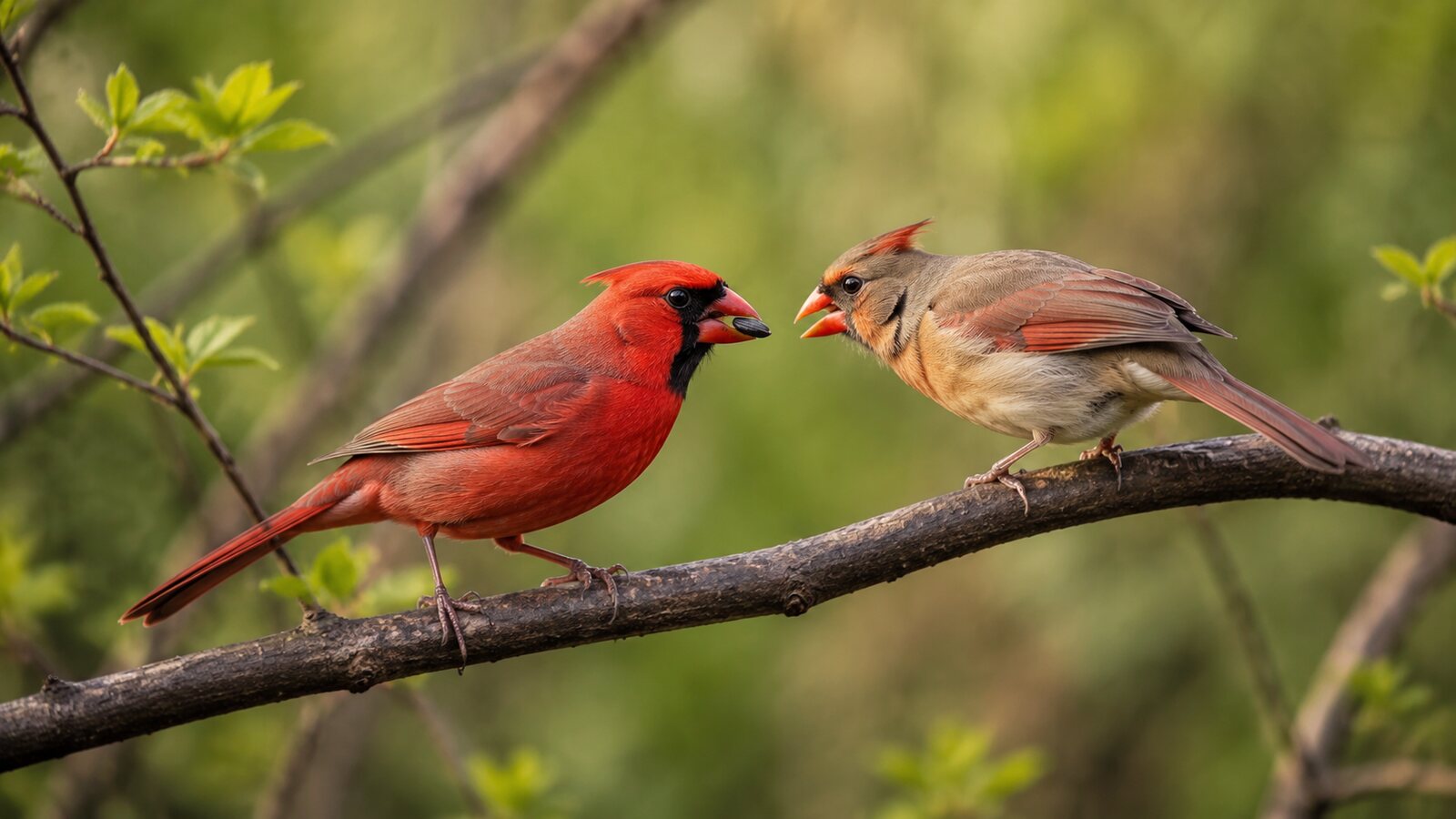
A bird may bring food to a potential mate or feed a partner directly. Male Northern Cardinals are well known for courtship feeding. The behavior may help maintain the pair bond and show that the bird can find food.
Food passing is not always courtship. Parents feed young, and flock members may have other social reasons for sharing. Context matters. The page on why birds feed each other separates those situations.
Territory and nest sites can help make the choice
A good breeding area may provide food, cover, song perches, and a safe nest location. A bird that holds suitable space can advertise it with song, posture, patrol flights, or repeated displays.
Some cavity nesters show a potential partner several holes. Other birds begin a nest, carry material, or display near a nest site. Territory is important in many courtships, but not every species defends a fixed area. See how bird territories work.
Finding a mate does not always create a lifelong pair
Some pairs stay together for years. Others remain together for one season or one nesting attempt. Some birds have more than one mate, and some raise young with help from a larger family group.
Do birds mate for life? looks at long pair bonds, seasonal partnerships, and what can happen when a partner disappears.
What courtship looks like in a backyard
Watch for a repeated sequence rather than one isolated movement. Singing followed by a close approach, food transfer, bowing, wing movements, or two birds remaining near each other can point toward courtship.
A fast chase alone is harder to interpret. It could involve courtship, territory, food, or a predator. The surrounding behavior and species are the best clues.
Frequently asked questions
Do female birds choose their mates?
Females choose among potential mates in many species, although the details vary. Males, females, or both may assess a partner depending on the species.
Why do male birds sing to females?
Song can advertise the singer’s species, location, condition, and territory. It can attract a mate while also warning rivals to stay away.
Do all birds have courtship displays?
Birds use some form of courtship communication, but it may be subtle. A display can involve sound, posture, flight, food, nest sites, or coordinated movement.