
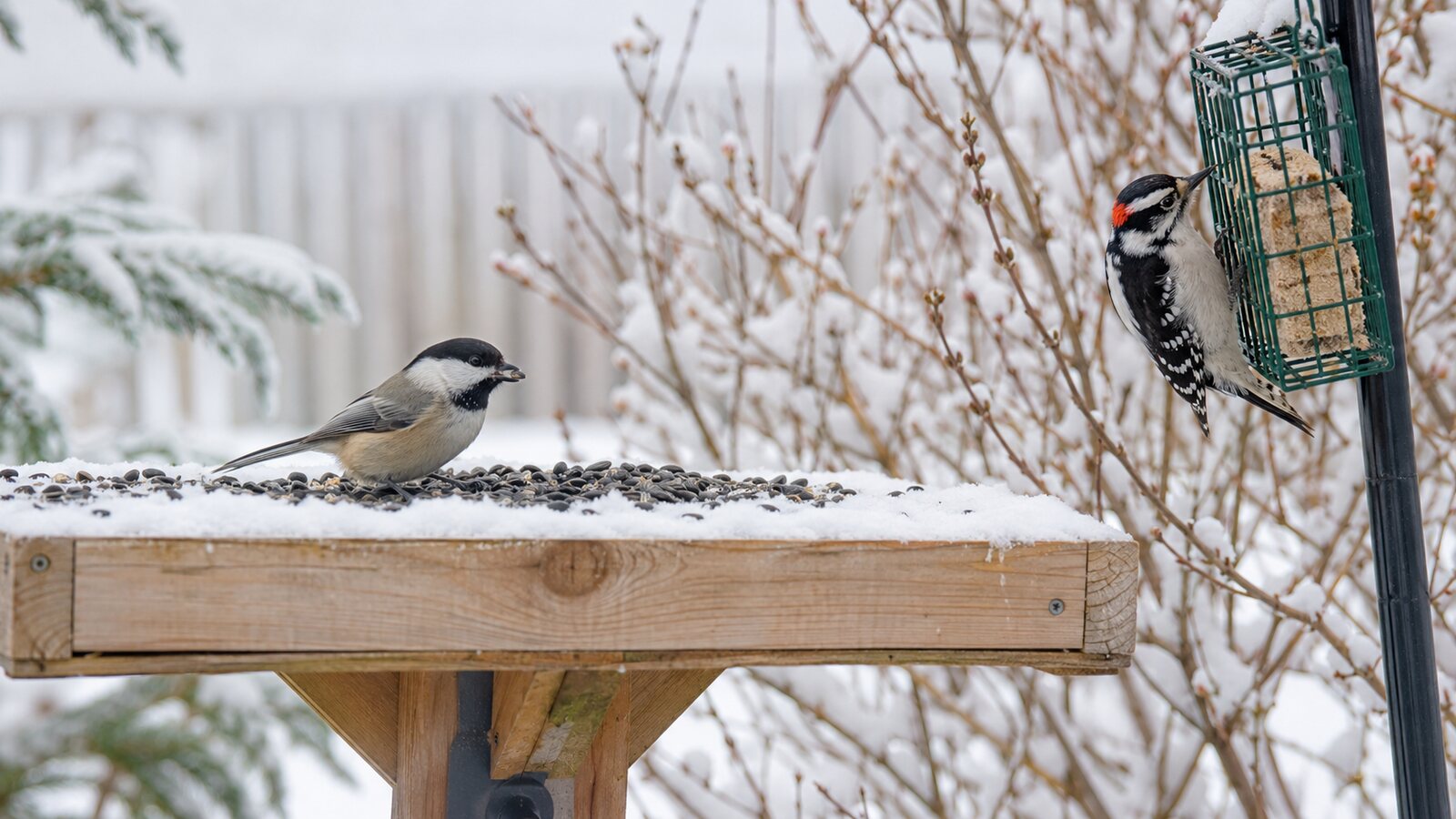
Why cold weather increases energy needs
A bird's body is much warmer than winter air. The colder and windier the weather becomes, the faster heat can escape and the more energy the bird may need to replace it.
Feathers and shelter slow heat loss, but they do not make heat. Calories from food power metabolism, movement, and shivering. This is the feeding side of how birds stay warm in winter.
Winter can make natural food harder to find
Snow can cover seeds and ground-feeding areas. Ice may seal berries, cones, bark, or wetland edges. Flying insects become scarce, and short days leave less time to search.
Many birds adapt by switching foods or feeding locations. The separate guide to what birds eat in winter covers seeds, berries, dormant insects, prey, carrion, and feeder foods.
Do birds eat more before a cold night?
Many birds feed actively during the day and often increase feeding before bad weather or nightfall. The stored energy helps carry them through hours when they cannot feed.
Exact needs vary with body size, species, temperature, wind, food quality, and activity. It is better to describe a changing energy budget than to claim every bird eats a fixed amount more.
What are good high-energy feeder foods?
No single food is best for every bird. Common choices include:
- Black-oil sunflower: a broad choice for chickadees, cardinals, finches, nuthatches, and other seed eaters.
- Sunflower hearts or chips: high-energy food without shells, though it must stay fresh and dry.
- Suet: concentrated fat used by many woodpeckers, chickadees, nuthatches, and some other birds.
- Unsalted peanuts: popular with jays, woodpeckers, chickadees, and nuthatches.
- Nyjer and millet: suited to different finches, sparrows, juncos, and other small birds.
Use the backyard birdseed guide, suet guide, and sunflower-seed guide to match food with local visitors.
Do birds depend on feeders?
Most wild birds keep searching many places and use feeders as one option. They may eat natural seeds, berries, insects, and cached food during the same day they visit a feeder.
A feeder can still be valuable during deep snow, ice, or a natural food shortage. Calling it supplemental does not mean it never helps. It means feeders are part of a larger habitat.
Clean food matters more than a crowded menu
Wet, mouldy, or spoiled food can be harmful. Clean feeders on a regular schedule, remove damp seed, and avoid letting waste build up beneath them.
Place feeding stations where birds can reach nearby escape cover without giving cats or other predators an easy hiding place. A simple, well-kept setup is better than many neglected feeders.
Water and shelter help too
Open water may be difficult to find during freezing weather. Fresh shallow water can help when it is practical to keep it clean and unfrozen. Never add salt, antifreeze, or other chemicals.
Dense native shrubs and evergreens provide shelter as well as natural food. See where birds shelter during snowstorms and how to build a bird-friendly yard.
Frequently asked questions
Should I feed birds during snow?
You can offer fresh seed, suet, or other appropriate foods during snow, when some natural food is harder to reach. Keep feeders clean and remove wet or spoiled food.
What gives birds the most energy in winter?
High-fat foods such as sunflower seed, suitable suet, and unsalted peanuts provide concentrated energy for many feeder birds, but the best choice depends on the species.
Do birds become dependent on feeders?
Most wild birds continue using several natural food sources and treat feeders as a supplement. Clean, reliable feeders can still help during severe weather or food shortages.
More winter feeding questions
See how small birds manage cold nights or return to the Backyard Birds hub.