
Common foods birds eat
Seeds and nuts
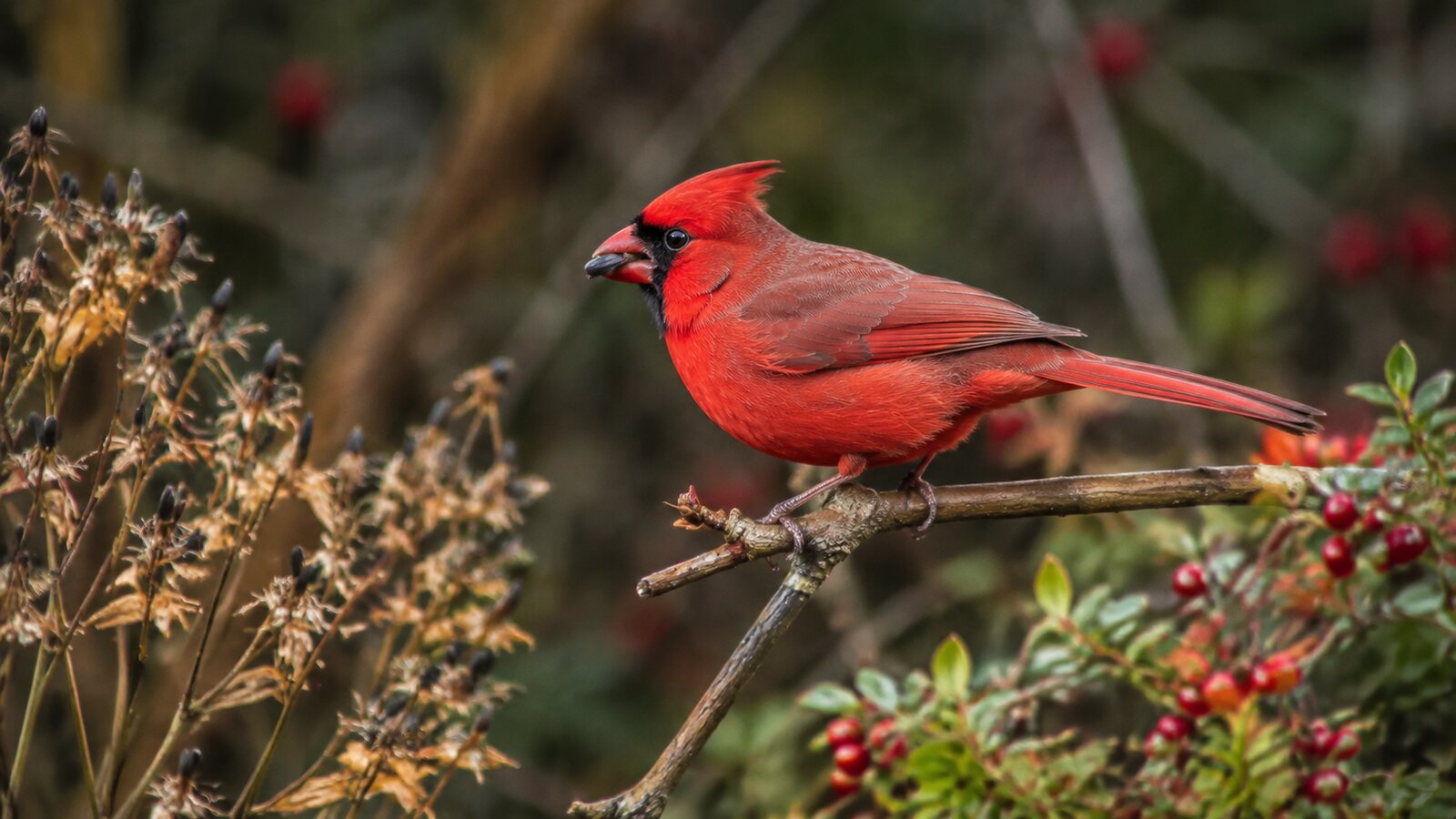
Finches, sparrows, cardinals, chickadees, and many other birds eat seeds. Some swallow small seeds whole. Others hold or grip a seed and use the bill to remove the shell. Jays, nuthatches, and woodpeckers also take nuts.
Some chickadees, nuthatches, and jays carry food away to store it. See how birds remember hidden food for caching, spatial memory, and forgotten seeds.
At feeders, black-oil sunflower attracts a wide range of birds. The guide to birds that eat sunflower seeds compares whole seeds, striped seeds, and sunflower hearts.
Insects, worms, and other invertebrates
Insects provide protein and are especially important when many songbirds feed growing chicks. Warblers catch insects on leaves, swallows take them in flight, and woodpeckers search bark and wood. Robins eat earthworms as well as insects and fruit.
Suet can attract some birds that normally search for insects and other high-energy foods. See which birds commonly eat suet.
Fruit and nectar
Robins, waxwings, orioles, bluebirds, and many other species eat berries or other fruit. Hummingbirds drink flower nectar but also catch small insects and spiders. Nectar alone is not their complete diet.
Fish, prey, and carrion
Birds of prey eat animals. A Bald Eagle often eats fish, while a Red-tailed Hawk commonly hunts mammals and other prey. Herons catch fish and frogs. Vultures mainly eat carrion. These diets are very different from the foods used at a backyard seed feeder.
Bird diets change through the year
Food changes with the seasons. In spring and summer, insects and other invertebrates can become important for nesting birds. Later, berries, seeds, nuts, and fruit may be easier to find. The page on what birds eat in winter explains how different species handle cold months.
Young birds may eat different foods from adults. Many seed-eating songbirds still carry soft insects to their chicks. Learn more about what baby birds eat.
What do birds eat around homes?
Birds around homes may find native seeds and berries, insects, garden fruit, spilled grain, pet food, and human scraps. Being able to swallow a food does not mean it is a good regular choice.
If you want to feed birds, choose fresh food that suits the visitors in your yard. Our backyard bird seed guide compares sunflower, nyjer, millet, safflower, peanuts, and mixes. The kitchen-food guide separates useful occasional foods from salty, spoiled, or heavily processed food that should stay indoors.
Foods to handle with care
Bread is not usually poisonous in a small fresh piece, but it is poor everyday bird food and should not replace better foods. Plain cooked or uncooked rice can be eaten by many birds, though it is not a complete feeder food.
Never put out mouldy or spoiled food. Keep feeders dry, remove old food, and follow the cleaning routine in how often to clean a bird feeder.
Frequently asked questions
Do all birds eat seeds?
No. Many do, but some birds depend more on insects, nectar, fruit, fish, carrion, or live prey.
Do birds drink water?
Yes. Birds need water, even when their food contains moisture. A shallow, clean bird bath can serve species that never visit a feeder.
Should I feed every bird the same food?
No. Match the food and feeder to the birds you want to help, and let uneaten food tell you when a choice is not working.
Explore backyard bird feeding
Compare sunflower-seed visitors, suet-eating birds, and the best seed choices for a backyard, or return to Backyard Birds.