
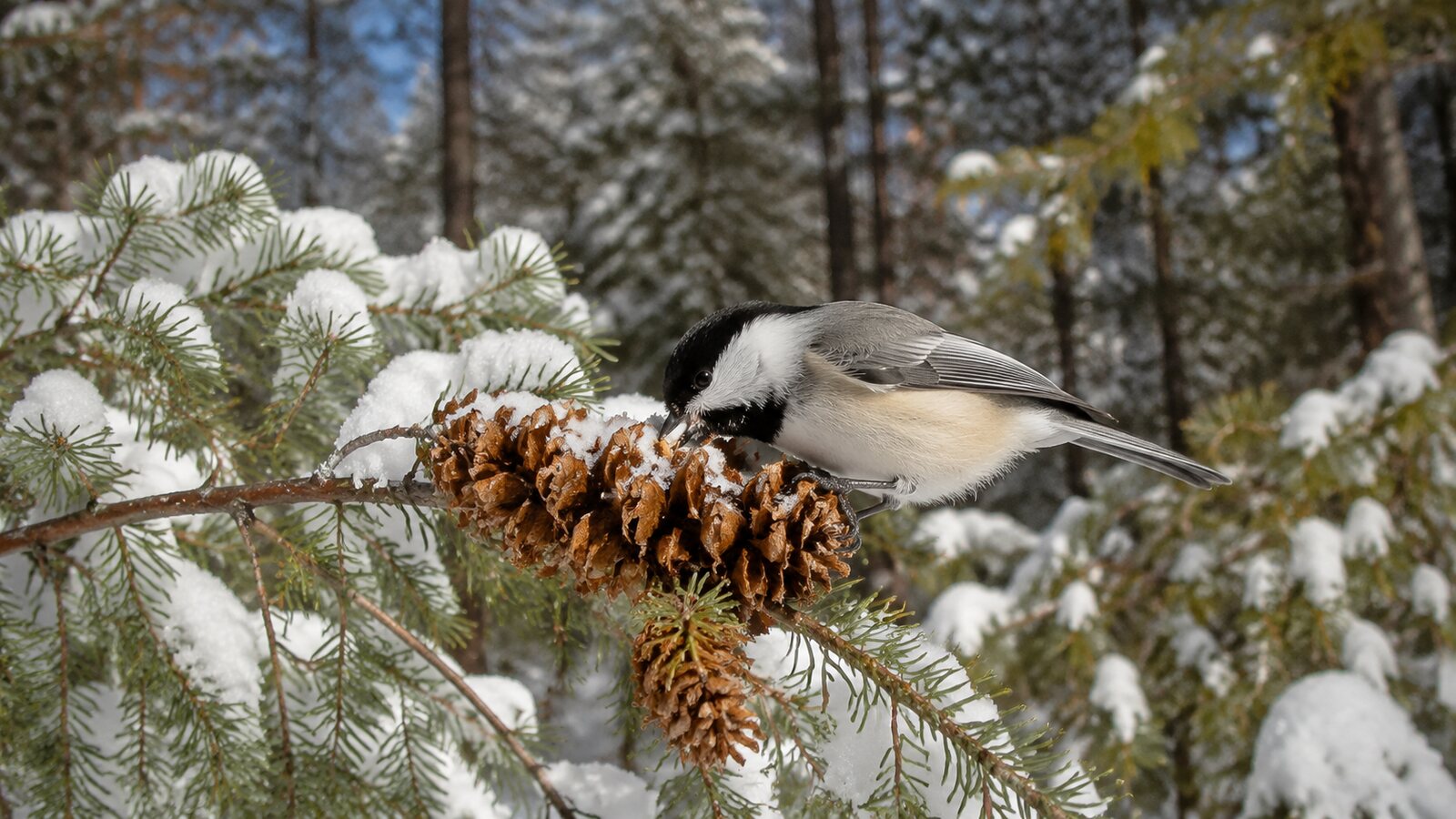
Why small size makes winter difficult
A small body has a large surface area compared with its mass. Heat can escape across that surface quickly, while the bird has only a limited amount of stored energy.
That does not make small birds helpless. Chickadees, nuthatches, kinglets, sparrows, finches, and other tiny birds have behaviours and body systems shaped for the places where they spend winter.
They feed whenever conditions allow
Winter daylight is short, so many small birds begin feeding soon after dawn and become active again before dusk. Seeds, berries, dormant insects, nuts, stored food, and feeder foods can all contribute, depending on the species.
Black-capped Chickadees and nuthatches store individual food items in bark and other hiding places. Memory and repeated searching help them use those scattered supplies later.
Short-term fat helps fuel the night
Birds can add fat during the day and use it after dark. The amount must remain practical because extra weight also affects flight and escape from predators.
Cold snaps can make this balance harder. A missed feeding period, ice-covered food, or a long storm may leave less fuel for the next night.
Fluffed feathers trap warm air
Feathers do not create heat. They slow its loss by holding still air near the body. Raising the feathers makes that insulating layer thicker, which is why a tiny bird can look much rounder in cold weather.
See why birds puff up their feathers and how feathers help birds.
Sheltered roosts reduce exposure
A protected roost can save energy through the night. Small birds may use dense evergreen branches, shrubs, cavities, crevices, brush, or another spot that blocks wind.
Some cavity users share a space, while many birds sleep alone. The guide to snowstorm shelter covers what birds do when normal roosts face severe weather.
Do small birds use torpor?
Some birds temporarily lower body temperature and metabolic rate, reducing the energy needed overnight. Hummingbirds are well-known for deep torpor. Other birds may use a smaller controlled drop in body temperature.
These patterns are not identical. A chickadee's nighttime cooling should not be described as though every bird enters the same deep state as a hummingbird. Many species do not use torpor at all.
Do small birds huddle together?
Some do. Sharing a protected cavity or roost can reduce exposed surface and slow heat loss. Brown Creepers and some small cavity-roosting birds are known to gather in cold conditions.
Huddling is one strategy, not a rule. Territory, social behaviour, available shelter, and species biology determine whether birds roost together.
Can feeders help small winter birds?
A clean feeder can supplement natural food, especially during snow or ice, but wild birds normally use many food sources. They should not be described as universally dependent on backyard feeders.
Offer foods suited to local species and keep feeding areas clean. See how winter changes birds' energy needs and which birdseed attracts different birds.
Frequently asked questions
How do tiny birds survive freezing nights?
They feed heavily by day, store some fat, fluff insulating feathers, choose sheltered roosts, and reduce heat loss. Some species also lower body temperature in a controlled way.
Do all small birds use torpor?
No. Torpor and nighttime body-temperature reduction vary by species. Hummingbirds are well-known users, while other birds rely on different levels of controlled cooling.
Do small birds huddle together in winter?
Some species share cavities or roost close together, which can reduce exposure. Many other small birds roost alone, so huddling is not universal.
Continue with winter behaviour
Read how birds respond to cold, see where birds sleep, or learn why some species remain through winter.