
Why many birds molt after breeding
Breeding, raising young, migration, and growing feathers all use energy. Many birds avoid doing the most demanding jobs at the same time. A late-summer molt lets them replace worn plumage after nesting and, for many migrants, before a long fall journey.
Day length and hormones help set the annual schedule. Food, weather, age, and the condition of an individual bird can affect the exact dates, but temperature alone does not start every molt.
Do birds molt before breeding?
Some birds have a partial molt before the breeding season. They may replace head and body feathers while keeping the larger wing and tail feathers. This can produce brighter breeding colors without the cost of replacing the whole plumage.
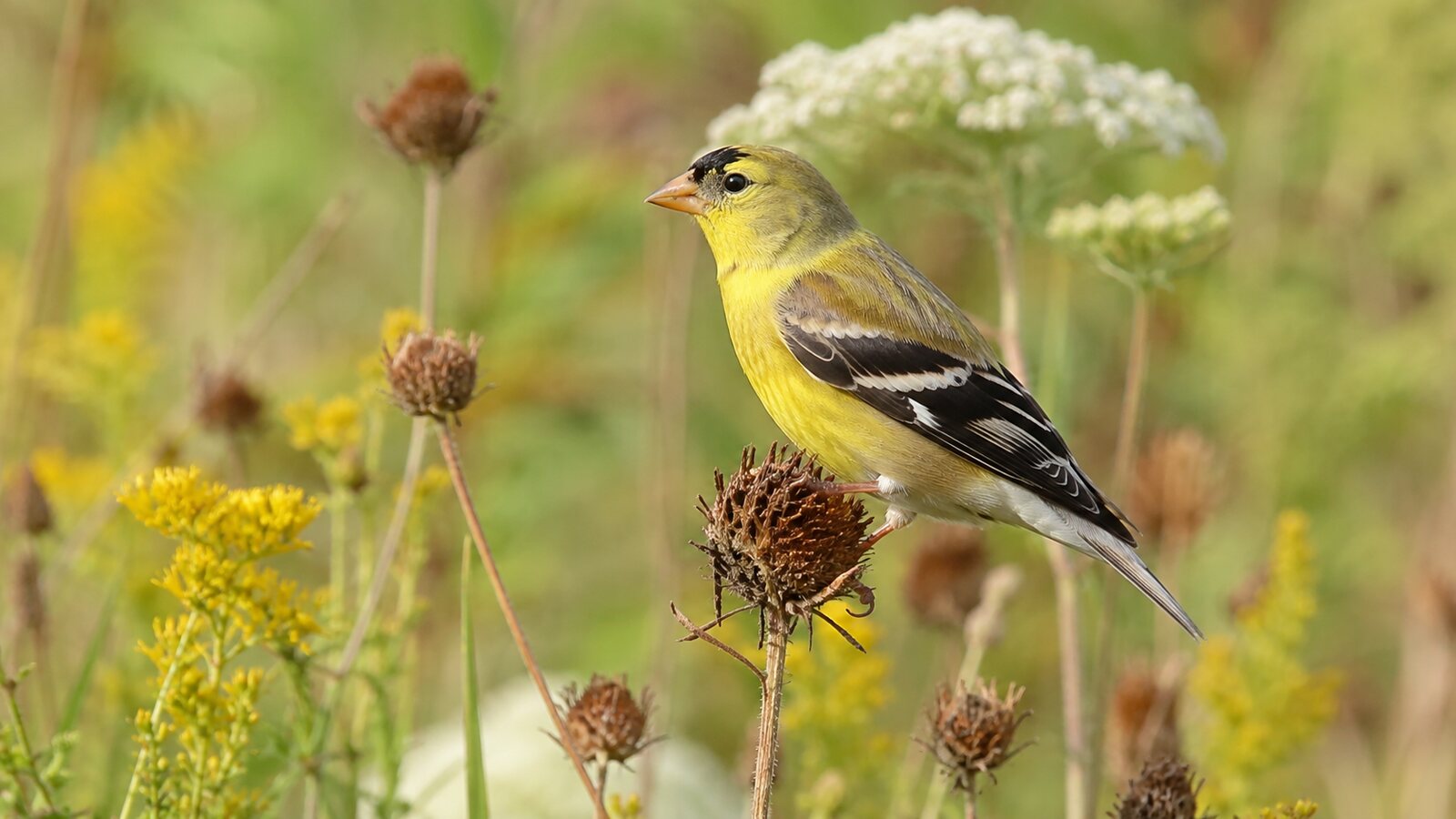
The American Goldfinch is a familiar example. Males become bright yellow for the breeding season and return to duller olive-brown plumage later in the year.
Do young birds molt at a different time?
Often. Many young birds leave the nest in a soft, spotted, streaked, or otherwise juvenile plumage. A later molt replaces some or all of those feathers with a first basic plumage.
That change can make identification confusing. Age, season, feather wear, and molt are among the reasons the same bird can look different.
How long does molting take?
It depends on the bird and the feathers being replaced. A small songbird may complete a major molt in several weeks. Large raptors may replace their longest flight feathers over a much longer period so they can continue flying.
The bird also needs enough protein and energy to grow keratin-rich feathers. A rushed molt can produce poorer feathers, so the schedule must fit the species' whole life cycle.
Does migration affect molt timing?
Yes. Some migrants finish molt before leaving. Others replace feathers after reaching wintering areas, and a few pause in a special molting area along the route. There is no one schedule shared by every migratory bird.
See how birds time migration for the role of daylight, hormones, weather, and internal rhythms.
Do birds molt during winter?
Some body-feather replacement can happen in winter, especially in species preparing for spring breeding. A complete winter molt is less common among familiar temperate songbirds because cold weather and limited food can make feather growth costly.
How often do birds molt?
Many birds complete one full molt each year. Some also have one or more partial molts. Large birds may take longer than a year to cycle through all major flight feathers, while a few species follow highly specialized schedules.
Read why birds molt for the full explanation of feather wear, seasonal plumage, and replacement.
Frequently asked questions
What time of year do birds molt?
Late summer and early fall are common in North America, especially after nesting, but there are many exceptions.
Do birds molt more than once a year?
Some do. A complete annual molt may be joined by a partial molt that changes body or breeding plumage.
How long does bird molt take?
It can take weeks or months. Body size, feather size, food, migration, and the bird's molt pattern all affect the length.
Continue with feather care
Learn whether birds lose all their feathers during molt, see how preening maintains feathers, or return to Bird Facts.