
Mate choice can favor brighter plumage
Color may help a bird stand out during courtship. Depending on the species, plumage can signal age, condition, or simply that the bird belongs to the right species.
A display often combines color with movement, posture, and song. The broad guide to how birds find mates shows how these signals work together.
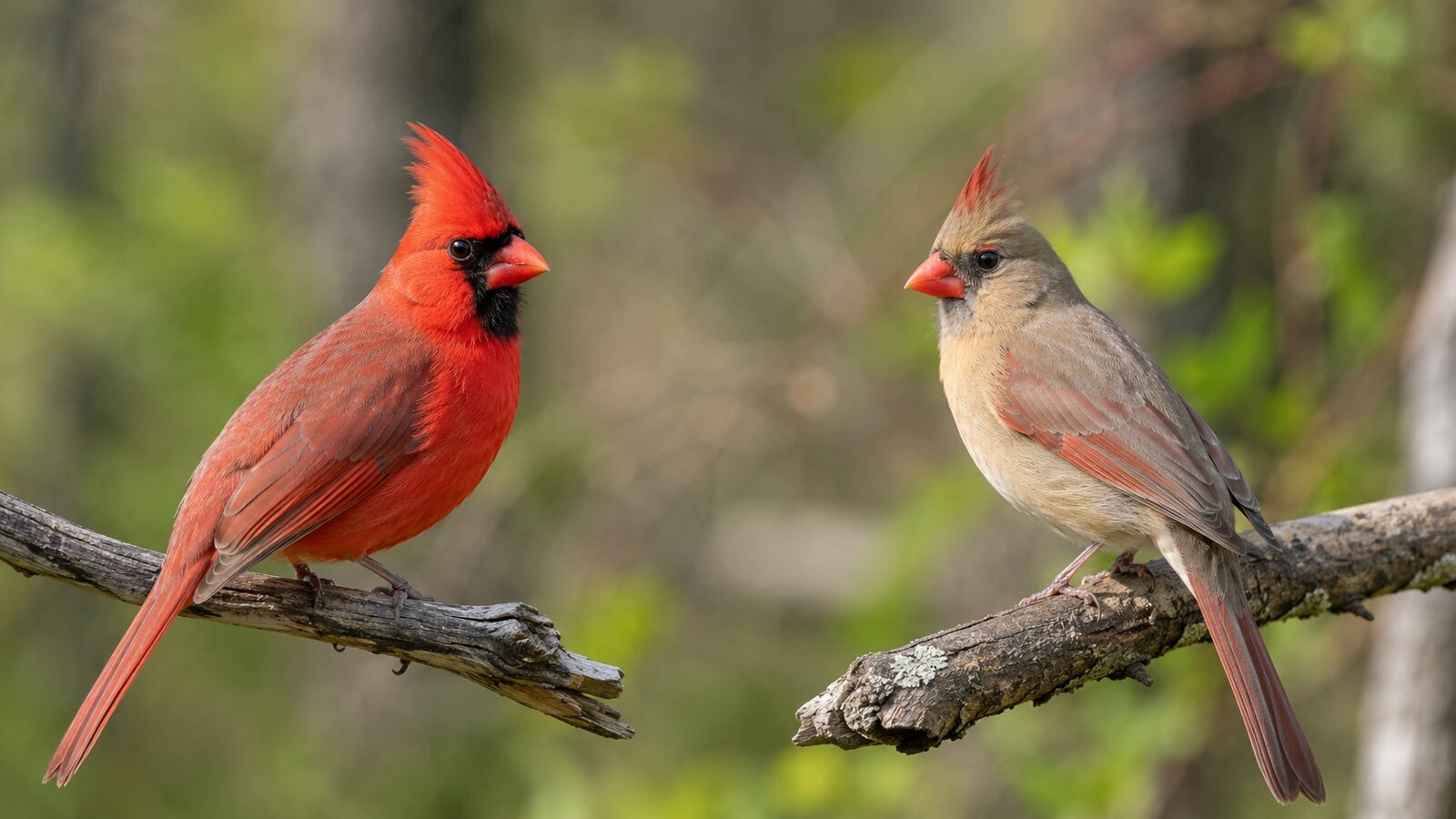
Northern Cardinals show a familiar difference
An adult male Northern Cardinal is mostly bright red with a black face. The female is mainly warm tan with red in the wings, tail, and crest. Both are colorful, but in different ways.
The difference helps identify sex in a clear view. It is less dependable in poor light, and young cardinals have their own plumage and bill colors.
Camouflage may help near a nest
In species where the female spends more time incubating, quieter colors and broken patterns can make her less noticeable against leaves, grass, bark, or the nest.
This is one possible benefit, not a rule that explains every dull female. Nest type, parental roles, habitat, predators, and evolutionary history all shape plumage.
Many male and female birds look alike
Chickadees, Blue Jays, crows, many woodpeckers, and numerous other birds do not show a large overall color difference between the sexes. Some have a small mark that takes a close view to see. Others cannot be reliably sexed by appearance in the field.
Behavior can sometimes provide another clue, but it should be used carefully. Both sexes may sing, defend territory, build, incubate, or feed young depending on the species.
Females can be equally bright or brighter
The usual pattern is reversed in some birds. Female phalaropes, for example, can be more colorful and compete for males, while males handle more incubation and chick care.
Female Belted Kingfishers also have an extra rust-colored belly band that males lack. That makes the female more marked without creating a universal explanation for role reversal.
Color can change with age and season
A young male may resemble a female before gaining adult plumage. Some birds wear brighter breeding feathers and a plainer look later in the year. Wear, molt, and lighting can also change what you see.
Iridescent feathers are especially angle-dependent. A hummingbird’s throat can look dark, then flash red or pink when it turns toward the light. The guide to why the same bird can look different covers those identification traps.
Color is only one part of courtship
Birds also use sound, movement, territory, food, and nest displays. A bright male is not automatically the best singer, territory holder, or parent, and different species weigh signals differently.
Courtship dances can reveal plumage at the right angle, while bird song can carry through habitat where color is hard to see.
Frequently asked questions
Are male birds always more colorful?
No. Many male and female birds look similar, and in some species females are equally colorful or more conspicuous.
Why are female birds often brown?
Brown or patterned plumage can provide camouflage, which may help a bird remain less visible near a nest. This explanation does not apply to every species.
Can bird color help identify sex?
Yes, when a species has clear male and female plumage differences. Age, season, lighting, and individual variation can still complicate identification.