
Courtship dances can attract and assess a mate
A display can show that the bird is healthy, coordinated, and ready to breed. It can also help the receiver confirm that the performer belongs to the same species.
Mate choice is not always one-sided. Females often assess males, but males may also choose, and both birds may take part in a coordinated routine. The broad guide to how birds find mates covers the other signals used with movement.
Sandhill Cranes are famous dancers
Sandhill Cranes may bow, leap, flap, run, and toss bits of grass or other light material. Pairs and unpaired birds can dance, and the behavior is not limited to a few seconds immediately before mating.
The large movements are easy for people to recognize as a dance. A songbird’s display may be much smaller, such as lowered wings, a raised tail, or a careful turn that shows a patch of color.
Hummingbirds dance in the air
Male hummingbirds may use dives, arcs, shuttling flights, and sounds made by the wings or tail. These performances combine motion, position, color, and sound.
An Anna’s Hummingbird can orient his bright head feathers toward the light, then climb and dive in front of a female. A Ruby-throated Hummingbird uses a swinging courtship flight. The exact pattern differs by species.
Some displays show feathers at their best
A bird may spread a tail, lift a crest, flare shoulder feathers, or turn so iridescent plumage catches the light. Color can disappear when the angle changes, so body position is part of the display.
Not all dances feature a colorful male. Some species look similar across the sexes, and in some birds the female is more conspicuous. See why male birds are brighter in some species.
Pairs may use movement to coordinate
A pair can perform matching calls, bows, head movements, or other actions. These shared displays may help maintain a pair bond and bring the birds into the same breeding rhythm.
Long-term partners are not the rule for all birds. Bird pair bonds can last for one nest, one season, or many years.
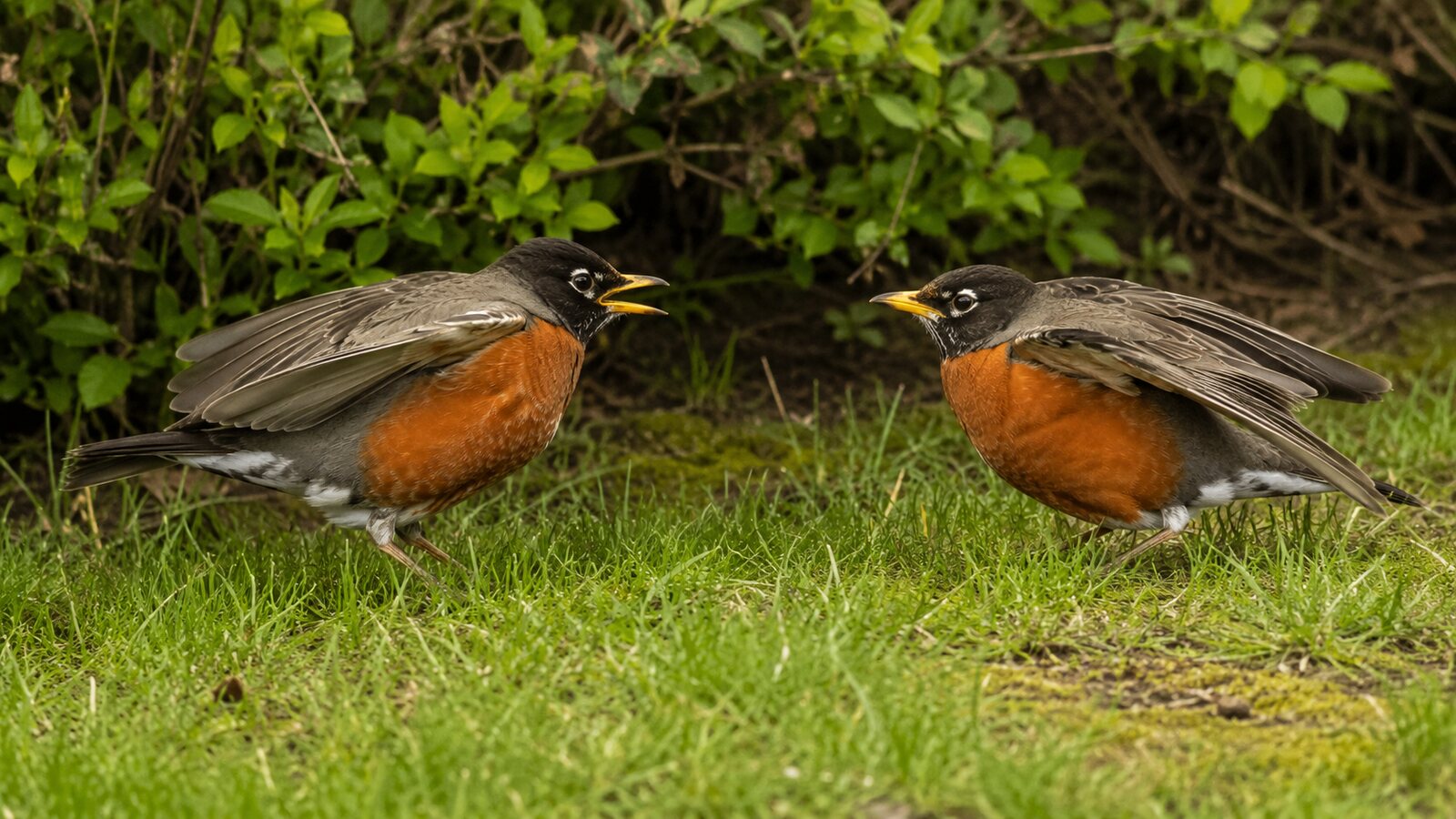
A dance can also warn a rival
Raised wings, an upright stance, a spread tail, or repeated lunges may be a threat rather than courtship. Territorial displays let birds settle some disputes without dangerous contact.
Watch what happens next. A potential mate may stay, respond, or approach. A rival is more likely to back away or be chased. The pages on territorial birds and why birds chase each other help separate the behaviors.
Frequently asked questions
Are bird dances always courtship?
No. Many dances are courtship displays, but similar movements can be used for territory, threat displays, play, pair coordination, or excitement.
Do female birds dance?
Yes. Females participate in displays in many species, and some pairs perform coordinated dances or movements together.
Why do birds puff up during courtship?
Puffed feathers can make colors, shapes, or patches more visible and make the displaying bird appear larger. The meaning depends on the species and context.