
“Chirp” is a broad everyday word
People use chirp for many short, high bird sounds. Birders may describe the same sounds more exactly as chips, contact calls, alarm calls, flight calls, or begging calls. Not all birds chirp, and not every short sound has the same meaning.
Contact calls keep birds connected
Chickadees, finches, sparrows, and many other birds give short notes while feeding or moving. These sounds help flock members or a pair keep track of one another when leaves, distance, or darkness hide them.
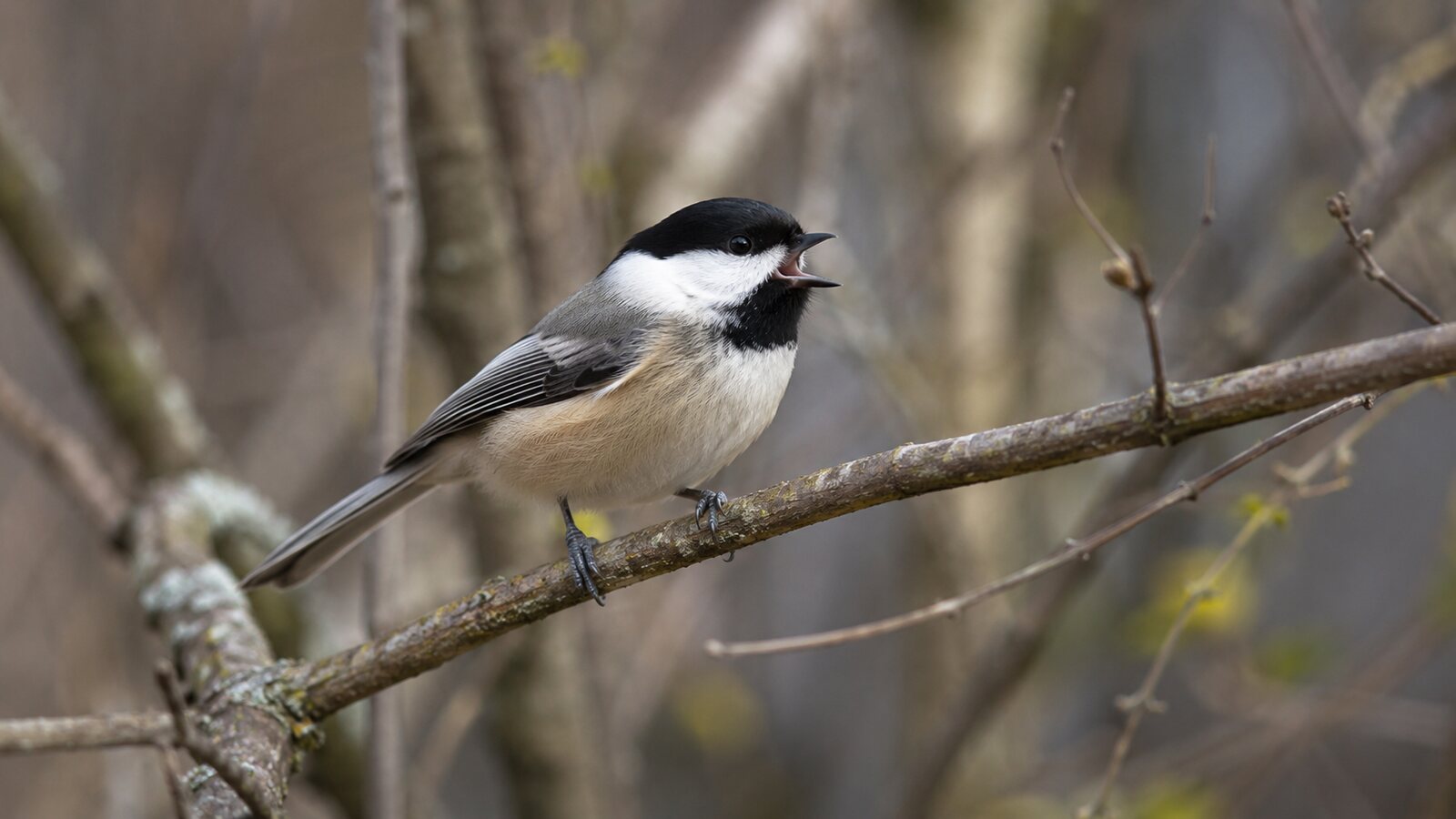
The Black-capped Chickadee has several calls, including its familiar chick-a-dee pattern. American Goldfinches also call often while flying in loose groups.
Alarm calls warn of danger
A bird that spots a predator may give a sharper or more urgent call. Other birds can react by freezing, hiding, gathering to mob the threat, or leaving the area. The exact response depends on the species and the type of danger.
A sudden burst of calling does not prove a predator is present, but it is a good reason to watch the birds' posture and direction of attention.
Young birds chirp to beg
Nestlings and fledglings often call when a parent approaches with food. Begging can include open mouths, wing fluttering, and repeated notes. A feathered fledgling calling from the ground may still be under normal parental care. If one seems in trouble, follow the guide for finding a baby bird.
Some chirps help coordinate movement
Birds may call before taking flight, while passing overhead, or when a flock changes direction. Migrating birds can give flight calls at night. These signals help keep moving groups connected.
See why birds chirp at night for nocturnal birds, migrants, artificial light, and nighttime alarms.
Chirping is not always song
Bird song is often longer and more patterned, with strong links to territory and courtship. Calls are usually shorter and serve a wider range of daily jobs. There are exceptions, so context matters more than the label.
How to work out what you heard
Notice pitch, pace, repetition, tone, and what the bird was doing. Check whether the call came from one bird or a group, high in a tree or near the ground, and whether another animal was nearby. The bird sound identification guide turns those details into a shortlist.
Frequently asked questions
Why do birds chirp at each other?
They may be keeping contact, sharing an alarm, coordinating movement, or communicating between parents and young.
Does chirping mean a bird is happy?
Not necessarily. A calm contact note and a tense alarm can both sound like chirping to us.
Why do baby birds chirp?
Young birds often chirp to beg for food or keep contact with their parents.