
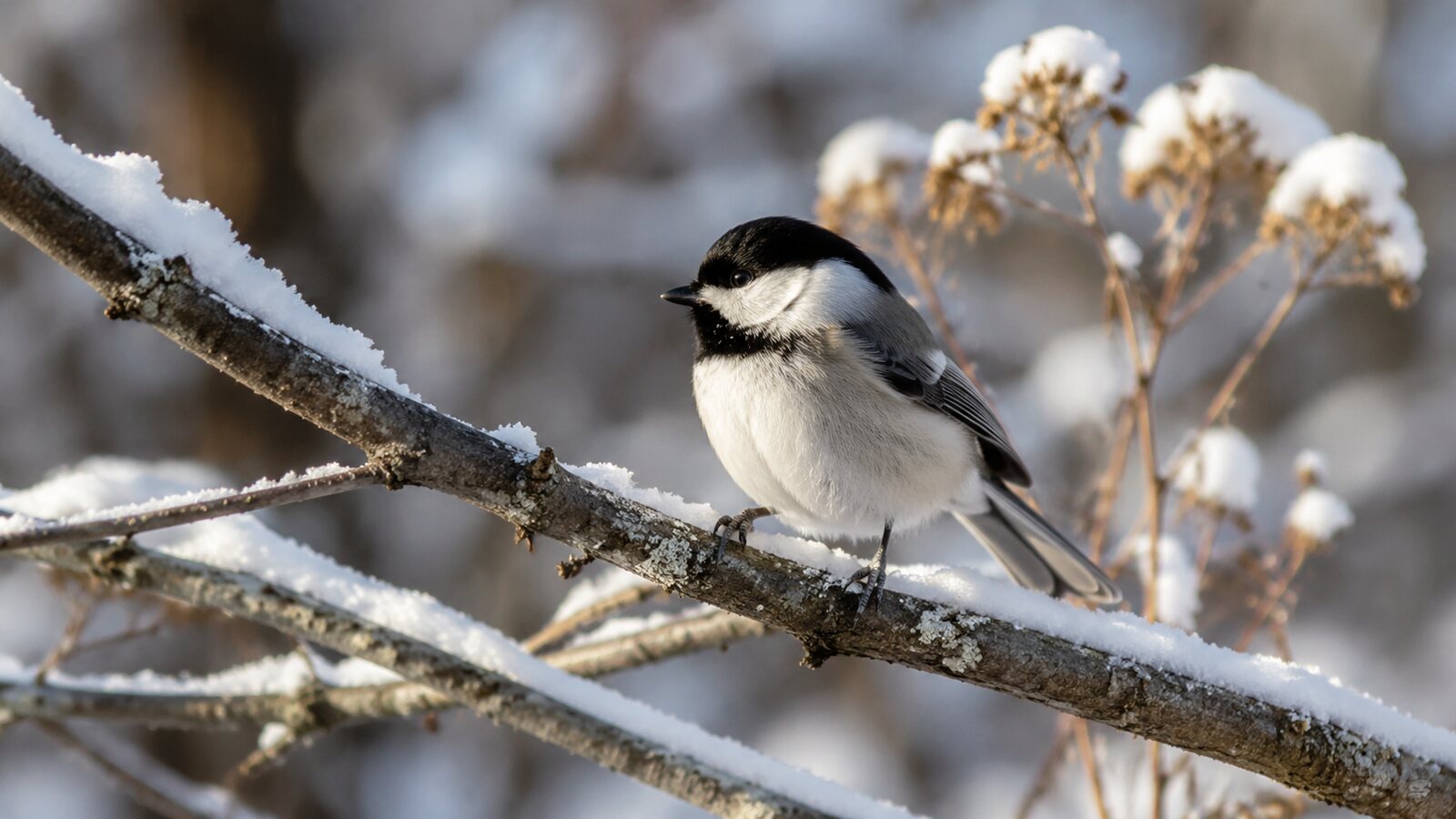
Winter residents can use foods that remain available
Seeds, dormant insects, insect eggs, berries, nuts, and carrion can remain through winter. Black-capped Chickadees search bark and twigs for tiny foods. Woodpeckers can reach insects hidden inside wood.
Birds that rely on flying insects or fresh nectar have fewer options after frost, which helps explain why many of them leave.
Shelter reduces heat loss
Dense evergreens, brush, tree cavities, and protected roosts block wind and help birds conserve energy. Small birds may fluff their feathers to trap warm air. Read more about how birds stay warm and where birds shelter in severe weather.
Migration also has a cost
Flying hundreds or thousands of miles takes energy and brings risks from storms, predators, collisions, and poor stopover habitat. If local conditions remain workable, staying can be the better strategy.
Some species are partial migrants
Not every member of a species behaves the same way. Northern Song Sparrows may move south while other populations remain year-round. Dark-eyed Juncos may appear as winter visitors in one area even though other juncos live nearby all year.
Feeders help, but do not rewrite migration
Reliable seed or suet can support individual birds that already spend winter in an area. Feeders do not generally stop a strongly migratory species from following daylight-driven internal rhythms. Keep feeders clean and pair them with natural cover.
See what birds eat in winter and how small birds manage cold nights, then explore why other birds migrate.
Frequently asked questions
Do bird feeders stop birds from migrating?
Usually not. Feeders can help birds already suited to the local winter, but migration is also controlled by daylight, internal rhythms, and inherited behavior.
How do small birds survive cold nights?
They use insulation, protected roosts, stored energy, and behaviors that limit heat loss.
Are all winter birds year-round residents?
No. Some are winter visitors that bred farther north.