
Where is the syrinx?
The syrinx is at the bottom of the trachea, or windpipe, close to the point where the airway divides into two bronchi leading toward the lungs. Its low position and paired shape give many birds unusual control over sound.
Birds still have a larynx higher in the throat, but it is not their main sound-producing organ as it is in humans.
Air starts the sound
A bird breathes out and pushes air through the syrinx. Soft tissues called labia vibrate in the moving air. Small muscles change their tension and position, which changes pitch and other parts of the sound.
The bill, mouth, tongue, and throat can shape the sound after it leaves the syrinx. That is why opening the bill or changing throat position can alter tone and volume.
Some birds control two sides separately
In many songbirds, the left and right sides of the syrinx can work with some independence. A bird may switch quickly between sides or, in some cases, produce two pitches at once. This helps create fast sweeps, layered notes, and rich trills.
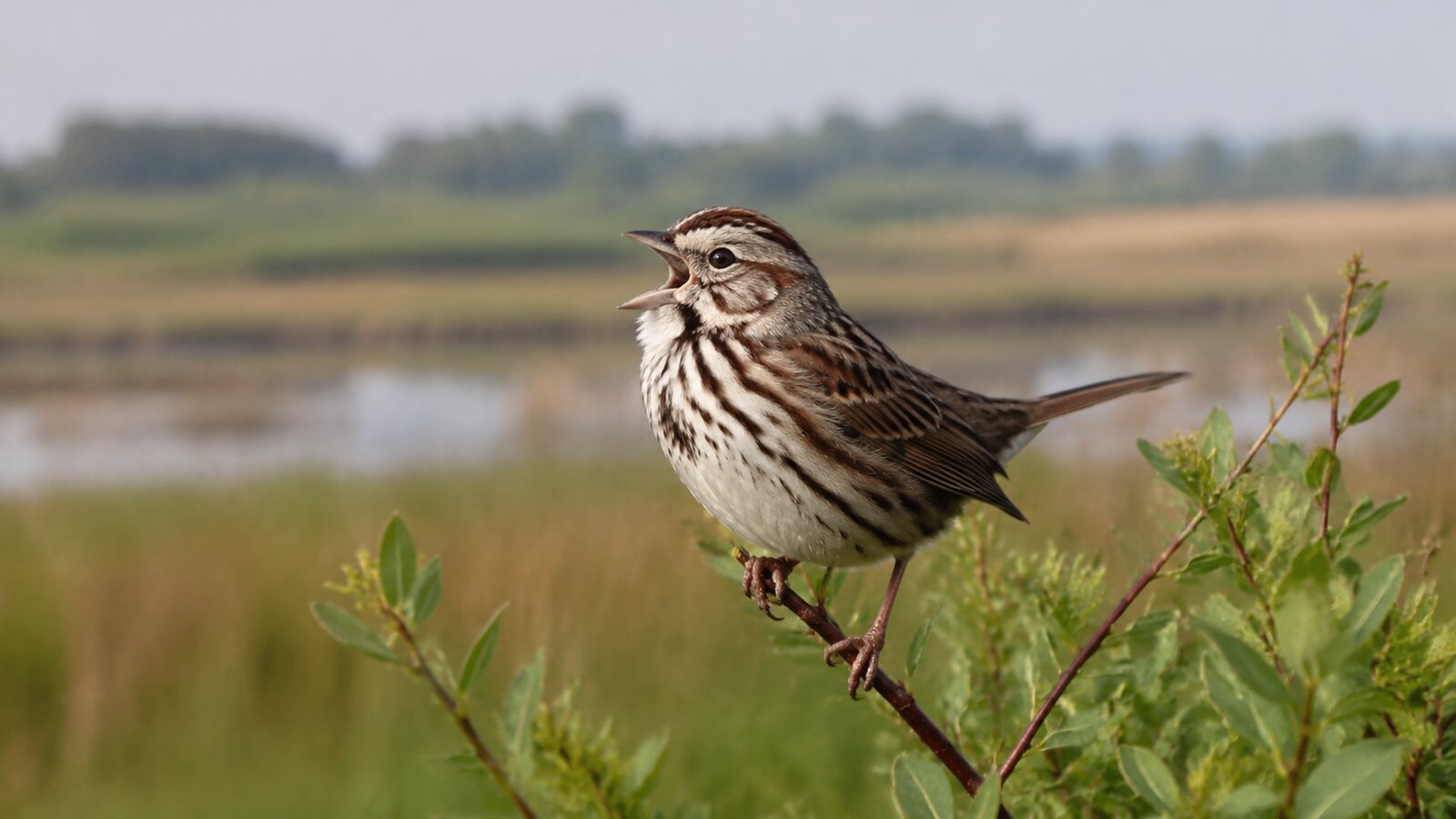
A Northern Cardinal can use the two sides while moving through a wide pitch range. The Song Sparrow builds songs from whistles, buzzes, and trills.
Not every bird sound is vocal
Birds also make mechanical sounds. Woodpeckers drum on resonant wood with their bills. Some birds clap wings, snap bills, or make tones with specially shaped feathers in flight. These sounds can defend territory, attract mates, or warn others.
The Downy Woodpecker and Hairy Woodpecker both drum, so rhythm and habitat can help with identification.
How songs and calls get their patterns
The syrinx makes the sound, but the brain controls the sequence. Many songbirds learn at least part of their songs by listening to adults. Calls may be more strongly inborn, though learning and experience can still affect how birds use them.
Read why birds sing for the jobs of song, or why birds chirp for short everyday calls.
Use sound shape to identify a bird
You do not need to understand the anatomy to identify a singer. Listen for pitch, rhythm, repetition, whistles, trills, buzzes, chips, and rattles. The guide to identifying birds by sound shows how to combine those clues with habitat and behaviour.
Frequently asked questions
What organ do birds use to make sounds?
Most vocal sounds come from the syrinx, low in the airway near the lungs.
Do birds have vocal cords?
They do not use human-style vocal cords to produce their voices. Vibrating tissue in the syrinx creates the sound.
Can a bird make two notes at once?
Some songbirds can control both sides of the syrinx separately and produce two pitches together.