
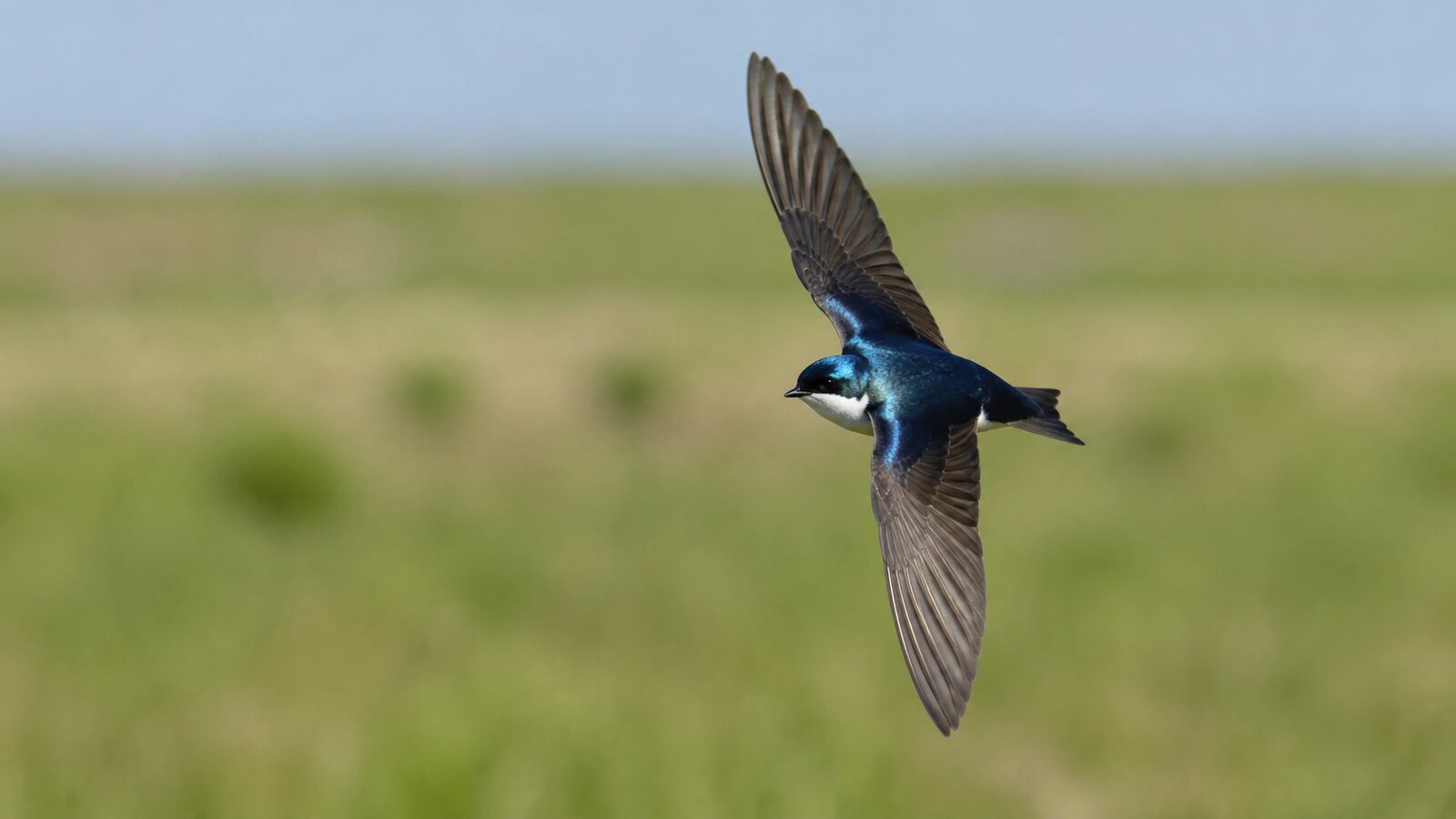
How does a bird turn in the air?
A bird usually begins a turn by changing how much lift and drag each wing creates. It may raise or lower one wing, alter the angle of a wing, change the wingbeat, or partly fold one side.
The uneven forces roll the body into a bank. The bird then coordinates both wings, the tail, and its body angle to follow a curved path rather than sliding sideways.
Do birds steer with their tails?
Yes, but the tail is only part of the control system. A spread or tilted tail can help guide a turn, resist unwanted rolling, and keep the body stable.
During a tight maneuver, the bird may adjust the tail at the same time as its wings. During straight cruising, the tail may stay mostly folded because less correction is needed.
The tail also has jobs beyond flight. See why birds have tails for balance, display, and communication.
How do individual feathers help?
The long primary feathers at the wingtip can spread, twist, and change angle. Small changes affect airflow and give the bird precise control.
Birds also use the alula, a small group of feathers near the front edge of the wing, during slow flight. It helps keep airflow attached when the wing is held at a steep angle, much like a leading-edge device on an aircraft.
How do birds bank?
Banking means tipping the body and wings into a turn. Part of the lift that normally points upward is redirected sideways, pulling the bird around the curve.
A steep bank can create a sharp turn, but the bird may need more lift to avoid losing height. Fast aerial hunters and insect-catching birds coordinate these adjustments in a fraction of a second.
How do birds climb and dive?
To climb, a bird increases lift and points some of its thrust upward. Stronger or faster wingbeats can help, although the exact movement depends on speed and wing shape.
To descend, the bird can reduce lift, angle its path downward, or partly fold its wings. A diving raptor streamlines its body to reduce drag, then spreads wings and tail when it needs to pull out or slow down.
How do birds slow down?
Birds slow down by increasing drag and changing the direction of lift. They spread the wings, fan the tail, and raise the front of the body.
That flare can be easy to see when a pigeon, gull, or chickadee approaches a perch. The feet swing forward only after the bird has reduced enough speed for a safe landing.
How do birds land on tiny branches?
Landing requires good vision, fast balance corrections, and precise timing. The bird judges the perch, reduces speed, holds the body at a steeper angle, and reaches with its feet.
Wing and tail movements continue right up to contact. After the toes grip, a last flick may keep the body from tipping forward.
How do hummingbirds maneuver so well?
Hummingbirds rotate their wings through an unusually wide range at the shoulder. They can redirect the force of each stroke quickly, which supports hovering, sideways movement, steep climbs, and sustained backward flight.
Our backward-flight guide explains why this ability is so unusual. The Ruby-throated Hummingbird and Anna's Hummingbird guides show how flight style also helps with identification.
Do all birds steer the same way?
No. A hawk soaring in rising air, a duck approaching water, and a swallow chasing an insect use the same broad physical principles but very different movements.
Wing shape, tail shape, body mass, speed, habitat, and the task at hand all change the solution. That is why flight style can be a useful identification clue.
Frequently asked questions
Do birds steer with their tails?
Bird tails help with steering, stability, and braking, but birds also steer by changing each wing and shifting body position.
How does a bird turn in the air?
A bird changes lift and drag on its two sides, often by banking and adjusting wing angle, wing shape, feathers, tail, and body posture.
How do birds slow down before landing?
Birds increase drag by spreading and angling the wings and tail. Many flare upward just before contact and bring the feet forward.
Can a bird steer without a tail?
A bird may still steer with its wings and body, but a damaged or missing tail can reduce stability, braking, and fine control.
See how flight fits together
Start with the broad guide to bird flight, examine how bird wings work, compare bird flight speeds, or use flight behavior as an identification clue.