
How does a tail help a bird fly?
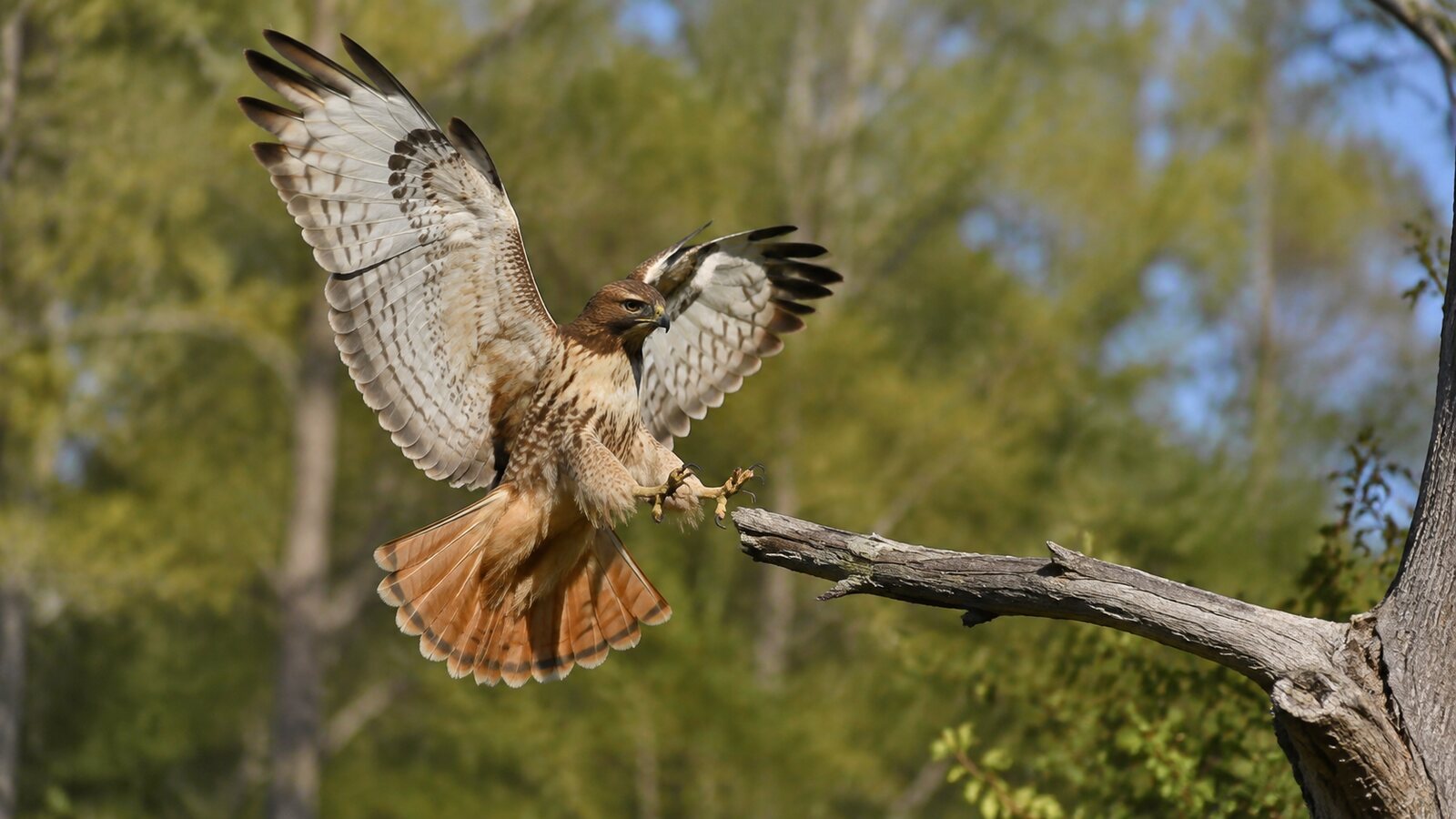
A spread tail adds an aerodynamic surface behind the wings. It can produce lift, add drag, and help control the bird's angle in the air.
A folded tail creates less drag during steady travel. When the bird needs a tight turn or landing, it can fan the feathers in an instant. The wings still do most of the work, but the tail adds valuable control.
Do birds steer with their tails?
Many do. A bird may tilt or twist the tail during a turn, using it along with unequal adjustments of the two wings.
The tail is often compared with a rudder, but that comparison is incomplete. It can also act as a brake, stabilizer, and extra lifting surface. The page on how birds steer while flying shows how all these controls work together.
How does a bird use its tail to brake?
Before landing, many birds fan the tail and hold it at a steeper angle. This increases drag and helps reduce forward speed.
The spread tail also helps the bird adjust its approach while the wings flare and the feet come forward. A tail flick that looks tiny from the ground can be an important last correction.
How do tails help with balance?
A tail can act as a counterbalance when a bird leans, hops, runs, or reaches for food. Ground birds may raise or lower the tail as their body angle changes.
Woodpeckers use stiff tail feathers as a brace against tree bark. That support helps them climb and hammer while their feet grip the trunk. The Downy Woodpecker and Hairy Woodpecker are familiar examples.
Why do some birds have long tails?
A long tail can improve maneuvering in some flight styles, especially when the bird turns through complex habitat. It can also become a visual signal used in courtship.
Long feathers have costs. They require energy to grow, add drag, and can wear or break. A long tail persists only when its benefits outweigh those costs for that species.
Why do birds spread or flick their tails?
A spread tail may help with braking, balance, warming, drying, or display. A quick flick can be a movement habit, an alarm signal, or part of foraging.
Some birds reveal hidden color patches when the tail opens. An American Redstart flashes orange or yellow patches while moving through foliage, which may help startle insects into view.
Do tails help birds communicate?
Yes. Tail position can show alertness, aggression, courtship, or coordination, depending on the species.
Plumage patterns also send visual signals. Dark bands, white corners, bright patches, and graduated feather shapes can help birds recognize members of their species or judge a display.
Can tail shape help identify a bird?
Tail shape is a useful clue when combined with size, wings, habitat, and behavior. A Common Raven often shows a wedge-shaped tail in flight, while an American Crow usually looks squarer or gently rounded.
Outer-tail color can matter too. Dark-eyed Juncos flash white outer feathers, and meadowlarks show white tail edges in flight. Use the size and shape guide to combine tail clues with the rest of the bird.
What happens if a bird loses its tail feathers?
A bird may lose tail feathers to molt, damage, or a close escape from a predator. Many can still fly, but they may have less precise steering and braking.
New feathers usually grow during molt. A bird with a missing tail may look odd for a while without being unable to survive.
Do all bird tails work the same way?
No. Swifts and swallows use tails during agile aerial turns. Hawks fan broad tails while soaring and landing. Woodpeckers brace with stiff feathers. Peacocks and other display species have highly specialized ornamental structures.
Even birds with short tails can be skilled fliers because wing control and body posture do so much of the work.
Frequently asked questions
Do birds use their tails to steer?
Yes. Many birds fan, tilt, or twist the tail to help steer, stabilize, and brake, although the wings and body also control flight.
Why do some birds have long tails?
Long tails may improve maneuvering or support courtship and visual signals. The benefit and cost depend on the species and its way of life.
Can a bird fly without tail feathers?
Many birds can still fly after losing tail feathers, but steering, braking, balance, and landing control may be reduced until the feathers regrow.
Do bird tails help with balance?
Yes. Birds may use the tail as a counterbalance while perching, climbing, running, feeding, or changing body position.
Look at the whole flying bird
Continue with how bird wings work, the basics of bird flight, the many jobs of feathers, or why feathers must be replaced.